
AI Weld Monitoring — Detect Defects in Real-Time
Catch drift while the arc is still on. Our welding cameras and HeatCore software watch the weld pool live, flag porosity, lack-of-fusion risk and process drift, and keep a record of every weld as evidence for ISO 3834 and ISO 17635.

Official spin-off of Politecnico di Torino, backed by T4P.


Inspect every weld. Not just samples.

See
HeatCore shows the weld pool and its numbers live — area, temperature, size, position — and raises an alarm when they leave your limits.

Record
Every weld on record: replay it frame by frame, chart its metrics, export video, metrics and profiles.

Prove
Measured evidence for ISO 3834, ISO 17635, ISO 5817 and EN 1090-2 files. Conformity assessment stays with your welding coordinator.
Weld monitoring at work in industry
- Over2,000welds monitored in production
- Over16 kmof weld seam monitored in production
- Over230hours of welding monitored in production
- Over15systems, thermal cameras and software licences shipped
- Over4pilot and integration projects in industry
- 7industrial sectors served
- 5years of R&D on thermography for welding, from Politecnico di Torino
- Over15peer-reviewed scientific papers by the founding team
Where we operate

- Europe — installed systems and projectsItaly and countries across Europe, including the United Kingdom
- Italy — headquarters, installed systems and projects
- Markets servedUnited States, Canada, United Arab Emirates, Saudi Arabia, India
Markets served: countries we have received qualified enquiries from or sent quotes to. Countries, not cities.
Projects and enquiries from over 10 countries on 3 continents
Industries served
- Railway
- Automotive and vehicles
- Metalworking and steel
- Oil & gas and energy
- Electronics
- Thermoforming and plastics
- Packaging
Data as of October 2026
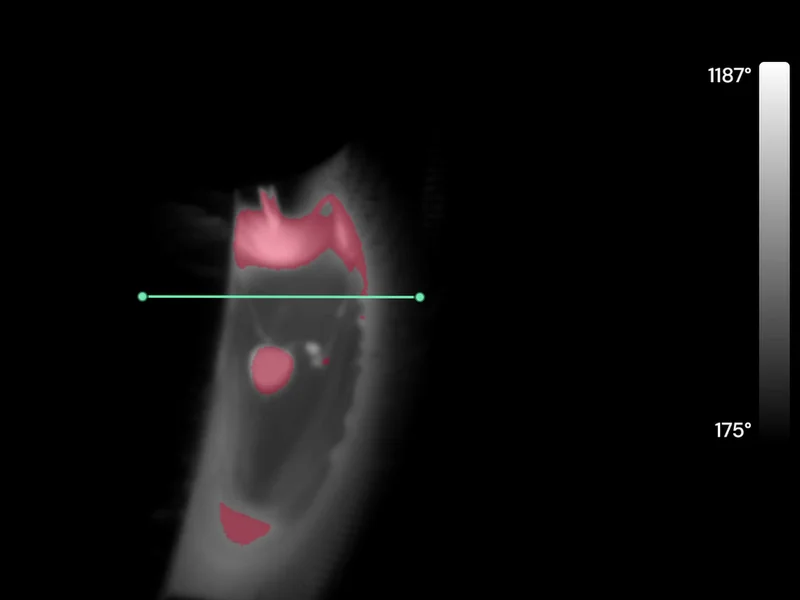
HeatCore AI on a real lab weld
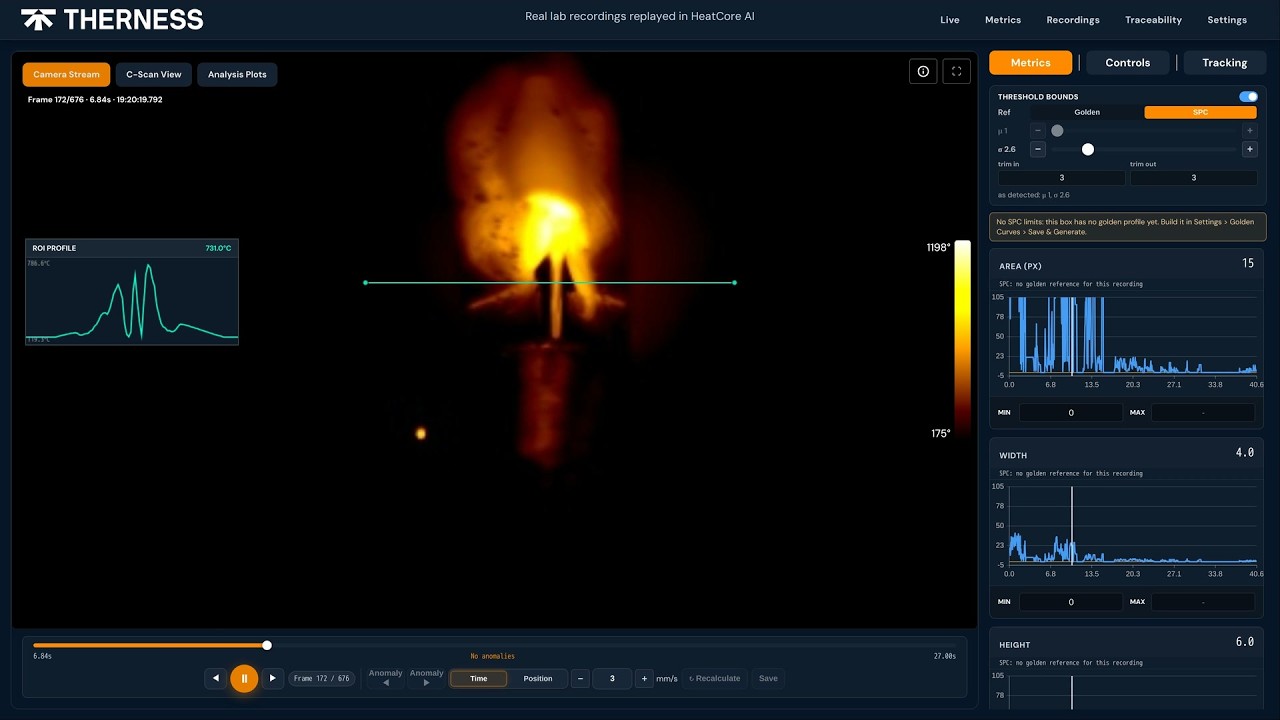
One platform. Thermal, visual and electrical data.

Inline thermography with defect AI
Adds real-time defect classification and AI anomaly detection to the live thermal view, with Kaizen reports and a record for every seam. Runs on an edge server in your plant.
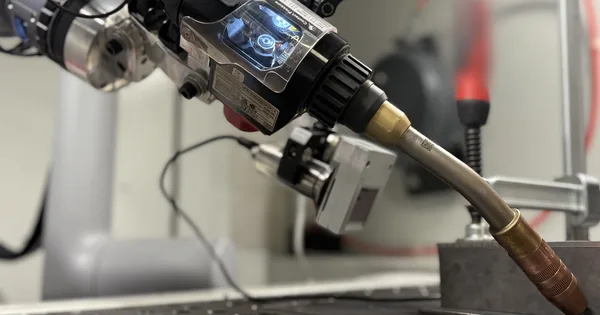
HeatCore Basic
Live thermal view, overheating alarms, basic SPC limits and an evidence log. Also for manual stations.
Learn more →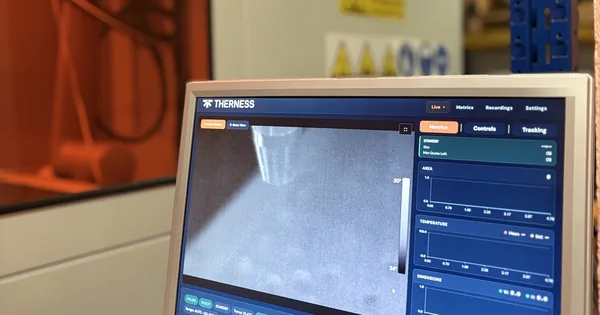
HeatCore Robotic
Turnkey package for robotic cells, reading the robot controller's signals through its API.
Learn more →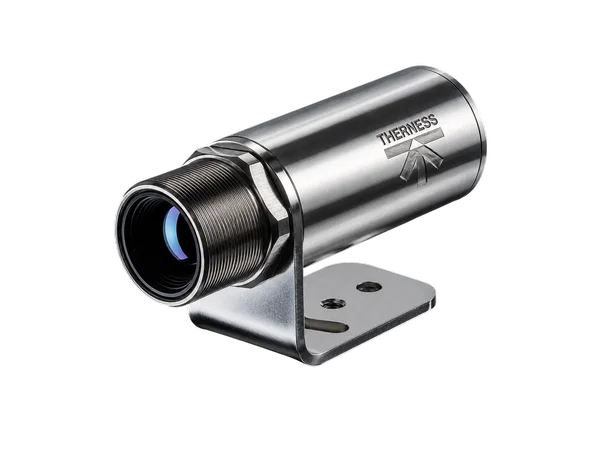
HeatCam IR-C
384 × 240 px radiometric camera, −20 to 900 °C standard (1500 °C optional), 60 mK NETD, PoE.
Learn more →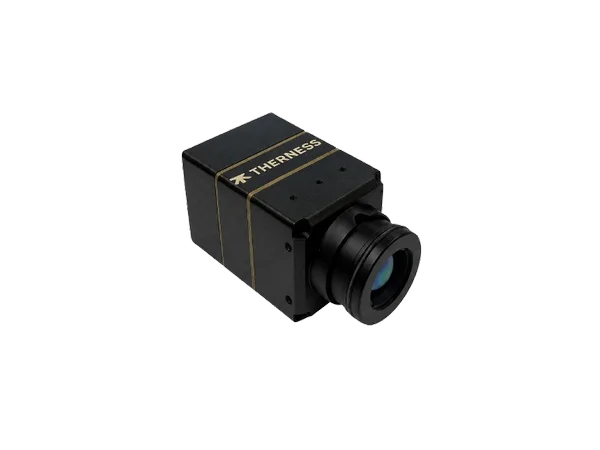
HeatCam IR-S
Compact LWIR camera for additive cells and robot heads, 400…1600 °C (high-temperature version).
Learn more →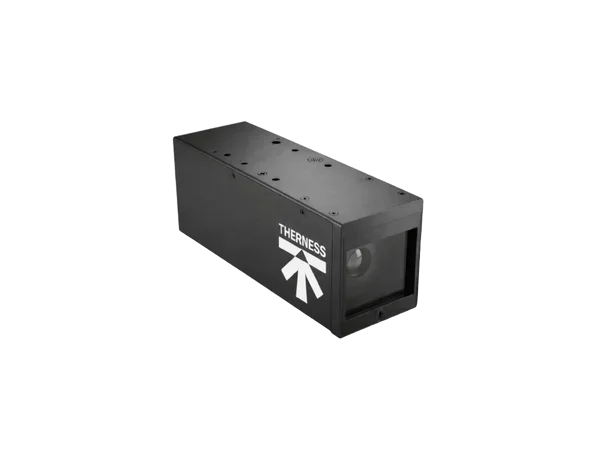
PoolDrop
Weld-pool video up to 480 frames/s, with Class 1 laser-safe light. USB 3.0.
Learn more →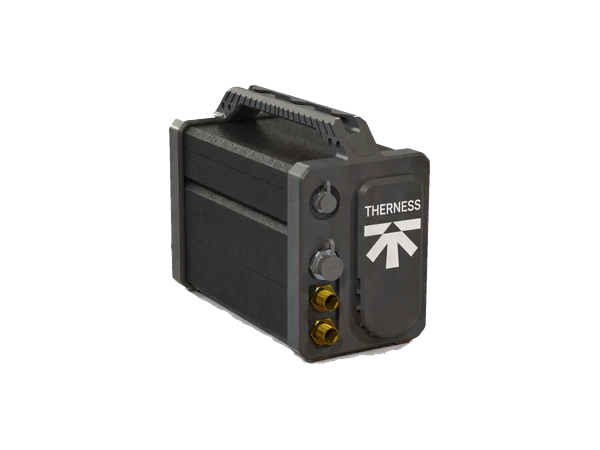
WeldTrace
Voltage, current and wire feed at up to 25 kHz, gas at 10 Hz, recorded with the thermal data in HeatCore.
Learn more →Building near-net-shape parts with wire-arc DED? The same HeatCam thermal sensors also drive our layer-by-layer WAAM monitoring for large-format additive work.
After the weld: Therness ForgeSense keeps a temperature record of the post-weld heat treatment (PWHT) for every piping joint. It is offered as a pilot.
Need a thermal camera on its own? HeatCam IR-C is in stock and ready to ship for maintenance, process control and R&D.
Engineering around the system
Feasibility & welding trials
A feasibility analysis and welding trials on your parts in our lab cell, before you commit to a line.
Learn more →Design, installation & integration
System design, installation, PLC and software integration, documentation, commissioning training and remote support.
Learn more →Welding process consulting
Ongoing technical consulting on parameters, procedures and the data your cells record.
Learn more →Industrial thermography
Thermographic inspections of plant and equipment, with a prioritised report of the thermal anomalies found.
Learn more →Find your setup in up to seven questions
Answer a few questions about your process and get the Therness camera, HeatCore tier or WeldTrace setup that fits, with the matching documents and videos by email.
Traditional inspection vs AI monitoring
Traditional inspection
- Sample-based inspections
- Complex and time-consuming audits
- Operator dependency
- Rework
- Limited process control
AI monitoring
- Real-time detection
- 100% weld monitoring
- Scalable across production lines and plants
- Simplified audits and full traceability
- Fewer returns and rework
Latest weld monitoring videos

Weld pool at 480 fps, thermal image and welding current, recorded during the same bead
Three recordings of the same bead from our robotic R&D cell: PoolDrop films the weld pool at 480 fps, HeatCam records the temperature field at 25 fps and WeldTrace samples the welding current at up to 25 kHz. Real footage, no generated frames.
High-speed welding camera →
CMT welding at 480 fps — every droplet visible
Cold Metal Transfer at 480 fps in landscape: the wire dips into the pool and retracts, releasing one clean droplet per cycle — low heat input, near-zero spatter, arc glare filtered out.
High-speed welding camera →
Wire-arc deposition with ER70S wire, cell and close-up
A 15-second vertical clip of MAG wire-arc deposition with 1.2 mm ER70S wire: first the torch in the cell, then a close-up camera following the torch and the melt pool along the bead.
WAAM additive monitoring →
Burn-through under a high-speed camera
The exact moment a weld pool collapses on a tee joint — burn-through captured frame by frame, and how real-time monitoring catches the precursor.
High-speed welding camera →Start with one cell, scale on evidence

Pilot
HeatCam and HeatCore in one cell, on your own parts. The equipment is also available on monthly rental for the pilot.
Plan a pilot →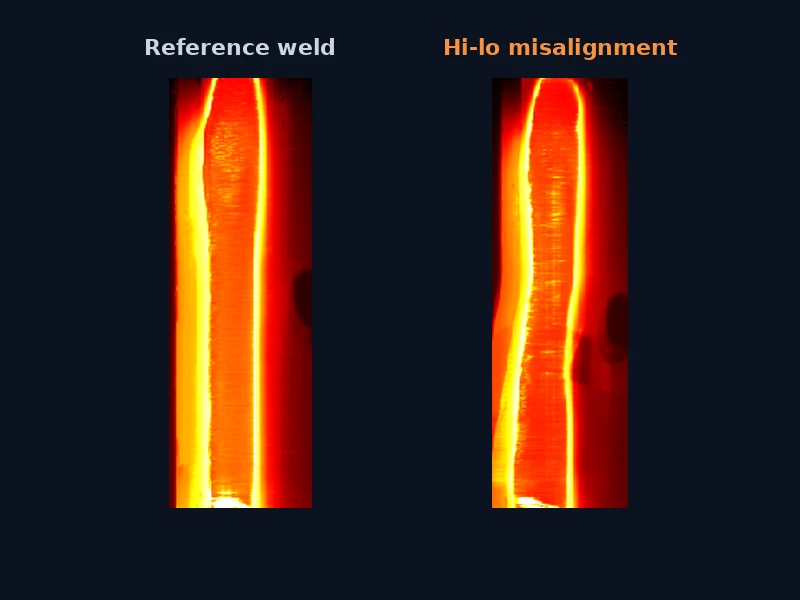
Validate
Compare our records with your inspection results on the same welds.
How we validate →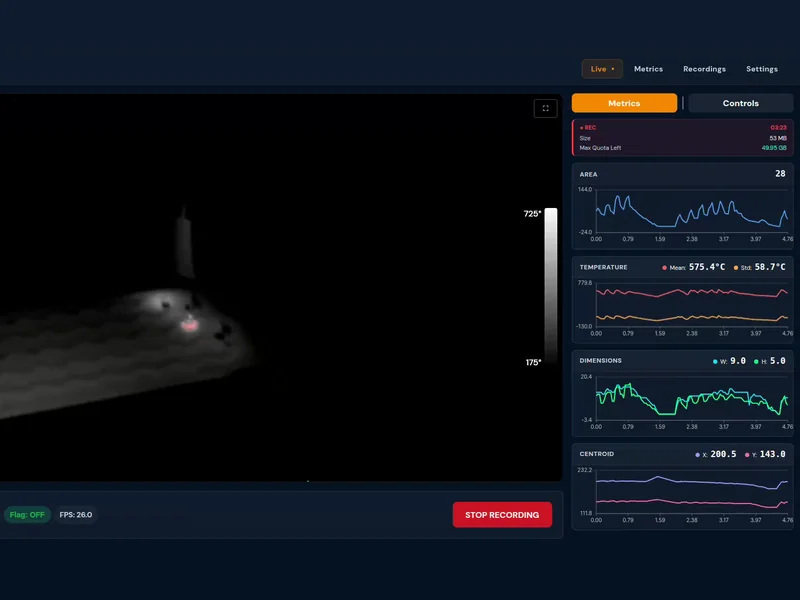
Set the limits
Agree the acceptance criteria with your quality team before you scale.
See the weld monitoring system →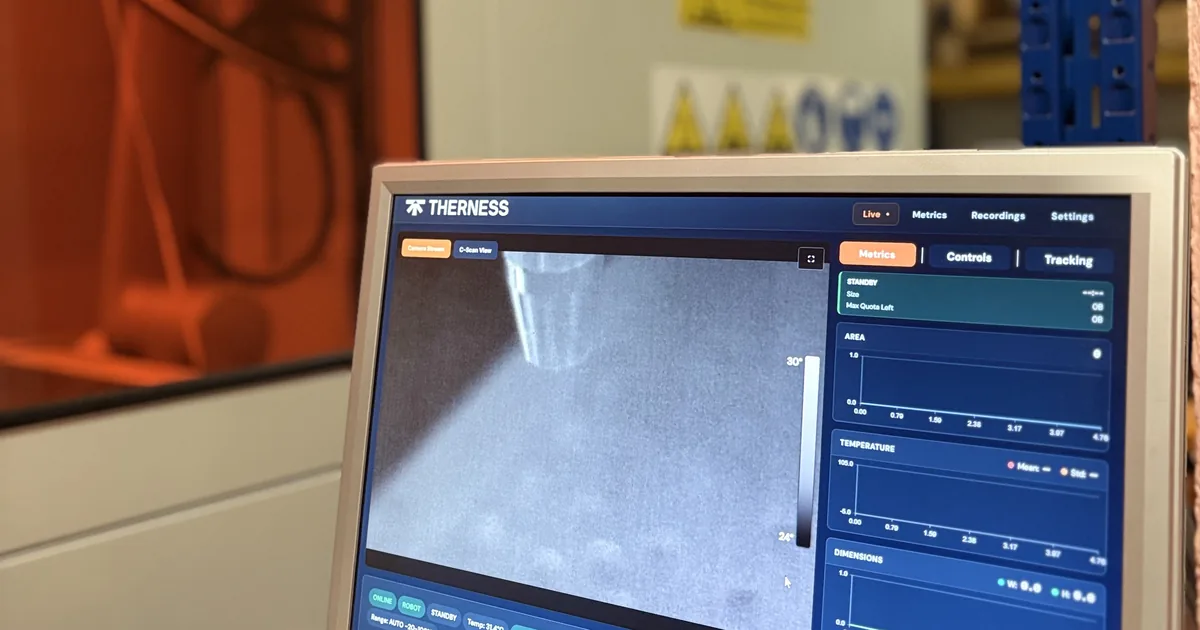
Roll out
The same criteria on each cell, and a record for every weld.
Scale with HeatCore AI →Weld monitoring FAQs
Does Therness replace traditional NDT (UT/RT/PT/MT)?
It reduces defects by catching issues in-process and creates traceable evidence for every seam, but your final inspection plan depends on risk, customer requirements, and applicable standards. Many teams use Therness to prevent defects and to support ISO 17635 / ISO 3834 documentation.
What defects can you detect with AI weld monitoring?
We flag thermal/anomaly patterns correlated with porosity, lack of fusion risk, overheating and process drift. Coverage depends on your material, geometry and how we set acceptance criteria.
How does active thermography help weld inspection?
Active thermography measures thermal response to controlled excitation and highlights subsurface-related anomalies earlier than visual inspection. See the full guide to thermographic weld inspection and NDT testing.
How long does installation and setup take?
We start with a pilot in one cell on your own parts, compare our records with your inspection results, agree the acceptance criteria and then roll the same criteria out cell by cell. To scope your line, talk to an expert.
Can you integrate with our QMS or PPAP/CAPA workflows?
Yes. HeatCore AI exports CSV and reports for every job and offers a REST API (OpenAPI 3.1 schema) and WebSocket; bidirectional PLC integration is set up on project with your IT team, so weld records and alarms can feed your quality workflows.
What ROI should we expect?
ROI depends on scrap/rework cost, throughput and defect rate. Request a detailed ROI analysis on the contact page.
What our cameras and software show



Featured weld-monitoring guides
How to choose a welding camera in 2026
Sensor types, frame rates and the specs that actually matter when you compare welding cameras.
Read the guide → SystemsPicking a weld monitoring system
Thermal, machine-vision and acoustic sensing compared — how to match a system to your line.
Compare approaches → FundamentalsWeld quality monitoring 101
How real-time AI catches porosity and lack of fusion while the arc is still running.
Learn the basics → IntegrationCameras for robotic welding cells
A practical playbook for adding vision to robotic welding cells without losing uptime.
See the playbook →Let’s Talk
Still have doubts? Contact us!


Headquarters
Visit us and see how Therness is shaping the future of welding.
Corso Castelfidardo 30/A, Torino