Cloud-based weld monitoring forces a choice: accept latency, or accept blind spots. For production lines running at 2 meters per minute, a 200-millisecond round-trip to the cloud means a defect has already traveled 6.7 mm before the alert fires. In high-speed TIG or laser welding, that gap defines scrap versus salvage.
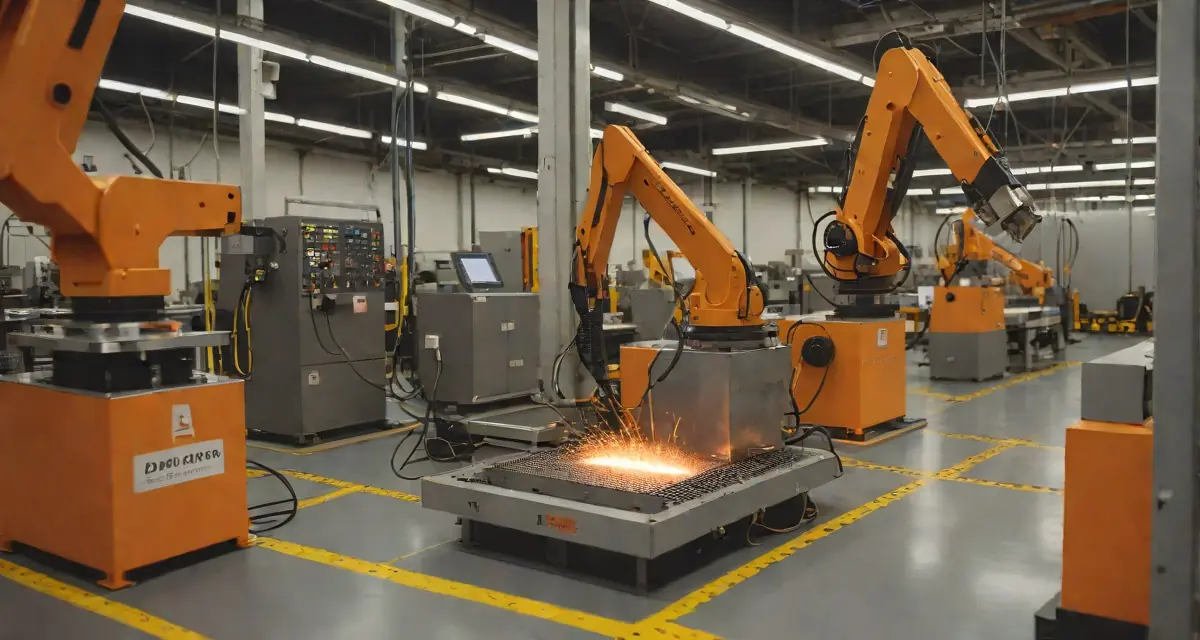
Edge AI welding inspection shifts inference to the production floor. Cameras, thermal sensors, and acoustic systems feed directly into dedicated computing hardware—no cloud dependency, no bandwidth bottlenecks, no latency compromise. This is the foundation of an on-premise AI weld monitoring system: sub-50ms response times, local data sovereignty, and continuous operation even when network connectivity fails.
This is not experimental. Manufacturers in automotive, aerospace, and energy infrastructure have already deployed on-premises AI inference at scale. This article maps the architectural patterns, hardware specifications, and integration strategies required to implement edge AI for welding quality control.
Why Cloud Fails Welding Quality Control
Industrial welding environments expose the limitations of cloud-centric AI architecture:
| Challenge | Cloud Impact | Edge Solution |
|---|---|---|
| Latency | 100-500ms round-trip | <50ms local inference |
| Bandwidth | HD thermal streams exceed typical factory uplinks | On-premise processing, selective cloud sync |
| Connectivity | Network outages halt inspection | Autonomous local operation |
| Data Security | IP-sensitive weld data leaves premises | All analysis on-site |
| Cost Scaling | Per-inference fees grow with throughput | Fixed hardware cost |
For continuous welding operations, the latency argument alone justifies edge deployment. In resistance spot welding for automotive body-in-white, current flows for 200-500ms per weld. A cloud-based system analyzing after weld completion cannot intervene. An edge system monitoring in real-time can abort bad cycles before electrode lift.
The Edge AI Inference Pipeline
On-premises AI welding inspection follows a standardized data flow from sensor to action:
1. Sensor Acquisition Layer
Thermal Imaging
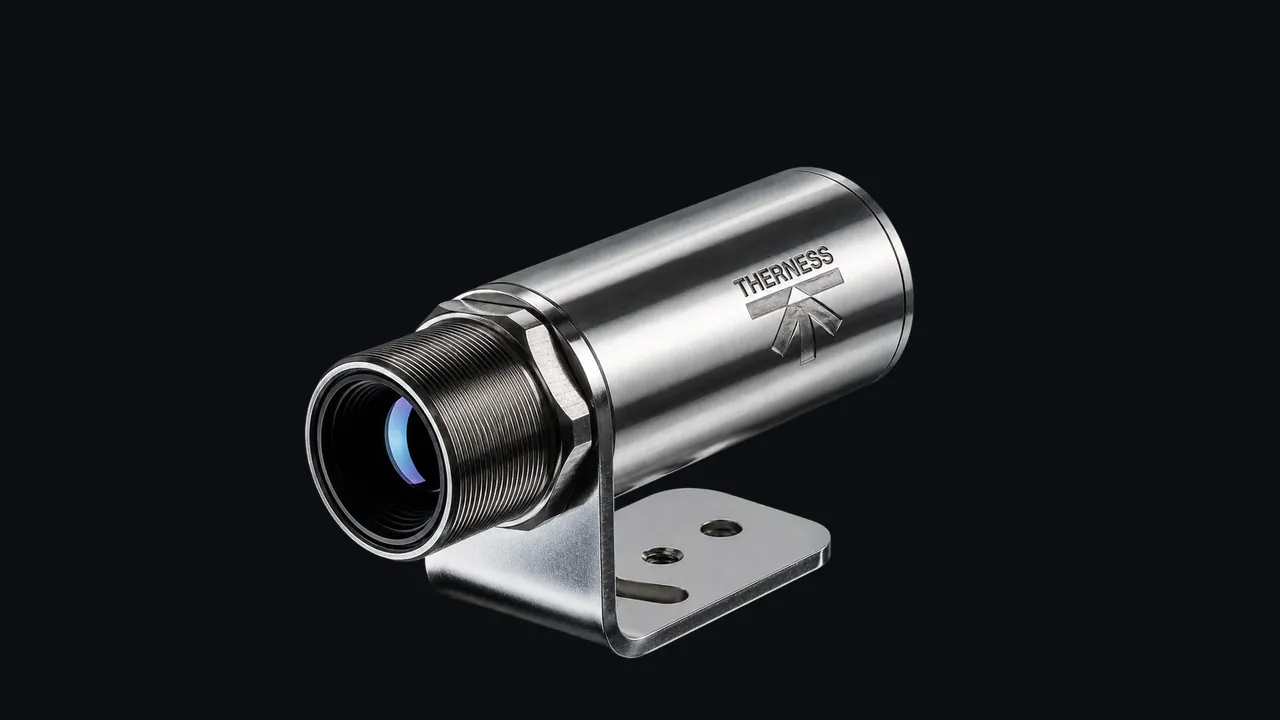
Infrared cameras capture weld pool temperature distribution at 60-120 Hz. Uncooled microbolometer arrays (typical resolution 640×480, <50mK NETD) provide sufficient thermal contrast for most ferrous and non-ferrous applications. Cooled MWIR sensors extend to specialized alloys and high-reflectivity materials like aluminum.
Learn more about thermal camera specifications for welding
Vision Systems High-speed visible-spectrum cameras (500-2000 FPS) capture weld pool geometry, arc stability, and molten metal dynamics. Coaxial illumination through the welding torch enables monitoring despite arc glare.
Acoustic Sensors Microphones and accelerometers detect process anomalies: arc instability through acoustic signature, porosity formation through acoustic emission, and electrode wear through vibration analysis.
2. Edge Computing Hardware
Modern edge AI platforms for welding applications typically include:
| Component | Specification | Function |
|---|---|---|
| GPU/AI Accelerator | NVIDIA Jetson AGX Orin, Intel Arc, or custom ASIC | Neural network inference |
| CPU | ARM Cortex-A78AE or x86 industrial processor | Data orchestration, PLC integration |
| Storage | 128GB-2TB NVMe SSD | Local data logging, model caching |
| Network | Gigabit Ethernet, 5G NR, Wi-Fi 6 | Selective cloud sync, remote management |
| I/O | Digital I/O, analog channels, fieldbus (EtherCAT, PROFINET) | Trigger signals, quality data export |
The NVIDIA Jetson AGX Orin exemplifies current generation edge platforms: 200-275 TOPS AI performance, 50W TDP, industrial temperature rating, and native support for PyTorch/TensorRT models. A single unit can simultaneously process thermal, vision, and acoustic inputs for multi-sensor weld quality assessment. The HeatCore AI edge inference unit packages this class of hardware for welding cells, pairing on-board inference with per-weld quality records.
3. Inference Engine
Trained neural networks—typically convolutional networks for image analysis, transformers for temporal sequences—execute on the edge hardware through optimized runtimes:
- TensorRT: NVIDIA GPU acceleration with INT8 quantization for maximum throughput
- OpenVINO: Intel platform optimization, CPU/GPU/NPU target flexibility
- ONNX Runtime: Cross-platform deployment, vendor-agnostic execution
- TensorFlow Lite: Embedded-optimized models for resource-constrained deployments
Quantization reduces model precision from FP32 to INT8, cutting memory footprint and inference latency by 2-4× with minimal accuracy degradation for welding defect detection tasks.
4. Decision & Action Layer
Inference outputs feed into programmable logic controllers (PLCs) or industrial PCs running the welding cell automation. Typical integration patterns:
- Binary pass/fail signals: Hardwired digital I/O to welding controller
- Quality scores: Analog outputs (4-20mA, 0-10V) proportional to defect probability
- Structured data: OPC UA, MQTT, or REST APIs to MES/quality systems
Explore sensor fusion approaches for comprehensive weld monitoring
Latency Budget: From Sensor to Action
For real-time weld quality intervention, every millisecond in the pipeline matters. A typical edge AI system achieves these latency allocations:
| Stage | Typical Latency | Optimization Targets |
|---|---|---|
| Sensor readout | 8-16ms | Camera DMA, zero-copy buffers |
| Preprocessing | 10-20ms | GPU-accelerated normalization |
| Inference | 15-30ms | Model quantization, batch size=1 |
| Post-processing | 2-5ms | Optimized NMS, thresholding |
| PLC communication | 5-10ms | Direct memory access, deterministic fieldbus |
| Total | 40-80ms | End-to-end deterministic response |
This budget enables meaningful intervention during active welding. In robotic GMAW at 1 m/min travel speed, 50ms latency corresponds to 0.8mm of weld length—a spatial precision sufficient to abort defective segments before they propagate.
Data Architecture: Local Learning, Cloud Sync
Edge AI welding systems do not operate in isolation. A hybrid data flow preserves operational autonomy while enabling continuous improvement:
Local Data Retention
Edge systems maintain rolling buffers of inspection data:
- High-resolution raw data: Thermal sequences, video, acoustic waveforms (typically 24-72 hours)
- Inference results: Defect classifications, confidence scores, process parameters (extended retention, 30-90 days)
- Aggregated statistics: Per-shift quality metrics, defect rate trends (indefinite retention)
This local history supports root cause analysis, process optimization, and regulatory audit requirements without cloud dependency.
Selective Cloud Synchronization
Strategic data transmission to cloud infrastructure enables:
- Model updates: New defect patterns, improved architectures pushed to edge
- Fleet analytics: Cross-facility quality benchmarking, statistical process control
- Remote diagnostics: Support access to system logs, sensor health metrics
- Long-term archival: Compliance records, customer documentation
Sync policies typically filter transmitted data: anomaly samples for quality engineering review, aggregated metrics for dashboard visualization, system health telemetry for predictive maintenance.
Industry 4.0 Integration Patterns
Edge AI weld inspection integrates with manufacturing execution systems (MES) and enterprise planning (ERP) through standardized interfaces:
OPC UA (IEC 62541)
The dominant industrial interoperability standard. Weld quality systems expose:
- Real-time variables: Current defect probability, sensor temperatures
- Historical records: Weld-by-weld quality logs, traceability data
- Methods: Calibration procedures, model switching commands
- Alarms: Out-of-specification conditions, hardware faults
MQTT (ISO/IEC 20922)
Lightweight publish-subscribe messaging for event-driven integration. Typical topics:
/welding/cell-001/defect-detected → {"weld_id": "W20260419-0142", "type": "porosity", "confidence": 0.94}
/welding/cell-001/quality-score → {"weld_id": "W20260419-0142", "score": 0.87}
/welding/cell-001/system-health → {"inference_time_ms": 42, "gpu_utilization": 0.73}
REST APIs
Synchronous queries for external systems: quality dashboards, mobile applications, customer portals. JSON payloads deliver structured weld records, statistical summaries, and configuration parameters.
Standards Compliance
On-premise welding inspection systems must align with quality management and safety standards:
-
ISO 3834 (Quality requirements for fusion welding): Digital records support compliance with materials traceability, procedure qualification, and personnel certification requirements. ISO 3834-2:2021
-
EN 1090 (Execution of steel structures): Execution class verification through automated welding parameter monitoring and documentation. EN 1090-2 on ISO.org
-
IEC 61508 / ISO 13849: Functional safety evaluation for systems providing safety-related feedback to welding controllers.
Review ISO 3834 welding quality system requirements
Deployment Considerations
Environmental Hardening
Welding environments expose edge hardware to electromagnetic interference, particulate contamination, and temperature extremes. Industrial deployments require:
- IP65+ enclosures: Protection against weld spatter, grinding dust
- EMI shielding: Ferrite cores, shielded cables for sensor interfaces
- Active cooling: Heat sinks, forced air for sealed enclosures
- Vibration isolation: Rubber mounts for robotic arm mounting
Network Security
Edge systems bridge IT and OT networks. Security architecture must include:
- Network segmentation: Edge devices on isolated VLANs, restricted external access
- Certificate-based authentication: mTLS for cloud sync connections
- Signed firmware updates: Prevent unauthorized model or software deployment
- Audit logging: All configuration changes, access attempts recorded locally
Maintenance & Updates
Edge AI systems require ongoing attention:
- Model drift monitoring: Statistical tracking of inference confidence scores; degradation triggers retraining
- Sensor calibration: Thermal camera emissivity checks, vision system geometric verification
- Hardware health: GPU temperature monitoring, storage wear leveling alerts
ROI Analysis
Edge AI welding inspection delivers measurable returns:
| Metric | Typical Improvement |
|---|---|
| Defect escape rate | -60% to -90% |
| Scrap reduction | -15% to -30% |
| Inspection labor | -40% to -70% |
| NDT sampling rate | +200% to +500% |
| Customer quality claims | -50% to -80% |
Capital investment varies with line complexity: single-cell edge deployment ranges €15,000-40,000; multi-cell centralized edge systems €50,000-150,000. Payback periods typically fall within 12-24 months for high-volume welding operations.
Conclusion
Edge AI welding inspection architecture eliminates the latency and dependency barriers that limit cloud-based quality systems. On-premises inference delivers the response times required for real-time intervention while maintaining data sovereignty and operational continuity.
For manufacturing IT managers evaluating Industry 4.0 investments, edge AI represents a proven, standards-aligned path to automated welding quality control. The technology stack—thermal sensors, GPU acceleration, optimized neural networks, and industrial fieldbus integration—has matured to production reliability. See it in action in this on-floor AI weld monitoring demonstration.
The strategic question is not whether edge AI can work in your environment. It is whether your welding operation can afford the latency and connectivity risks of continued cloud dependency.
Next Steps
- Download the Edge AI Technical Brief for hardware specifications and integration templates
- Compare the Therness inspection hardware range for edge-ready cameras and inference units
- Review thermal imaging fundamentals for welding applications
Evaluate edge AI welding inspection in your facility
HeatCore runs on-premise inference on live thermal imagery — sub-50ms response, no cloud dependency. See it on your own welds.
Request a demonstrationPublished April 19, 2026. This analysis reflects current-generation edge AI hardware and software architectures as deployed in industrial welding environments.
Therness solution: Welding monitoring system — Every weld inspected in the cycle, with defect flags and the ISO 3834 / ISO 17635 evidence kept per weld.