
Thermographic Welding Camera for Embedded & WAAM Systems
The HeatCam IR-S is a thermographic welding camera: unlike visible-light arc-visualization cameras that just show the weld pool, it measures the weld's infrared thermal signature for AI defect detection and ISO 5817 grading.
Built for tight spaces and permanent installation — WAAM cells, robotic heads, and multi-sensor setups where space, stability, and repeatability matter.
See it in action

HeatCam IR-S
Thermographic welding camera for embedded & WAAM integration
Built to integrate
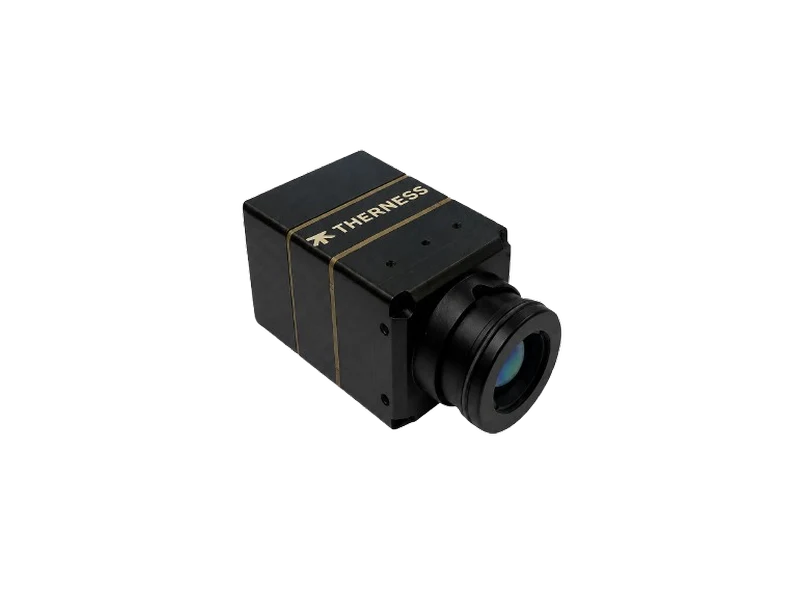
The IR-S is purpose-built for installations where the camera becomes part of the machine—tight envelopes, repeatable positioning, and stable thermal capture.
- Compact square housing for easy mechanical integration
- Designed for permanent installation in industrial cells
- Stable geometry for repeatability across shifts and recipes
Best fit
Optimized for additive manufacturing and robotic applications where space and mounting constraints eliminate classic cylindrical form factors.
- WAAM cells and robotic heads
- DED and robotic additive manufacturing
- Multi-sensor setups (thermal + vision + metrology)
Buy thermographic capture for embedded welding systems
Choose HeatCam IR-S for a compact, permanently integrated thermal camera in WAAM cells, DED systems, robotic heads, and multi-sensor welding setups where mounting space, stable geometry, and repeatable acquisition matter.
Configure around the cell
IR-S uses manual focus for fixed-standoff installations. Brackets and enclosures support robotic heads and cells, while cable routing and strain relief address moving axes. Lens and interface options are configured with your team for the installation.
Discuss analysis only when it belongs in scope
IR-S provides network and protocol options for logging and automation, data export for QMS/MES pipelines, and synchronization with robots and multi-sensor stacks. If defect analysis is needed, ask how HeatCore AI fits the workflow.
Use the thermal-monitoring ROI guide to structure the business case. If the inspection method requires controlled excitation, see pulsed and lock-in inspection options.
Same Therness thermal performance, new mechanical freedom
The HeatCam-IR-S keeps Therness thermal accuracy while giving integrators a compact, rugged square body designed for embedded systems.
Compact square housing
Easy to fixture on robot wrists, heads, and machine frames.
Continuous industrial operation
Designed for long runs, stable mounting, and repeatable acquisition.
WAAM / DED ready
Intended for robotic additive manufacturing cells where integration is as important as imaging.
Integration-first design
Built to coexist with other sensors when mechanical space is limited.
An embedded thermal channel for industrial machines
The same integration qualities that suit WAAM cells apply to other machines.
The qualities that make IR-S fit WAAM cells — a compact square housing for tight, permanent integration, manual focus for fixed standoffs, LWIR measurement calibrated up to 1500 °C, and coexistence with vision and metrology sensors — apply wherever a machine needs a permanently embedded thermal channel, with data export for QMS/MES pipelines and synchronization with robots and multi-sensor stacks.
For OEM and application-specific integrations, Therness engineers custom thermal imaging solutions around cameras like IR-S; for plant-level surveys with delivered findings, see industrial thermography inspection services.
Technical specifications
A compact, manual-focus LWIR thermal camera calibrated for weld temperatures up to 1500 °C. Lens and interface options are configured with your team for the installation.
Imaging & calibration
- LWIR thermal camera (longwave infrared, not SWIR)
- Temperature calibration up to 1500 °C
- Manual focus for fixed-standoff installations
Mechanical & mounting
- Compact square housing for tight, permanent integration
- Brackets/enclosures for robotic heads and cells
- Cable routing and strain relief for moving axes
Interfaces & integration
- Network and protocol options for logging/automation
- Data export for QMS/MES pipelines
- Sync with robots and multi-sensor stacks
Explore related cameras and applications
See the cylindrical alternative and where embedded thermography fits in additive and weld monitoring.
Frequently asked questions
How is HeatCam IR-S different from a visible-light arc-visualization camera?
Unlike visible-light cameras that just show the weld pool, HeatCam IR-S is a thermographic welding camera that measures the weld's infrared thermal signature, enabling AI defect detection and ISO 5817 grading.
What sensor technology does HeatCam IR-S use?
It is an LWIR thermal camera (longwave infrared, not SWIR) with manual focus for fixed-standoff installations and temperature calibration up to 1500 °C.
What applications is HeatCam IR-S designed for?
It is optimized for additive manufacturing and robotic applications where space and mounting constraints rule out classic cylindrical form factors, including WAAM cells, robotic heads, DED, and multi-sensor setups that combine thermal, vision, and metrology.
Why does HeatCam IR-S use a compact square housing?
The compact square housing is purpose-built for tight, permanent integration on robot wrists, heads, and machine frames, with brackets and enclosures for robotic cells plus cable routing and strain relief for moving axes.
How does HeatCam IR-S integrate with quality and automation systems?
It offers network and protocol options for logging and automation, data export for QMS/MES pipelines, and synchronization with robots and multi-sensor stacks, and it works with HeatCore AI for defect analysis.
What should I provide when requesting an embedded IR-S configuration?
Describe the fixed standoff, mounting location, moving-axis cable routing, and any robot or multi-sensor synchronization needs. HeatCam IR-S has manual focus for fixed-standoff installations, brackets and enclosures for robotic heads and cells, plus cable routing and strain relief for moving axes.
When should I discuss HeatCore AI with an IR-S purchase?
Discuss HeatCore AI when defect analysis is part of the planned workflow. HeatCam IR-S also offers network and protocol options for logging and automation, data export for QMS/MES pipelines, and synchronization with robots and multi-sensor stacks.
How does IR-S relate to active thermography?
HeatCam IR-S is described here as an LWIR thermographic welding camera for embedded weld monitoring. If the inspection project requires controlled excitation, review active thermography NDT and discuss the required setup with the team.
Scope HeatCam IR-S for your line
Send the joint, the process and the cell constraints. A Therness engineer replies within one business day with a deployment path, not a sales deck.
