How Infrared Thermography Works During Welding
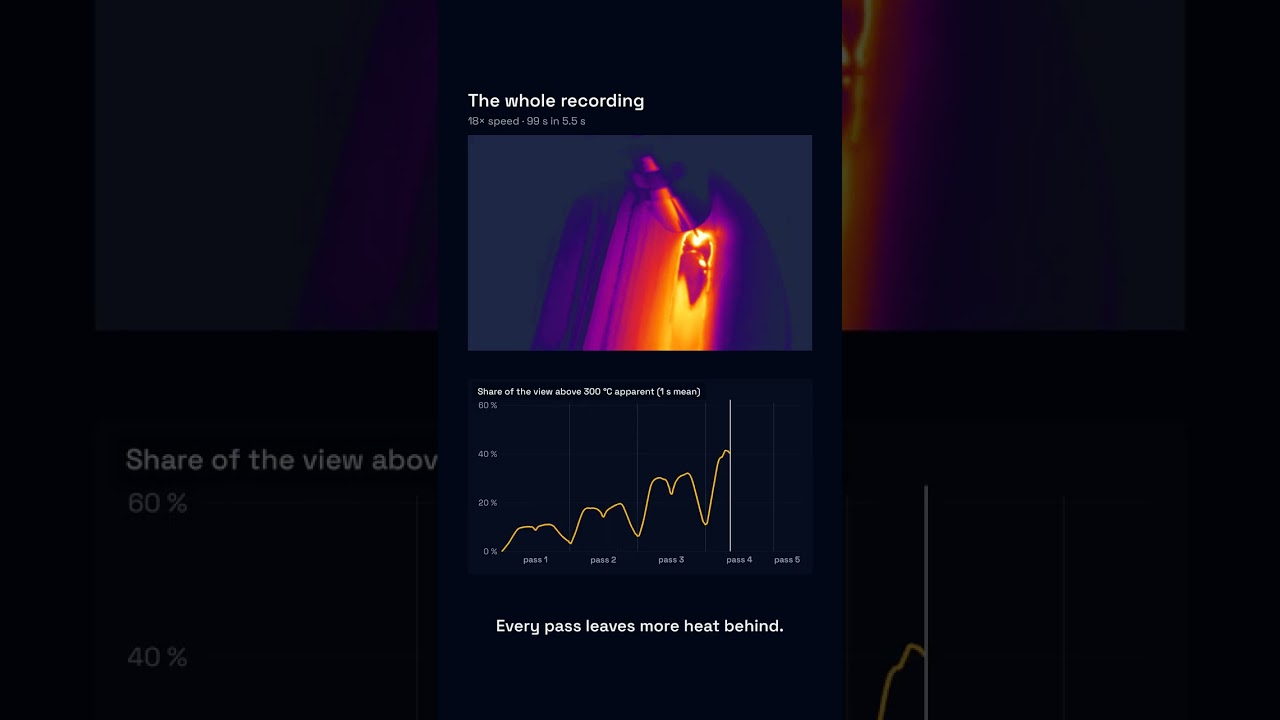
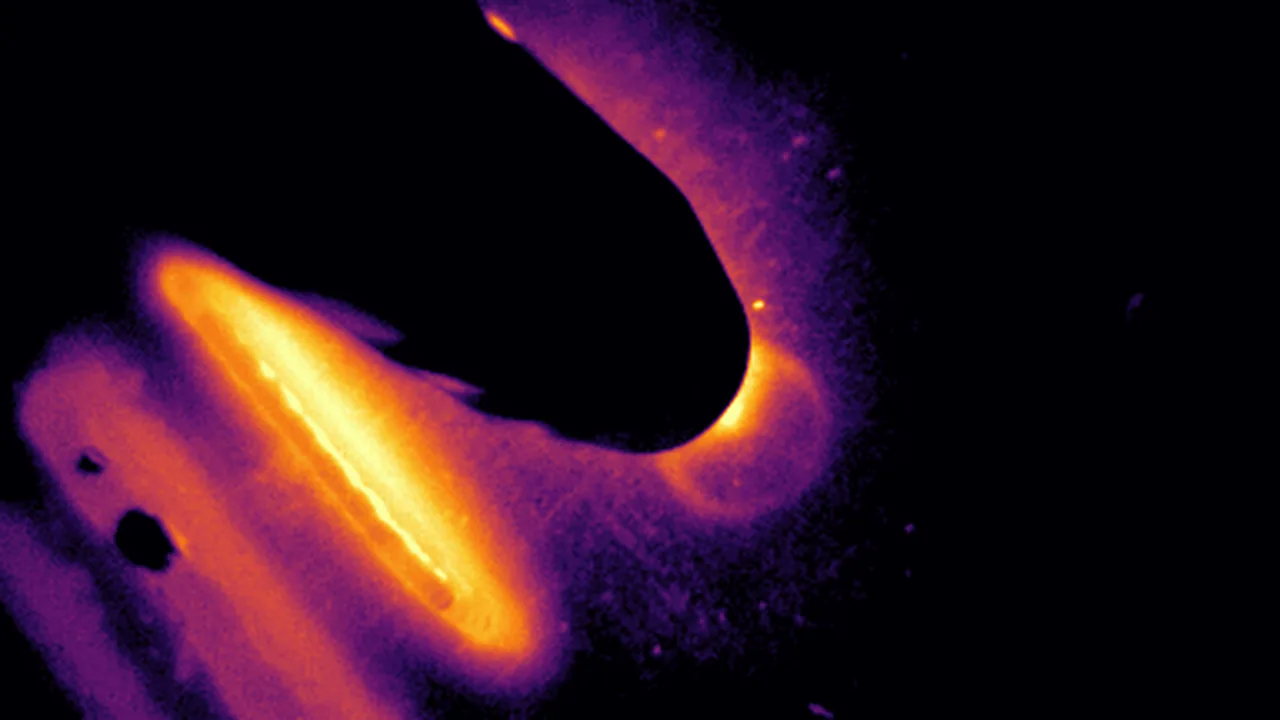
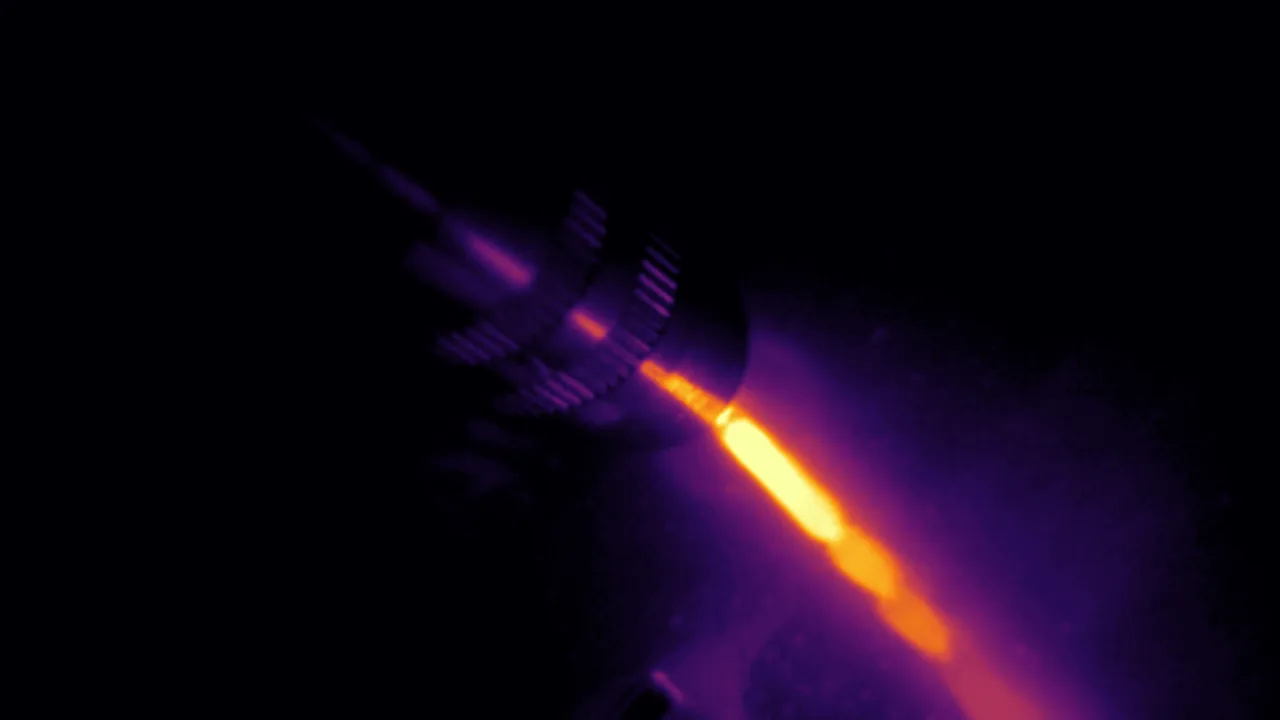
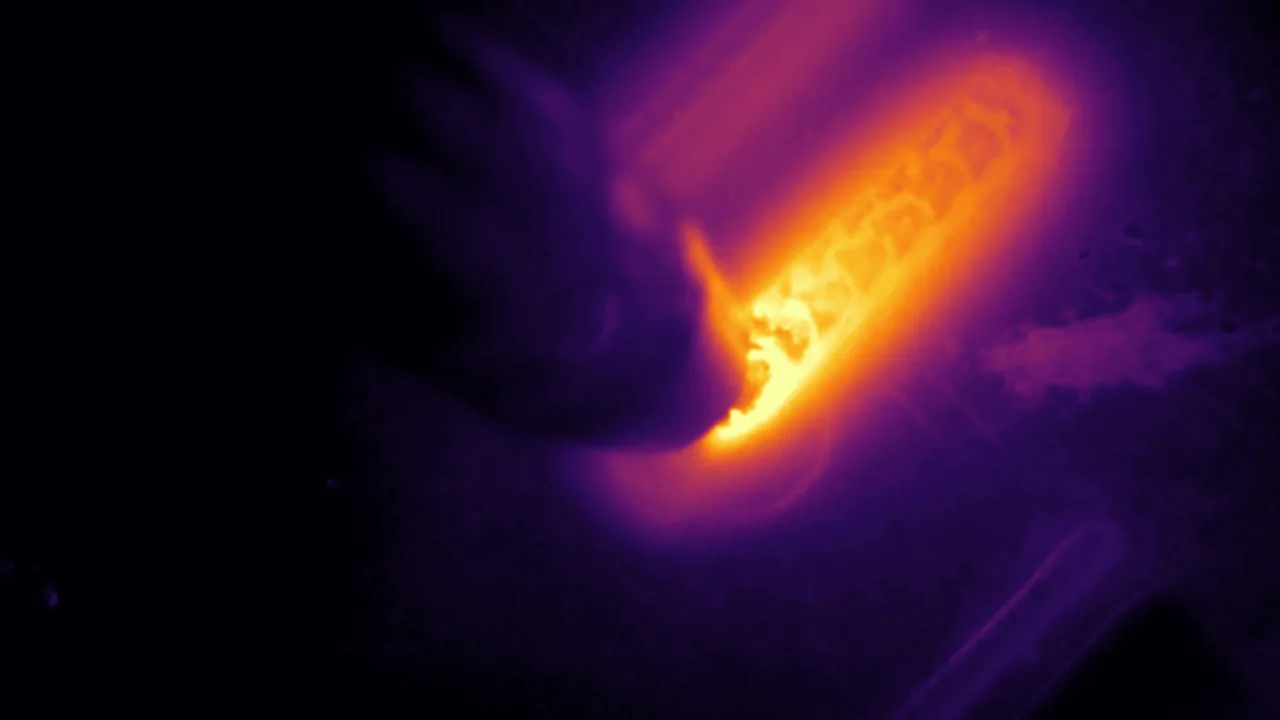
Infrared thermography in welding converts infrared radiation from the weld pool and heat-affected zone (HAZ) into temperature maps. Using an AI weld monitoring camera such as HeatCore AI, frames arrive at hundreds of frames per second. This allowing algorithms to track weld pool dynamics, toe cooling, and HAZ width in real time, detecting defects like porosity and lack of fusion as they happen.
Selecting the spectral band is foundational. Many metallic welds are captured in the mid‑wave infrared (MWIR, ~3–5 μm) where high-temperature scenes offer better signal-to-noise and some filters can attenuate arc glow; others use long‑wave infrared (LWIR, ~7.5–14 μm) with rugged uncooled detectors but lower dynamic range at very high temperatures. For arc processes, aim for fast exposure control, high well depth, and frame rates in the 200–1000 fps range so short-lived events aren’t missed. Watch real-time thermal imaging of a live weld to see these high-frame-rate captures in practice.
Accurate temperature requires handling emissivity (ε). Steel emissivity can vary from ~0.3 on clean, shiny surfaces to >0.9 on oxidized or coated surfaces. Angle to the surface and environmental reflections bias readings. Practical mitigations include using high‑ε coatings where allowed, maintaining a consistent viewing geometry, and calibrating with blackbody or thermocouple references during setup.
Thermal imaging for weld inspection: what it sees and what it does not
Thermal imaging is used around welds in two different ways, and they answer different questions.
| During welding (passive) | After welding (active) | |
|---|---|---|
| Heat source | The weld itself | A lamp, laser or induction pulse applied to the finished part |
| What is recorded | Heat distribution and cooling of every seam as it is made | How an applied heat pulse flows through the joint |
| What it indicates | The process left its normal pattern: a cold start, a narrow heat field, slow or fast cooling | A near-surface discontinuity that disturbs the heat flow |
| What it does not do | Size or accept a defect inside the weld | See deep into thick sections |
Neither replaces the inspection a code or a contract requires. A thermal record made during welding is process evidence: it shows that a seam was made like the good ones, or where and when it was not, so that the required inspection can be directed at the right place. Acceptance still follows the method and the quality level in the specification.
In practice the choice follows the question. If you need to know that every seam ran inside its normal thermal pattern, a welding camera on the cell is the tool, and the rest of this guide covers that case. If you need to examine a finished joint for near-surface flaws without contact, look at active thermography.
Thermal Signatures of Common Weld Defects (Porosity, Lack of Fusion, Cracks)
| defect | thermal signature | typical trigger |
|---|---|---|
| lack of fusion | cool-edge band + delayed cooling at toe | low heat input / high travel speed |
| porosity | speckled hot spots during solidification | contamination / shielding gas issues |
| cracks | fast local cooldown + linear discontinuity | high restraint / hydrogen |
Camera, Optics, and Emissivity: Choosing the Right Thermal Setup
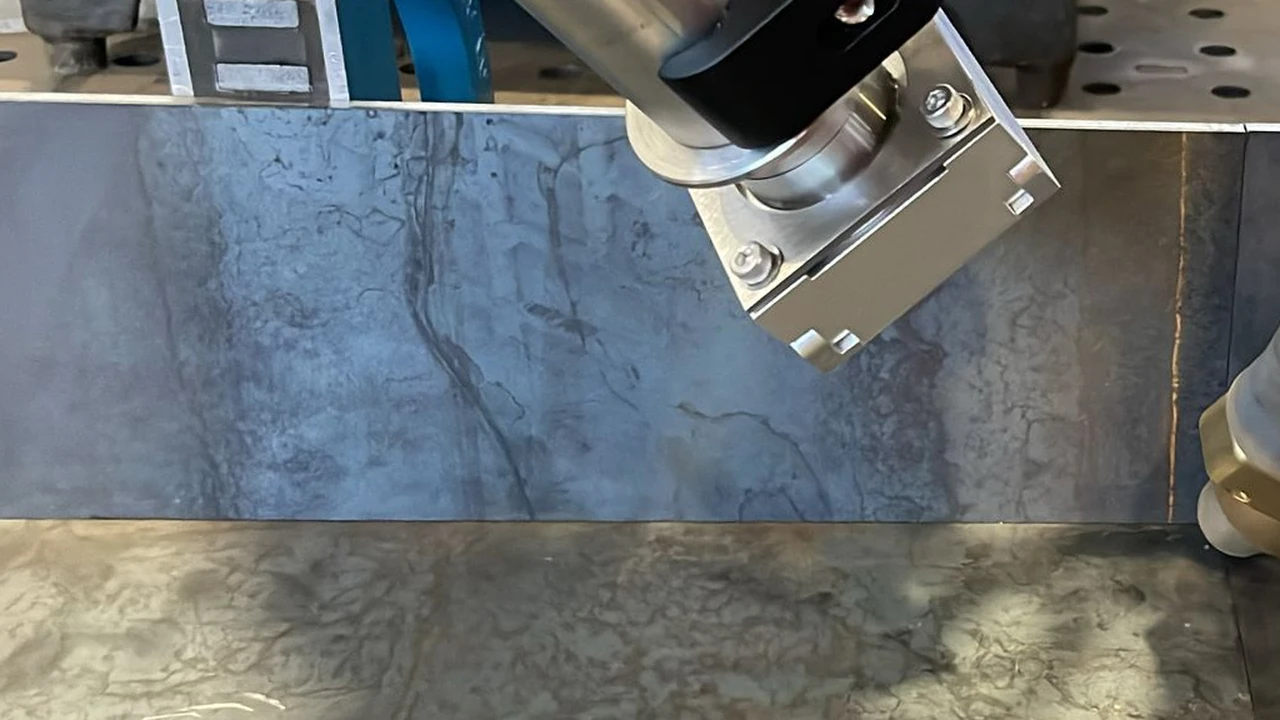
Choose detectors and lenses to match the working distance and expected weld geometry. Shorter focal lengths cover wider beads; telephoto optics help on narrow grooves or robotic cells with standoff. Use narrow‑band or neutral density filters when necessary to avoid saturation near the arc. Fixed mounts with vibration damping preserve calibration and reduce motion blur at high frame rates. Compare the Therness monitoring products to match a detector and lens to your working distance and weld geometry.
Define emissivity values per material and surface condition in the procedure, and adjust when switching materials, wire, shielding gas, or surface prep. Document angles, standoff, aperture, focus, and environmental shielding (air knives, purge) so results are repeatable across shifts and stations.
Real‑Time Thresholds and Alarms: Turning Pixels Into Quality Rules
Translate process knowledge into measurable rules: minimum/maximum toe cooldown rate, HAZ width bounds, pool eccentricity limits, or t8/5 windows derived from cooling curves. Implement hysteresis and debounce windows to reduce nuisance alarms and couple them with line speed and motion status to avoid false triggers during stops. A real-time weld monitoring system applies these quality rules automatically on every seam.
Every alarm should be tied to a unique joint or segment ID, with timestamps, operator and WPS references. Store snapshots or short clips before and after events to aid root‑cause analysis. Review alarm statistics weekly to tune thresholds and spot drifts (e.g., fouled optics or shielding gas issues).
Integrating Thermography With WPS/PQR and Quality Systems
Link each run to its WPS and PQR variables (current, voltage, travel speed, preheat/interpass), and to welder/operator qualifications. Persist thermal metrics with part IDs, lot/batch, workstation, and revision. Export acceptance summaries and evidence into QMS/MES so NCRs and concessions can reference the same record set.
On multi‑cell lines, centralize health monitoring: track camera temperature, focus metrics, lens contamination indices, and data latency. Use APIs/webhooks to propagate acceptance status downstream (mark‑for‑inspection, hold‑for‑review) and to notify supervisors when trends breach control limits.
Acceptance Criteria and Standards Mapping (ISO 5817, EN 17637, API 1104)
Infrared thermography is best positioned as process monitoring and ISO 17635 evidence generation. Acceptance decisions typically follow established standards. Map thermal indicators to acceptance levels in ISO 5817 (B/C/D) only after correlation with reference inspections (e.g., VT per EN 17637, and where required UT/RT/PAUT). ISO 17635 provides general rules for NDT of welds; API 1104 governs pipeline welds—always follow the governing code and client specifications. Therness the HeatCore QMS workflow automates this mapping for every seam.
Document your validation: sampling plans, coverage, correlations against conventional NDT and destructive tests. Keep limits conservative at first and adjust under Level 3 oversight once evidence supports tighter thresholds.
Limitations and When to Combine With UT/RT/PAUT
Thermography excels at detecting process anomalies and surface/near‑surface cues. For volumetric acceptance or high consequence classes, pair with UT/RT/PAUT to meet the code. Sensitivity can be limited by reflections, emissivity uncertainty, occlusions, or constrained viewing geometry. Mitigate with camera placement, surface prep, coatings where permissible, and frequent focus/cleaning checks.
Adopt a layered approach: real‑time thermal monitoring to prevent defects from forming, then targeted conventional NDT for final acceptance where required. For subsurface defect inspection using controlled thermal excitation, see our guide to active thermography for weld inspection.
ai defect detection: thermal vs vision vs acoustic
·
standards & traceability with thermography
·
active thermography: subsurface defect detection
·
heat input & cooling rates (t8/5)
·
preheat & interpass temperature monitoring (ISO 13916)
References
- ISO 5817 — Welding — Fusion‑welded joints — Quality levels for imperfections
- EN 17637 — Non‑destructive testing of welds — Visual testing of fusion‑welded joints
- ISO 17635 — Non‑destructive testing of welds — General rules for metallic materials
- API 1104 — Welding of Pipelines and Related Facilities
- TWI Knowledge: Heat input and cooling rate (t8/5) overviews
Note: Standards are paywalled; consult official texts for definitive requirements.
Therness solution: Welding camera — Thermal and high-speed imaging that watches the arc, the pool and the cooling seam while the weld is made.
Related Video