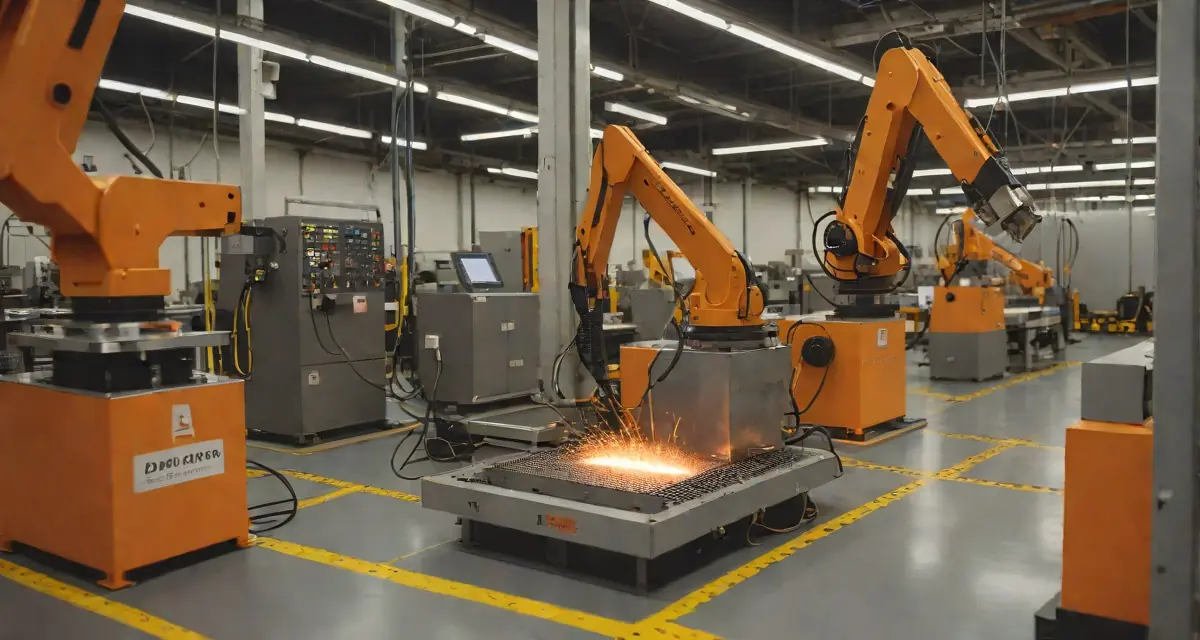
Incomplete penetration represents one of the most critical yet difficult-to-detect weld defects in structural steel fabrication, pressure vessel manufacturing, and pipeline construction. Traditional inspection methods often catch these defects too late—after welding completion, when repair costs escalate exponentially. Weld penetration depth control through real-time thermal monitoring offers a proactive solution, enabling fabricators to ensure complete through-throat fusion during the welding process itself.
This technical guide examines how infrared thermography provides continuous penetration monitoring, why through-throat consistency matters for code compliance, and practical implementation strategies for welding engineers and quality managers.
Understanding Weld Penetration Depth Requirements
What Constitutes Complete Penetration?
Complete penetration (CP) welds extend fusion through the entire joint thickness, from the face side to the root side. For butt joints in structural steel applications, this means the weld metal fully consumes the joint preparation depth including any backing bar or root opening.
Partial penetration (PP) welds, by contrast, intentionally leave unfused material at the root. While acceptable in specific applications with calculated throat dimensions, partial penetration becomes problematic when specifications require complete joint fusion. According to AWS D1.1 Structural Welding Code, complete penetration requirements apply to:
- Tension splices in primary structural members
- Column splices in multi-story construction
- Moment connection flanges
- Cyclically loaded connections
The Economics of Incomplete Penetration Defects
When incomplete penetration escapes detection during welding, the consequences compound through the production workflow:
- Immediate rework: Cutting, grinding, and re-welding adds 30–60 minutes per defect
- Radiographic repair cycles: RT repair rates above 5% trigger contractual penalties on many projects
- Structural liability: Undetected root defects in critical connections pose catastrophic failure risks
- Schedule impact: Delayed releases cascade through downstream fabrication and erection sequences
A fabrication shop processing 500 meters of groove welds weekly with a 3% incomplete penetration rate faces approximately 15 repair events. At 45 minutes average repair time, this consumes over 11 labor hours weekly—nearly 30% of a single welding station’s productive capacity.
Thermal Signatures Reveal Penetration Dynamics
The Physics of Through-Throat Heat Flow
Weld penetration depth directly correlates with thermal energy transfer through the joint. When an arc impinges on the base metal, heat conducts downward through the material thickness. The depth of this thermal excursion indicates how far fusion extends—you can watch real-time thermal imaging of a live weld to see these gradients form.
Key thermal observations for penetration assessment include:
| Thermal Indicator | Complete Penetration Signature | Incomplete Penetration Signature |
|---|---|---|
| Root-side temperature | 800–1200°C visible thermal glow | <400°C (cold root) |
| Face-side thermal distribution | Uniform elliptical pattern | Concentrated near-surface pooling |
| Transient cooling rate | Consistent through-throat | Gradient discontinuity at partial fusion depth |
| Backing bar temperature | 600–900°C for steel | <200°C for ineffective penetration |
ISO 13916:2021 provides guidelines for preheating and interpass temperature measurement, but the standard’s principles extend logically to penetration monitoring through thermal signature analysis.
Thermal Camera Positioning for Penetration Validation
Effective penetration monitoring requires strategic sensor placement:
Single-sided access applications: Position thermal cameras at 45–60° angles to capture both the weld pool surface and adjacent heat-affected zone. Surface temperature gradients approaching 1500°C within 15mm of the weld centerline typically indicate adequate energy input for full penetration in 12mm steel sections.
Root access configurations: When back-gouging or double-sided welding permits, direct thermal observation of the root pass provides unambiguous penetration confirmation. Root-side temperatures below 500°C generally indicate insufficient fusion depth.
Through-thickness thermal modeling: Advanced systems correlate face-side thermal patterns with predicted root conditions using physics-based heat transfer models, enabling penetration inference even without direct root visibility.
Real-Time Process Adjustment Based on Thermal Feedback
Current and Travel Speed Modulation
Thermal monitoring enables closed-loop control of welding parameters to maintain target penetration. Edge analytics units such as HeatCore AI run this loop continuously: when real-time thermal analysis detects cooling trends inconsistent with required fusion depth, the system can automatically:
- Increase welding current (within WPS limits) to elevate heat input and extend penetration
- Reduce travel speed to extend thermal exposure time through the joint thickness
- Adjust arc characteristics through waveform control on advanced power sources
- Trigger operator alerts when manual intervention becomes necessary
This feedback loop proves particularly valuable for heat sink variations caused by:
- Changing mass conditions (near plate edges vs. center sections)
- Fit-up variations affecting joint geometry
- Ambient temperature fluctuations in uncontrolled environments
Root Pass Monitoring in Multi-Pass Welding
Multi-pass welding sequences present unique penetration challenges. The root pass establishes the foundation for all subsequent layers—defects here become buried and potentially undetectable without destructive examination.
Thermal monitoring during root pass deposition provides immediate confirmation of:
- Root opening bridging without excessive collapse
- Adequate penetration into backing bars or ceramic backing
- Consistent bead geometry for subsequent fill passes
Many welding engineers specifically target our multi-pass welding thermal monitoring capabilities for pressure vessel and heavy structural applications where root pass integrity determines overall joint reliability.
Industry-Specific Penetration Requirements
Pressure Vessel Fabrication (ASME Section VIII)
Pressure vessel welds operating under cyclic loading or at elevated pressures demand complete penetration for fatigue resistance. ASME Section VIII Division 1 specifies full penetration for:
- Category A joints (longitudinal shell seams)
- Category B joints (circumferential shell seams) when design stress ratios exceed defined thresholds
- Nozzle attachment welds subject to pressure-induced stress concentrations
Thermal monitoring during pressure vessel welding provides documentation of adequate penetration for quality dossier requirements requested by Authorized Inspectors.
Pipeline Construction (API 1104)
Pipeline girth welds experience complex stress states from internal pressure, thermal expansion, and soil movement. API 1104 acceptance criteria explicitly prohibit lack of penetration exceeding specified limits based on weld thickness.
For transmission pipelines, incomplete penetration defects concentrate stress and serve as crack initiation sites under cyclic pressure loading. Our pipe welding monitoring solutions leverage thermal imaging to ensure complete fusion through the pipe wall, particularly critical for high-pressure gas transmission applications.
Structural Steel (EN 1090 Execution Classes)
EN 1090 Execution Classes 3 and 4 (highest consequence classes) require extensive weld inspection including volumetric examination of complete penetration joints. The standard’s correlation between execution class, weld quality level, and inspection intensity makes pre-emptive defect prevention economically essential.
Thermal monitoring supports EN 1090 compliance documentation by providing continuous process evidence, supplementing post-weld inspection with preventive process control.
Integration with Existing Quality Systems
Welding Procedure Qualification Records
When qualifying welding procedures to ISO 15614-1 or ASME Section IX, penetration validation traditionally requires destructive macro-etch examination. Thermal monitoring during procedure qualification provides:
- Correlation between thermal signatures and verified macro-etch results
- Documentation of process parameter windows reliably producing target penetration
- Statistical basis for production process control limits
Once qualified, these thermal signatures enable non-destructive penetration verification during production welding without repeated destructive testing.
Statistical Process Control Implementation
Penetration depth data collected through thermal monitoring integrates naturally into statistical process control (SPC) frameworks. Control charts tracking thermal indicators provide early warning of process drift before non-conforming welds occur.
Our SPC implementation for welding applications typically tracks:
- Maximum thermal excursion (x̄ and R charts)
- Penetration depth proxy measurements (calculated from thermal models, Cpk monitoring)
- Process capability indices demonstrating sustained penetration consistency
Technical Implementation Roadmap
Phase 1: Baseline Thermal Characterization
Before implementing closed-loop control, characterize thermal signatures for your specific joint configurations:
- Configure test plates representing production joint geometries
- Establish WPS-compliant parameter ranges
- Correlate thermal signatures with macro-etch verification
- Document thermal windows corresponding to acceptable penetration
This baseline typically requires 20–30 test welds across parameter variations but establishes the foundation for production monitoring reliability.
Phase 2: Real-Time Monitoring Deployment
With validated thermal signatures, deploy monitoring on production welding:
- Position thermal cameras for optimal joint visibility
- Configure alarm thresholds based on baseline data
- Enable operator feedback displays for immediate awareness
- Begin data logging for process capability analysis
Phase 3: Closed-Loop Control Integration
Advanced implementations integrate thermal feedback directly with welding power sources:
- Program parameter adjustment triggers based on thermal thresholds
- Implement ramp rates preventing abrupt parameter changes
- Establish safety limits preventing WPS violations
- Document automation for procedure revision requirements
ROI Considerations
Quantifying thermal monitoring returns requires balancing implementation costs against quality improvements:
| Cost Element | Typical Range | Quality Benefit | Typical Impact |
|---|---|---|---|
| Thermal camera hardware | €15,000–35,000 per station | Incomplete penetration reduction | 60–85% defect prevention |
| Software integration | €5,000–15,000 | Radiographic repair reduction | 40–70% RT repair rate improvement |
| Training and qualification | €3,000–8,000 | First-time pass rate increase | 15–30% improvement |
For a fabrication shop performing 1,000 radiographs annually with current 8% repair rates, reducing repairs to 3% saves approximately 50 RT repair cycles. At €400 average repair cost (labor, materials, re-inspection), annual savings exceed €20,000—not including schedule acceleration benefits.
Conclusion
Weld penetration depth control through thermal monitoring transforms quality assurance from reactive inspection to preventive process control. By tracking thermal signatures that correlate with through-throat fusion, fabricators ensure complete penetration during welding rather than discovering defects afterward.
The technology proves most valuable for applications where incomplete penetration consequences are severe: pressure vessels, structural moment connections, critical pipeline welds, and fatigue-loaded components. Implementation requires initial thermal characterization but delivers lasting returns through reduced repair rates, improved first-time acceptance, and documented process consistency.
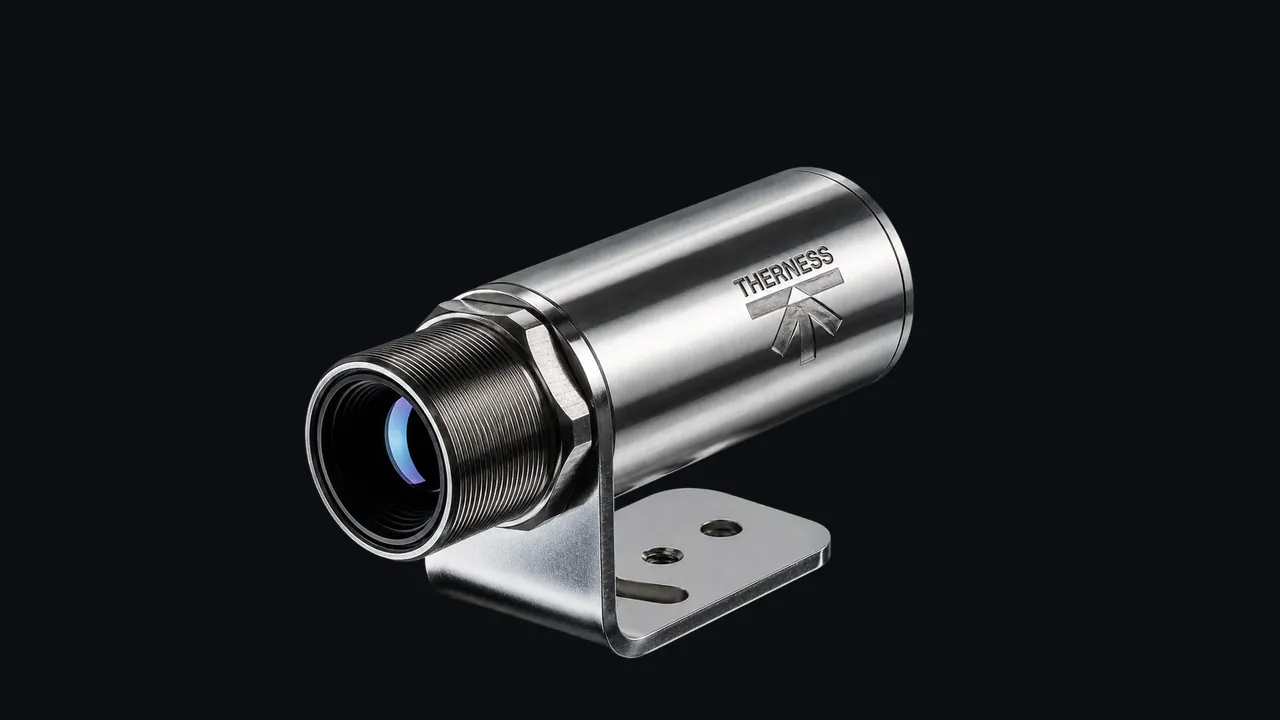
For fabrication shops navigating increasingly stringent quality requirements and competitive cost pressures, thermal-based penetration monitoring—available across the Therness product range—represents a measurable step toward zero-defect welding operations.
Verify full penetration while the weld is still hot
Book a demo to see thermal penetration monitoring flag incomplete fusion on your joints in real time—before it ever reaches radiography.
Book a demo See in-process penetration monitoringFurther Reading
- Multi-Pass Welding Thermal Monitoring
- Pipe Welding Monitoring: Orbital TIG Applications
- Pressure Vessel Welding Quality Monitoring
- SPC for Welding: Statistical Process Control with Thermography
- ISO 3834 and EN 1090 Traceability
External References
- AWS D1.1 Structural Welding Code – Steel: aws.org
- ISO 13916:2021 Weldings – Measurement of Preheating Temperature, Interpass Temperature and Preheat Maintenance Temperature: iso.org
- ISO 15614-1:2017 Specification and Qualification of Welding Procedures for Metallic Materials: iso.org
- ASME Boiler and Pressure Vessel Code, Section VIII: asme.org
- Weld Joint Classification (Wikipedia): en.wikipedia.org
Therness solution: Welding camera — Thermal and high-speed imaging that watches the arc, the pool and the cooling seam while the weld is made.