

Heat input calculator
Enter what the meters read. The tool returns arc energy and heat input in kJ/mm, kJ/cm and kJ/in, and compares them against a WPS limit if you give one.
Enter values to calculate.
- Heat input kJ/mm
- —
- Arc energy kJ/mm
- —
- Heat input kJ/cm
- —
- Heat input kJ/in
- —
- Arc energy kJ/in
- —
Arc energy is what the meters deliver; heat input applies the process thermal efficiency factor k. A WPS limits one or the other — check which before you compare a number to it. ASME IX and AWS D1.1 call the un-factored value heat input: read arc energy in kJ/in.
Welding heat input calculation is one of the most practical ways to connect weld procedure requirements with what actually happens on the shop floor. Most manufacturers already record voltage, current, and travel speed somewhere. The problem is that these values are often reviewed too late, in isolation, or not linked to the specific weld, operator, and production order that matter during an audit or root-cause investigation.
When heat input drifts outside the range expected by the Welding Procedure Specification, the consequences show up quickly: wider heat-affected zones, unstable penetration, excess distortion, reduced toughness, or inconsistent cooling behavior between operators, shifts, and welding cells. That is why manufacturers moving toward zero-defect workflows increasingly treat heat input as a live quality variable rather than a spreadsheet exercise done after production.
This guide explains how to calculate welding heat input, where the formula helps and where it does not, how it relates to standards and WPS compliance, and how real-time thermal monitoring turns heat input control into a measurable production discipline. If you are already standardising records, this article connects directly with our posts on welding procedure specification software, digital welding quality records, and welding traceability software with MES and ERP integration.
Heat input is not just a welding engineering calculation. It is a controllable process variable that can be tied to WPS limits, traceability records, and real-time operator feedback.
Heat input formula at a glance: arc energy, k and a worked example
Two quantities are often both called heat input. Arc energy is the electrical energy of the arc per millimetre of weld. Heat input is the share of it that enters the joint, so it carries the process thermal efficiency k. EN 1011-1:2009 defines k in clause 3.1 as the ratio of heat energy introduced into the weld to the electrical energy consumed by the arc, and deals with heat input in clause 8.7. The ISO report with the same title, ISO/TR 17671-1:2002 (Recommendations for welding of metallic materials — Part 1: General guidance for arc welding), was last reviewed and confirmed by ISO in 2016.
- Arc energy [kJ/mm] = (U × I × 60) / (v × 1000), with U in volts, I in amperes and v the travel speed in mm/min. With v in mm/s the same value is (U × I) / (v × 1000).
- Heat input [kJ/mm] = k × arc energy, with k taken for the welding process from EN 1011-1. The calculator at the top of this page returns both values.
- Travel speed v = length of the run ÷ arc time: 450 mm welded in 90 s is 5 mm/s, or 300 mm/min.
Worked example: 25 V, 220 A, 300 mm/min. Arc energy = (25 × 220 × 60) / (300 × 1000) = 1.10 kJ/mm, which is 27.9 kJ/in (× 25.4). Heat input is k × 1.10 kJ/mm.
When k matters: whenever two numbers are compared. A WPQR, a WPS or a customer specification may state either quantity, and for the same weld the two differ by the factor k, unless k is 1. Check which convention each document uses before calling a weld inside or outside its range. ISO/TS 8182:2026 sets requirements and recommendations for reporting arc-energy parameters in the WPQR and transferring them to the WPS.
What welding heat input actually means
In practical terms, heat input is the amount of energy delivered per unit length of weld. In Europe it is commonly expressed in kJ/mm. The standard engineering formula for arc welding is:
Heat input = k × (Voltage × Current × 60) / (1000 × Travel speed in mm/min)
The bracket without k is the arc energy; k is the thermal efficiency of the process (EN 1011-1:2009, 3.1). That formula gives welding engineers a comparable way to estimate how “hot” a process is running for a given joint. Higher heat input often means a larger heat-affected zone, slower cooling, and greater distortion risk. Lower heat input can reduce total thermal load, but it can also raise the risk of lack of fusion or excessively fast cooling in crack-sensitive steels.
The goal is not high or low heat input in isolation. The goal is to stay inside the window proven by procedure qualification and validated in production.
The formula is simple. The control problem is not.
The heat input equation is easy to write and surprisingly hard to govern consistently in live production.
A WPS may define target ranges for current, voltage, and travel speed. On paper that sounds controlled. In reality, heat input drift is common because operators vary travel speed, robot paths change as fixtures wear, and parameter logs are often reviewed after the part has already moved downstream.
A plant can have clean parameter logs and still produce inconsistent weld quality if the values are not tied to part identity, procedure revision, thermal behavior, and non-conformance workflow.
Why heat input matters for weld quality
Heat input affects quality because it changes the thermal history of the weld and surrounding base material.
1. Heat-affected zone size and properties
As heat input rises, the HAZ usually becomes wider. That changes grain growth, hardness distribution, and final toughness. On higher-strength steels, too much heat can degrade mechanical properties. On thin sections, it can also amplify warping and cosmetic rework.
2. Cooling rate and crack risk
Heat input is closely related to cooling behavior, although it is not the only factor. Material thickness, preheat, joint geometry, ambient conditions, and restraint all matter too. Still, if the process repeatedly runs colder or hotter than qualified, the cooling curve changes, and so does the probability of cold cracking, excessive hardness, or undesirable metallurgical transformation.
This is why heat input control should be considered alongside preheat and interpass temperature monitoring and hydrogen-induced cracking prevention, not as a separate documentation exercise.
3. Distortion and downstream fit-up issues
Excess thermal load creates shrinkage and residual stress. On structural fabrications, pressure parts, and multi-pass assemblies, small heat input deviations repeated across many welds can become measurable geometry problems. That translates directly into fixture corrections, rework, and schedule delay. Our guide on weld distortion monitoring and control explores this in more depth.
4. Procedure compliance and customer confidence
For many manufacturers, the commercial impact is just as important as the metallurgical one. If a customer complaint arrives months later, the supplier needs to show not only that a qualified procedure existed, but that the weld was actually produced inside the required operating window.
That is where heat input shifts from an engineering metric to a traceability asset.
The formula estimates — the joint decides
Calculated heat input only proves what the meters saw. Real-time thermal imaging shows how the joint actually behaved — thermal signature, drift, cooling behavior — while there is still time to react.
See the welding monitoring systemWhere standards fit into heat input control
Heat input is rarely managed in isolation. It sits inside a broader framework of welding procedure qualification, measurement discipline, and quality assurance.
- ISO 15614-1:2017, with Amendment 1:2019, defines how welding procedures are qualified by welding procedure tests for many arc and gas welding applications.
- ISO 13916:2025 specifies how preheating temperature, interpass temperature and preheat maintenance temperature are measured.
- ISO 3834-2:2021 defines comprehensive quality requirements for fusion welding of metallic materials.
- The AWS D1.1/D1.1M:2025 Structural Welding Code—Steel remains a key reference for structural fabrication workflows and heat-related procedure considerations.
These references do not all prescribe one universal “good” heat input number. Instead, they support a process where welding variables are qualified, measured, controlled, and documented appropriately.
That distinction matters. Good quality systems do not ask, “What is the best heat input?” They ask, “What heat input range has been validated for this joint, material, process, and acceptance requirement, and how do we prove we stayed inside it?”
Heat input versus real thermal behavior
One reason heat input gets misunderstood is that engineers treat it like a direct substitute for temperature measurement. It is not.
Heat input is a derived value based on electrical and travel parameters. It estimates energy per unit length. But two welds with similar calculated heat input can still behave differently if restraint, thermal mass, root gap, or torch positioning change.
That is why the strongest quality systems combine calculated heat input with direct thermal evidence. Real-time thermal monitoring — using welding camera systems at the cell — shows whether the joint is actually behaving as expected and helps catch unstable weld behavior before downstream inspection.
Use electrical process data to calculate heat input, then pair it with thermal imaging and digital traceability so the same weld record includes the qualified limits, actual parameter history, and observed thermal behavior.
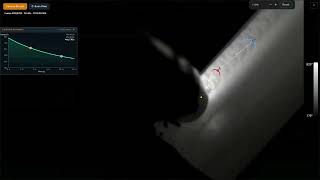
You can watch the full HeatCore cooling-time analysis to see how T8/5 is read straight from the thermal record.
A practical workflow for real-time heat input quality control
A realistic deployment does not start with a giant factory-wide overhaul. It starts with a single controlled workflow.
Step 1: define the procedure window
For the chosen weld family, document the approved parameter range from the WPS and any additional production rules used by the plant. This usually includes:
- process type,
- material and thickness range,
- current and voltage window,
- travel speed range,
- preheat or interpass limits,
- operator qualification requirements,
- and hold/review criteria if values drift.
This is the foundation for a welding procedure specification software workflow that does more than store PDFs.
Step 2: capture actual data per weld event
The next step is collecting real process values from the welding machine, robot controller, PLC, or edge gateway. Each weld event should be tagged to:
- part or serial number,
- production order,
- station or cell,
- operator or robot program,
- WPS revision,
- timestamp,
- and if possible pass number or weld ID.
Without this context, heat input becomes just another orphaned number in a historian.
Step 3: calculate live heat input and compare against expected range
Once current, voltage, and travel speed are available, the system calculates heat input continuously or per weld segment. This is how you turn heat input into a live monitored quality gate rather than a post-production report. The important part is not the arithmetic. The important part is the comparison logic:
- within range = continue,
- near limit = alert or review,
- out of range = hold, inspection trigger, or non-conformance workflow.
This is especially effective on repetitive production cells where variation should be low. If the same product family shows widening heat input spread across shifts, that is often an early warning for fixturing, consumables, training, or maintenance issues.
Step 4: add thermal verification
At this stage, thermal monitoring verifies whether the process behaves consistently with the calculated values. The HeatCore and HeatCam range provides the thermal hardware for this step. Getting it onto an existing line — camera placement, trigger logic, and calibration cadence — is covered in inline thermal inspection setup for welding lines. That creates a much stronger quality record than parameter logging alone. It also reduces false confidence caused by stable setpoints with unstable real weld behavior.
Step 5: store the record where QA can use it
The final step is moving beyond dashboards. Heat input records need to land in the systems used for release, traceability, CAPA, and audits. That usually means connecting them to the quality workflow described in our post on welding QMS software for ISO 3834, EN 1090, and ASME.
What good traceability looks like
A useful heat input record should let a quality manager answer five questions quickly: which part was affected, which WPS revision applied, what the expected process window was, what actually happened during the weld, and what decision the plant made when values drifted.
NIST’s work on digital thread and manufacturing data trustworthiness highlights the broader principle: traceability improves when process data, identifiers, and quality decisions stay linked across the lifecycle rather than being reconstructed manually after the fact. See NIST’s Digital Thread for Manufacturing project for the broader manufacturing context.
Where manufacturers usually struggle
In practice, heat input control projects stall for a few predictable reasons.
Many teams already log machine data, but the data is not contextualised. Some WPS documents do not list heat input explicitly, so plants miss it as a supervisory metric. And if review happens only after production, a controllable deviation turns into a containment problem.
Heat input calculation alone does not guarantee weld quality. It improves control and traceability, but quality still depends on joint prep, metallurgy, fit-up, consumables, operator execution, and inspection discipline.
Heat input control as a commercial advantage
For suppliers in automotive, structural steel, heavy fabrication, pressure equipment, and high-spec industrial manufacturing, stronger process evidence does more than reduce scrap. It can reduce manual recordkeeping time, narrow containment scope during complaints, speed root-cause analysis, and demonstrate stronger procedural discipline during audits.
In other words, heat input control is not just about compliance. It is also about trust.
Conclusion
Welding heat input calculation remains one of the most useful quality indicators in modern welding operations because it translates everyday process variables into a metric that engineering, quality, and production teams can all understand. But its full value only appears when the calculation is tied to procedure limits, thermal verification, and digital traceability.
If you only calculate heat input after production, you gain a report. If you calculate it in real time, compare it to the WPS, confirm thermal behavior, and attach the result to the weld record, you gain a quality control system.
That is the difference between documentation and prevention.
Turn heat input into a live quality gate
Therness helps manufacturers connect welding parameters, thermal monitoring, and audit-ready quality records so process drift is detected before it becomes scrap or rework.
Book a heat input demo See welding camera systems

![Welding WPS Software: Top Tools Compared [2025]](/assets/images/blog/welding-procedure-specification-software.webp)
