The welding industry is undergoing a significant transformation, driven by the relentless pursuit of higher quality, increased efficiency, and reduced costs. Traditional manual inspection methods, while still relevant, are increasingly being complemented or replaced by advanced monitoring technologies. At the forefront of this evolution is Agentic Thermal Monitoring Welding, a paradigm shift that integrates real-time thermal imaging with artificial intelligence to enable truly autonomous quality control in advanced manufacturing environments. This article delves into how these agentic systems are reshaping the landscape of robotic welding, paving the way for self-optimizing processes and unprecedented levels of precision.
The Evolution of Welding Quality Control
For decades, welding quality control relied heavily on human expertise and post-process non-destructive testing (NDT). While effective for detecting defects, these methods often occur after significant value has been added to a part, leading to costly rework or scrap. The advent of real-time monitoring systems marked a crucial step forward, allowing operators to observe the welding process as it happens. However, these systems still largely depended on human interpretation and intervention.
The next leap involved integrating basic automation and data logging, but true autonomy remained elusive. The vision for a fully autonomous welding cell, capable of self-diagnosis, self-correction, and continuous optimization, has been a long-standing goal. Agentic Thermal Monitoring represents a critical enabler for this vision, moving beyond mere data collection to intelligent decision-making at the edge.
What is Agentic Thermal Monitoring?
Agentic Thermal Monitoring for welding refers to a sophisticated system that leverages thermal cameras, artificial intelligence (AI), and machine learning (ML) to observe, analyze, and act upon real-time welding process data without continuous human oversight. Unlike conventional real-time monitoring, which primarily provides data visualization, agentic systems possess a degree of autonomy. They can:
- Perceive: Capture high-fidelity thermal data of the weld pool and surrounding heat-affected zone (HAZ).
- Analyze: Process this data using AI models to identify anomalies, predict potential defects, and assess process stability.
- Decide: Determine appropriate responses based on learned patterns and predefined quality parameters.
- Act: Trigger alerts, adjust welding parameters (via integration with robotic controllers), or initiate corrective actions in real-time.
This closed-loop feedback mechanism is what fundamentally differentiates agentic systems. They don’t just report problems; they actively participate in solving them, mimicking the cognitive processes of an expert human inspector and welding engineer combined.
Key Components of an Agentic System
A robust agentic thermal monitoring system is built upon several foundational technologies:
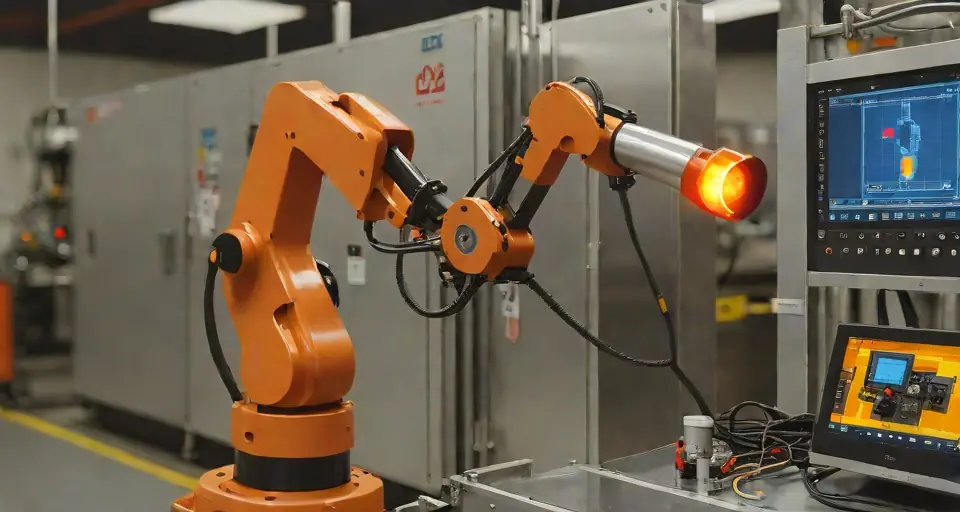
- High-Resolution Thermal Imaging: The core sensor component. High-speed, high-resolution thermal cameras capture minute temperature variations in the weld pool, offering critical insights into melt pool dynamics, heat input, and cooling rates. These insights are often invisible to the naked eye or even conventional vision systems.
- Advanced AI and Machine Learning: This is the “brain” of the agentic system. Deep learning neural networks are trained on vast datasets of thermal images, correlated with known weld quality outcomes. This allows the AI to recognize normal process signatures, detect deviations indicative of defects (like porosity, lack of fusion, or incorrect penetration), and even predict defect formation before it occurs. For a deeper dive into how AI enhances robotic welding, read our post on AI Predictive Maintenance in Robotic Welding.
- Closed-Loop Feedback: The ability to communicate findings back to the welding machine or robotic controller. If the AI detects a critical deviation, it can trigger an immediate adjustment to parameters such as travel speed, wire feed rate, or power, effectively correcting the process in-situ. This is a hallmark of truly autonomous control, as described by principles of closed-loop control on Wikipedia.
- Data Integration: Seamless communication with manufacturing execution systems (MES), quality management systems (QMS), and robotic cell controllers is paramount. Agentic systems generate a continuous stream of verifiable quality data, enabling comprehensive traceability and audit readiness. This integration is key to realizing the full benefits of Industry 4.0, as explored in our article on Welding Digital Twin and Quality Monitoring for Industry 4.0.
Benefits for Autonomous Manufacturing
The adoption of agentic thermal monitoring brings a multitude of benefits, driving manufacturers closer to fully autonomous, lights-out production:
Enhanced Defect Detection and Prevention
By continuously analyzing thermal signatures, agentic systems can identify process instabilities that precede defect formation. For example, an abnormal temperature fluctuation in the weld pool could indicate an impending porosity issue or insufficient penetration. The system can then alert an operator or automatically adjust parameters to prevent the defect, significantly reducing scrap rates and rework. Our HeatCore AI™ system provides a real-world example of how thermal AI enhances defect detection. The same intelligence drives our autonomous weld monitoring platform on the line.
Adaptive Process Optimization
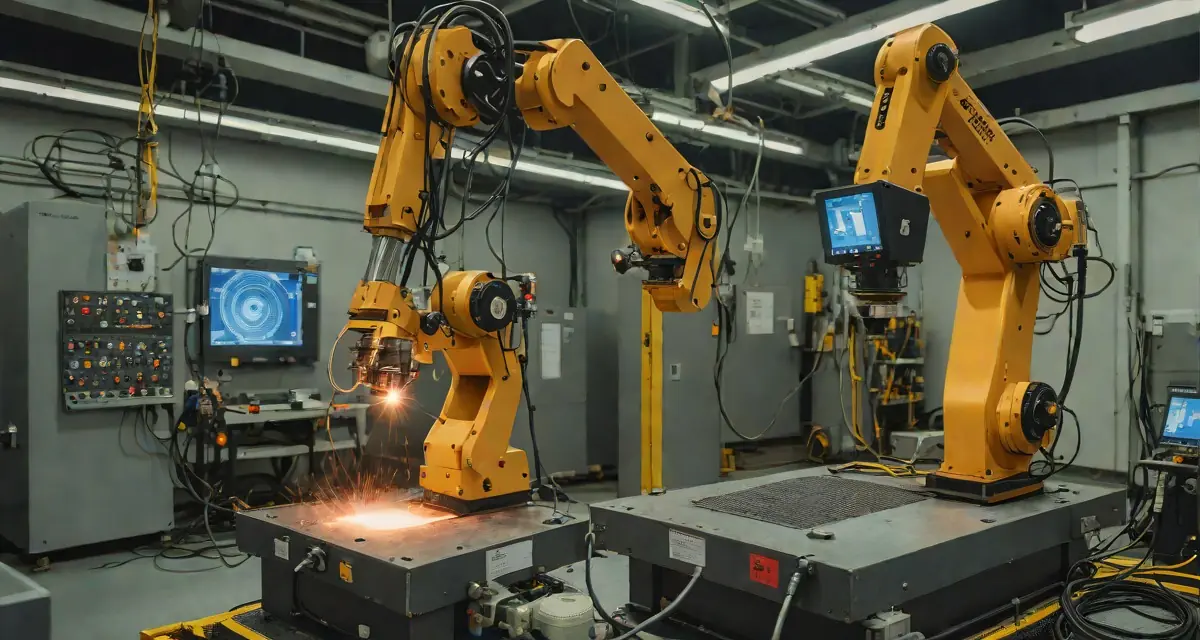
Unlike static welding programs, an agentic system can learn and adapt to minor variations in materials, fixturing, or environmental conditions. Through continuous monitoring and feedback, it can fine-tune welding parameters in real-time to maintain optimal quality and efficiency, even as conditions drift. This dynamic optimization ensures consistent weld quality across production runs, minimizing the need for manual recalibration. (Watch an AI weld-monitoring demo on a robotic cell.)
Reduced Human Intervention and Increased Throughput
With the system autonomously monitoring and correcting the process, human operators can focus on higher-value tasks, such as system oversight, maintenance, and process development. This shift not only increases overall factory throughput but also addresses the skilled labor shortage prevalent in the welding industry. The automation minimizes human error and fatigue, leading to more consistent, predictable results.
Comprehensive Traceability and Audit Readiness
Every weld monitored by an agentic system generates a rich dataset of thermal images, process parameters, AI analyses, and quality scores. This data forms an unassailable digital record for each part, providing comprehensive traceability from raw material to finished product. This level of documentation is invaluable for compliance with stringent quality standards like ISO 9001 and ISO 3834, facilitating rapid audits and root cause analysis.
Implementing Agentic Thermal Monitoring
Integrating agentic thermal monitoring into an existing manufacturing environment requires careful planning and a phased approach. You can see the monitoring products that make up an agentic cell before scoping the rollout. Key considerations include:
- Data Infrastructure: Ensuring robust network capabilities for data transfer and storage.
- Robotic Integration: Establishing secure and reliable communication protocols between the monitoring system and robotic controllers.
- AI Model Training and Validation: Initial training of AI models using historical data and ongoing validation with real-world production.
- Operator Training: Educating personnel on how to interact with and oversee autonomous systems.
Challenges and Solutions
While the benefits are clear, implementing agentic systems presents challenges. The complexity of AI model training, the need for deep integration with existing infrastructure, and the initial investment can be significant. However, these are often outweighed by long-term gains in quality, efficiency, and competitive advantage. Solutions involve leveraging expert partners, modular system designs, and incremental rollout strategies to manage complexity.
The Future of Welding Quality with Agentic Systems
The trajectory of manufacturing points towards increasing autonomy, and welding is no exception. Agentic Thermal Monitoring is not just an incremental improvement; it’s a foundational technology for the next generation of welding processes. Imagine factories where welding cells are self-aware, self-optimizing, and capable of producing zero-defect welds with minimal human intervention. These systems will not only ensure superior product quality but also unlock new possibilities for customized manufacturing, rapid prototyping, and efficient resource utilization.
As AI models become more sophisticated and thermal imaging technology advances, agentic systems will gain even greater predictive capabilities and finer control over complex welding processes, pushing the boundaries of what’s possible in automated manufacturing.
Conclusion
Agentic Thermal Monitoring for welding represents a crucial step towards the fully autonomous factory. By combining the unparalleled insight of thermal imaging with the intelligent decision-making power of AI, these systems offer a path to consistent, high-quality welds, reduced costs, and enhanced productivity. For manufacturers aiming to stay competitive in a rapidly evolving industrial landscape, embracing this agentic approach to quality control is not just an option, but a necessity.
Therness solution: Welding camera — Thermal and high-speed imaging that watches the arc, the pool and the cooling seam while the weld is made.