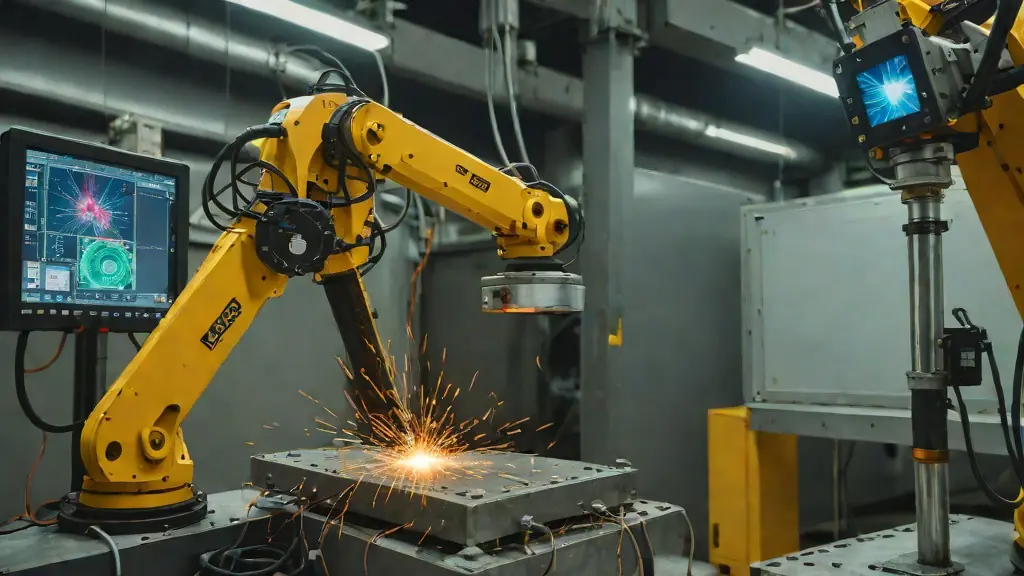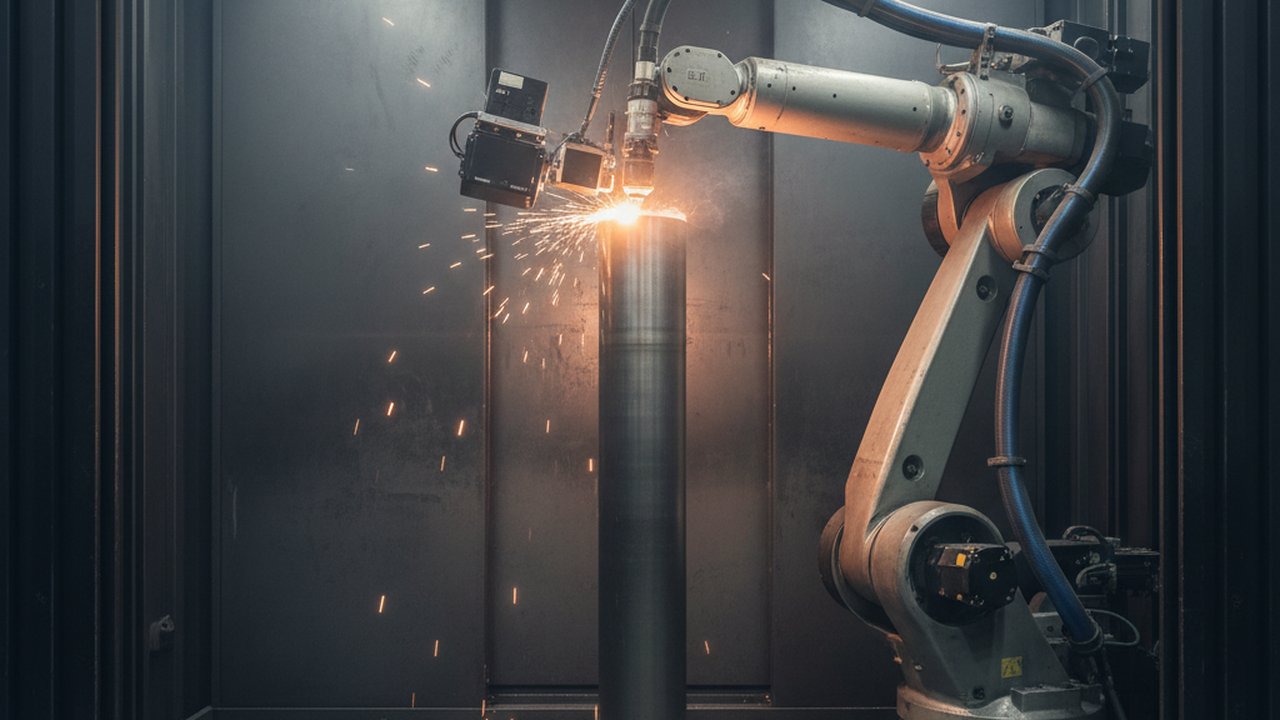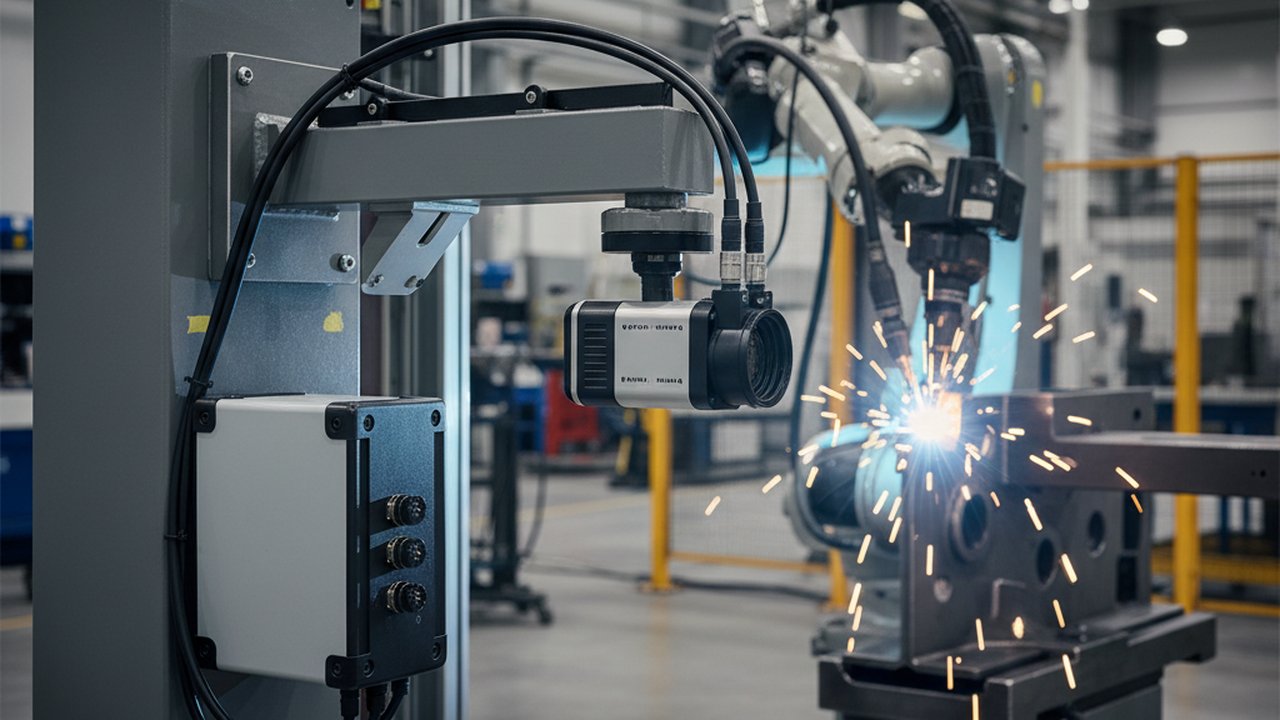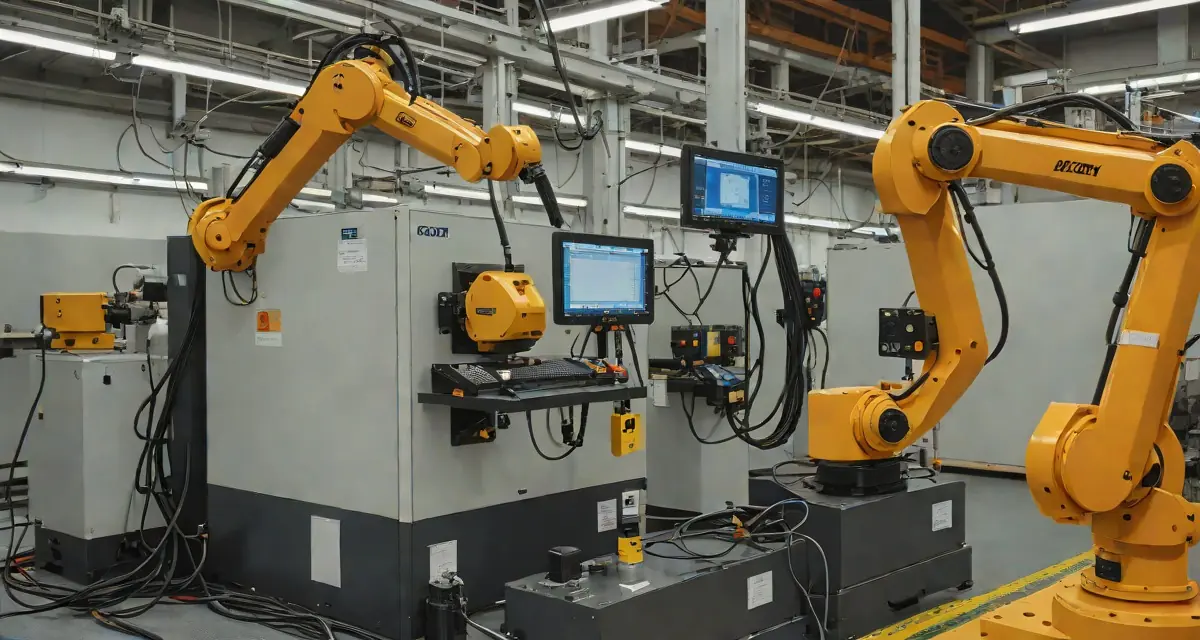
HeatCore AI is Therness’s flagship thermal weld monitoring system that brings real-time, AI-driven defect detection to robotic welding cells. By combining a high-speed microbolometer thermal camera with edge-computing deep learning, HeatCore AI identifies porosity, lack of fusion, overheating, and other critical weld defects in under 100 milliseconds-well before the part moves to downstream processes. The result is a closed-loop quality system that reduces scrap, enables ISO 3834/ISO 17635 evidence generation, and integrates seamlessly with MES, the HeatCore QMS workflow, and PLC controllers without adding cycle time. Full specifications live on the HeatCore AI product page.
Why Real-Time Thermal Monitoring Matters
Welding defects such as porosity and lack of fusion are often invisible to the naked eye and can only be caught after costly machining, painting, or assembly. Traditional post-process inspection (visual, ultrasonic, radiographic) adds delay, increases handling, and fails to prevent defective parts from entering the value stream. HeatCore AI shifts quality left: defects are flagged at the source, allowing immediate corrective action-whether that is a robot-path adjustment, a weld-parameter tweak, or an automatic reject signal.
Manufacturers using real-time AI-driven inspection report scrap reductions of 30-50 % and rework cost savings exceeding $18 M per 1,000 robots annually【ca575bada66a2422†L13-L16】.
Core Technology: Thermal Imaging + Edge AI
640×512 Microbolometer Array
At the heart of HeatCore AI is a 640 × 512 microbolometer focal plane array with a 12 µm pixel pitch. This sensor captures radiometric thermal data across a -40 °C to +2000 °C range with a noise-equivalent temperature difference (NETD) below 50 mK, enabling precise measurement of weld-pool temperature gradients, heat-affected zone (HAZ) width, and cooling rates.
The camera housing is arc-compensated and IP67-rated, designed to mount directly onto the robot flange or a fixed station near the weld point without requiring protective shrouds that would obstruct access.
Edge-Computing Deep Learning
All image processing happens on an embedded AI accelerator inside the HeatCore AI unit. Proprietary convolutional neural networks, trained on millions of labeled weld-pool thermograms, classify defects such as:
- Porosity (gas entrapment)
- Lack of fusion (incomplete melting at the joint interface)
- Overheating / burn-through
- Cracking initiation
- Excessive spatter
Inference latency is under 100 ms per frame, supporting real-time feedback at 60 FPS. Because processing is local, the system operates without cloud connectivity, ensuring deterministic performance and data sovereignty.
- Sensor: 640 × 512 microbolometer, 12 µm pitch
- Temperature range: -40 °C to +2000 °C
- Sensitivity: <50 mK NETD
- Frame rate: 60 FPS
- Housing: Arc-compensated, IP67
- AI accuracy: 99.2% for porosity, lack of fusion, overheating
- Decision time: <100 ms
- Connectivity: Modbus RTU/TCP, Ethernet/IP, OPC-UA, REST API, PLC function blocks
Integration with Manufacturing Systems
HeatCore AI speaks the languages of the factory floor. Standard industrial protocols allow it to plug into existing automation architectures:
- Modbus RTU/TCP - simple register-based alarm and status words
- Ethernet/IP - implicit/explicit messaging for high-speed I/O
- OPC-UA - information-model-based publishing of temperature timelines, pass/fail flags, and statistical process control (SPC) data
- REST API - OpenAPI 3.0-defined endpoints for configuration, results retrieval, and evidence pack generation
- PLC function blocks - pre-tested ladder-logic function blocks for Siemens, Rockwell, and Schneider controllers
Through these channels, HeatCore AI can:
- Trigger immediate robot-stop or rework commands on defect detection
- Stream temperature profiles to a manufacturing execution system (MES) for traceability
- Push structured inspection records to Therness the HeatCore QMS workflow (or any third-party QMS) for ISO 3834 audit packs
- Provide alarms and diagnostic codes to HMIs/SCADA for operator awareness
Typical Data Flow
- Thermal camera captures weld-pool frame at 60 FPS.
- Edge AI runs defect classification (<100 ms).
- Pass/fail result and temperature metrics published via OPC-UA.
- the HeatCore QMS workflow stores the record and generates ISO-compliant evidence pack.
- MES logs the result against the specific part serial number.
- If defect detected, PLC sends reject signal to conveyor or robot.
ISO 3834 & ISO 17635 Compliance Made Automatic
ISO 3834-2:2021 defines comprehensive quality requirements for fusion welding of metallic materials, including monitoring, measurement, and record-keeping. ISO 17635 specifies non-destructive testing of welds-thermal imaging is an accepted method for surface-breaking defects.
HeatCore AI simplifies compliance by:
- Automatically capturing radiometric data for every weld pass
- Timestamping and geo-tagging each frame to the robot program and part ID
- Storing temperature timelines that demonstrate proper preheat, interpass, and post-weld heat treatment (PWHT) compliance
- Generating PDF/JSON evidence packs that include:
- Weld-pass identification (job, part, operator, shift)
- Process parameters (voltage, current, travel speed-if available via PLC)
- Thermal metrics (peak temperature, cooling rate T8/5, HAZ width estimate)
- Defect detection results with confidence scores
- Operator-acknowledgment fields for corrective actions
Because the evidence is generated inline and tied to the specific weld, audit preparation time drops from days to minutes. No extra paperwork, no manual traceability matrices.
Use Cases Across Industries
Automotive Body-in-White (BIW) Robotic Welding
In high-volume automotive plants, even a 0.1 % increase in weld-related rework can halt lines. HeatCore AI mounts on spot-welding or MIG/MAG robots, monitoring each weld for porosity caused by contaminated surfaces or improper shielding gas. Real-time alerts enable immediate gun-clean-or-parameter-adjust, keeping scrap below target.
EV Battery Tray and Module Assembly
Battery trays require hermetic seals; porosity in a seam weld can lead to electrolyte leaks. HeatCore AI’s sensitivity to subtle temperature variations allows detection of incomplete fusion before the tray proceeds to cell insertion, preventing costly scrap of high-value battery components.
Heavy Machinery & Construction Equipment
Thick-section welds in excavator booms or crane frames are prone to lack of fusion due to insufficient heat input. HeatCore AI monitors the thermal signature of each pass, flagging when the HAZ width falls outside the qualified procedure specification (WPS). This enables welders to adjust voltage or travel speed on the fly, staying within the qualified range.
Aerospace & Pressure Vessors
For ASME Section IX-qualified welds, HeatCore AI provides the objective data needed for procedure qualification records (PQRs) and welder performance qualifications (WPQs). The system’s radiometric traces serve as supplementary evidence of thermal process control.
ROI: From Defect Detection to Bottom-Line Impact
Investing in real-time weld monitoring pays off through multiple channels:
| Benefit | Mechanism | Typical Savings |
|---|---|---|
| Scrap reduction | Defects caught before machining/painting | 20-40 % less scrap |
| Rework avoidance | Inline alert prevents defective part flow | $150-$500 per part avoided |
| Labor savings | Reduced NDT and manual inspection | 10-20 % QMS labor down |
| Cycle-time preservation | Zero added robot delay | No OEE loss |
| Insurance/liability | Demonstrated process control | Lower premiums |
| Audit efficiency | Automatic evidence packs | Days → minutes per audit |
A mid-size automotive supplier with 150 robotic weld cells reported a payback period of under 6 months after deploying HeatCore AI, driven primarily by scrap and rework reductions【ca575bada66a2422†L13-L16】.
Without real-time monitoring, a single undetected lack-of-fusion seam in a structural weld can propagate to fatigue failure months later, resulting in recalls, liability, and brand damage.
How HeatCore AI Compares to Alternatives
| Feature | HeatCore AI | Vision-Only Systems | Ultrasonic/Phased Array | Manual Radiographic |
|---|---|---|---|---|
| Detection speed | Real-time (60 FPS) | Real-time but surface-only | Near-real-time (scan-dependent) | Minutes-hours per spot |
| Sub-surface sensitivity | Yes (thermal gradients) | No | Yes (limited penetration) | Yes |
| Setup complexity | Low (bolt-on) | Medium (lighting, lenses) | High (couplant, scanning) | High (shielding, exposure) |
| Consumables | None | None | Couplant, wedges | Film, chemicals |
| Integration | Modbus, Ethernet/IP, OPC-UA, REST, PLC | Vision-GPIO, Ethernet | Proprietary, analog | Manual logs |
| ISO 3834 evidence | Auto-generated packs | Manual logging | Semi-auto | Manual |
| Cost (per cell) | $ | $$ | $$$ | $$$$ (including consumables) |
Vision-only systems excel at detecting geometric deviations (undercut, misalignment) but miss internal defects lacking a surface signature. Ultrasonic provides depth information but requires contact coupling and slower scanning. HeatCore AI offers the best trade-off for inline, high-speed, defect-type-agnostic monitoring. Compare it with the Basic and Robotic tiers across the Therness product range.
Implementation Guide: From Quote to Production
- Application Review - Therness engineers assess weld joint geometry, access, and environmental conditions (ambient temperature, electromagnetic interference).
- Camera Mounting - Select robot-flange, fixed-stall, or overhead mounting based on line layout. Provide CAD brackets and cable-routing diagrams.
- Electrical & Network - Connect 24 VDC power, terminate Ethernet/IP or Modbus, configure IP address.
- Protocol Configuration - Map Modbus registers or OPC-UA nodes to defect flags, temperature metrics, and alarms.
- AI Model Loading - Load the pretrained model for the specific material/process (carbon steel, stainless steel, aluminum) or request a custom model tuned to your weld parameters.
- Factory Acceptance Test (FAT) - Run weld coupons with known defects (porosity holes, lack-of-fusion shims) to verify detection rates and latency.
- Training & SOPs - Train operators on alarm response, evidence-pack retrieval, and basic troubleshooting.
- Go-Live & Optimization - Monitor false-positive/negative rates; adjust confidence thresholds or ROI (region of interest) as needed.
- Ongoing Support - Remote diagnostics via OPC-UA, firmware updates, and annual recalibration service.
Start Your HeatCore AI Evaluation
Frequently Asked Questions
Q: Does HeatCore AI require a dedicated cooling system? A: No. The microbolometer sensor is uncooled and operates at ambient temperature. The IP67 housing protects against weld-splatter and dust.
Q: Can the system see through welding smoke or plasma? A: Yes. Thermal radiation penetrates the plasma plume; the camera receives line-of-sight infrared emitted by the hot weld pool and surrounding HAZ.
Q: What is the minimum weld size detectable? A: Detection depends on defect size relative to pixel size. With a 12 µm pixel and typical lens magnification, defects as small as 0.2 mm (porosity pores) are detectable.
Q: How does HeatCore AI handle reflective surfaces? A: The sensor measures emitted radiation, not reflected IR, so emissivity of the weld pool (typically >0.7 for molten metal) dominates the signal.
Q: Is there a limit to the number of robots per HeatCore AI unit? A: One unit monitors one weld point at a time. For multiple simultaneous welds, deploy additional units or use a multiplexing optical splitter (available as an accessory).
Conclusion
HeatCore AI transforms welding quality from a reactive, post-mortem activity into a proactive, inline control loop. By delivering sub-100 ms defect detection with laboratory-grade accuracy, it enables manufacturers to:
For a detailed breakdown of how HeatCore AI analyses weld pool shape, aspect ratio, tail geometry, and thermal gradient to predict specific defect classes before solidification, see our technical guide to weld pool geometry AI analysis.
- Stop defects before they leave the cell
- Automate ISO 3834/ISO 17635 evidence generation
- Preserve robot uptime with zero added cycle time
- Gain actionable thermal data for continuous improvement
For automotive, EV, heavy machinery, and any sector that relies on robotic welding, HeatCore AI provides the technical foundation for Industry 4.0-ready digital quality assurance. See how it fits into a full weld monitoring system.
Ready to see HeatCore AI in action on your line? Schedule a live demo and receive a complimentary weld-process assessment.
See HeatCore AI in action:
- HeatCore AI — Real-Time Circular Weld Bead Tracking
- HeatCore AI — Automatic Weld Cooling Time Analysis: T8/5, T12/7

Last updated:
Want to reduce weld-related scrap by up to 50 %?
Discover how HeatCore AI's real-time thermal monitoring can protect your quality and your bottom line.
Get a free feasibility studyTherness solution: Welding monitoring system — Every weld inspected in the cycle, with defect flags and the ISO 3834 / ISO 17635 evidence kept per weld.