Most of the time spent on a welding nonconformance is not spent deciding. It goes into finding the joint, the welder, the WPS revision and the inspection report, copying them into a form, chasing the person who owns the next step, and assembling the same evidence again for the CAPA and, on automotive parts, for the PPAP file. That collection work is where AI agents are useful. The decisions at the end of it are not theirs to take.
This article draws that line for a welding quality management system: which NCR, CAPA and PPAP steps an agent can prepare, and which stay with the signature of a responsible person. It is written for quality managers and welding coordinators who are deciding where automation belongs, not choosing software. How an NCR workflow is built from event to closure is covered in welding NCR management software for ISO 3834.
Key takeaways
- An agent prepares; a person decides. Drafts, classifications, evidence packs, routing and reminders can be automated. Disposition, release, root cause acceptance and closure cannot.
- The line is set in the quality procedure, not in the software: which steps an agent prepares, who approves, and what the record keeps.
- Every agent output should carry its sources, so the approver can check it in the record rather than re-collecting the evidence.
- Start on historical cases, then shadow mode, then live drafts. Never start with a decision step.
The NCR, step by step
A welding NCR goes through the same stages in most plants. The table shows where an agent can help and where the step stays with a person.
| Step | What an agent can prepare | What stays with a person |
|---|---|---|
| Detection | Turn a monitoring alarm or an inspection finding into a draft NCR with joint, part and time | Confirm that a nonconformance exists |
| Identification | Collect the WPS revision, welder qualification, parameter and thermal records, inspection report | Check that the evidence is the right one |
| Classification | Propose a defect type and severity from the finding and similar past cases | Accept or change the classification |
| Containment | List the parts and lots welded under the same conditions | Decide the containment scope and quarantine |
| Disposition | Summarise the options and the records each one needs | Decide use as is, repair, rework or scrap |
| Release | Check that the required records are present | Release the part or lot |
| Closure | Remind owners of open actions and missing records | Close the NCR |
Disposition, release and closure are signed by the person the quality system gives that authority. An agent can make those steps faster to prepare. It does not take them.
CAPA: drafts, not conclusions
Corrective action is where the pull to automate is strongest, and where it matters most to keep the analysis human.
An agent can:
- prepare a first 8D or 5-Why draft from the NCR, the process records and past similar cases, listing the evidence it used;
- search earlier NCRs for the same joint, material, WPS or station;
- propose owners from the responsibility matrix and track due dates the team has set;
- collect production data after the action, for the effectiveness check.
A person must:
- run the analysis and decide which cause is confirmed;
- approve the corrective action and its scope;
- judge whether the action was effective and close the CAPA.
The methods themselves, with templates, are in CAPA for welding: 8D, 5-Why and data-driven root cause. A draft that arrives with its evidence attached shortens the meeting. It does not replace it.
PPAP and audit evidence
On automotive parts, a welding nonconformance often has to be traced into the PPAP file: PFMEA, control plan, and whether the change needs customer notification. An agent can assemble the evidence that already exists, check that each record is present and current, and flag what is missing. Deciding whether a change needs customer approval, and submitting it, stays with the supplier quality engineer. PPAP for welded components describes the file itself.
The same pattern applies to audit preparation. An agent can build an evidence index against an audit scope and check WPS and PQR documents for revision and signature completeness. The answers to the auditor come from the people who own the process.
Write the line into the procedure
The boundary between agent and person is a quality system decision, so it belongs in the procedure, not only in a system setting. For each step an agent touches, the procedure should say:
- what the agent receives as input and what it produces;
- who reviews the output and with what authority;
- what happens when the agent is unsure or the data is incomplete (escalation, not a guess);
- what the record keeps: the agent’s draft, its sources, the person’s decision and the date.
ISO 9001 already requires control of nonconforming outputs and documented corrective action, and ISO 3834 requires it for welding. Neither changes because a draft was prepared by software. What changes is that the record has to show which parts were prepared and which were decided.
Start where the risk is low
A sensible order is to begin with a step that is repetitive, well defined and already decided by a person today: evidence collection for NCRs, or revision checks on welding documents. Run the agent on closed historical cases and compare its drafts with what the team actually decided. Then run it in shadow mode next to the live process, and only then let it prepare live records for approval.
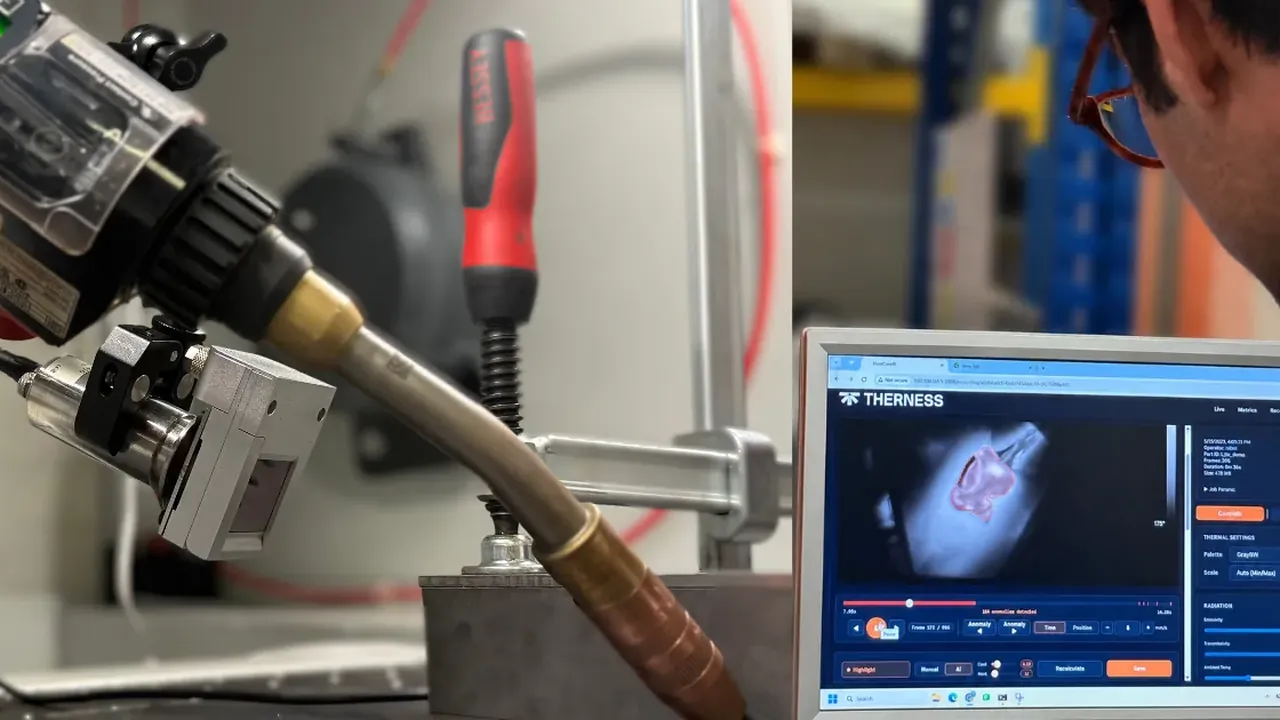
Process data per joint makes these steps more specific. When the NCR can carry the parameter and thermal record of the affected weld, the agent collects facts about that joint instead of general information about the station.
Where Therness fits
Therness offers Quality AI Agents and QMS consulting as a service: mapping the quality workflow, designing task-specific agents with defined inputs, outputs, escalation rules and human checkpoints, and integrating them with the existing QMS, MES and ERP. The service does not make autonomous quality-acceptance decisions: quality teams keep override authority. One of the typical agents described on the service page turns weld monitoring alarms, from HeatCore or another monitoring system, into draft NCRs for a person to review.
Map which quality steps an agent can prepare
Therness can walk through your NCR and CAPA workflow and mark which steps an agent could prepare and which stay with your quality team.
See the Quality AI Agents serviceTherness solution: Welding monitoring system — Every weld inspected in the cycle, with defect flags and the ISO 3834 / ISO 17635 evidence kept per weld.
Frequently Asked Questions
What can an AI agent do in a welding NCR workflow?
It can prepare work that a person then checks: turn a monitoring alarm or an inspection finding into a draft NCR, propose a classification, collect the records linked to the joint, route the NCR to the right owner and remind people of open actions. Each output is a draft or a suggestion with its sources attached.
Which NCR decisions must stay with a person?
The disposition of the nonconforming part (use as is, repair, rework, scrap), the release of a part or lot, the acceptance of a root cause, the closure of a CAPA after its effectiveness check, and any notification or concession request to the customer. These are signed by a person with the authority defined in the quality system.
Can an AI agent draft an 8D or a 5-Why?
It can prepare a first version from the NCR, the process records and past similar cases, and list the evidence it used. The team still runs the analysis, challenges the causes and decides which cause is confirmed. A draft saves collection work; it does not replace the investigation.
How do auditors see AI-prepared quality records?
The quality system has to show who decided what, on which evidence, and under which procedure. If the procedure states which steps an agent prepares, which a person approves, and the record keeps both the draft and the approval, the trail is auditable. An undocumented automatic decision is not.
Where should a welding plant start with AI agents?
With a step that is repetitive, well defined and already decided by a person today, such as collecting evidence for an NCR or checking document revisions. Run it on historical cases first, then in shadow mode next to the current process, before it prepares live records.
Does an AI agent need weld monitoring data?
Not to start. Many useful steps work on existing NCRs, WPS and PQR documents and inspection reports. Process data per joint, such as parameter and thermal records, makes evidence collection and classification more specific, because the agent can attach what happened on the affected weld.