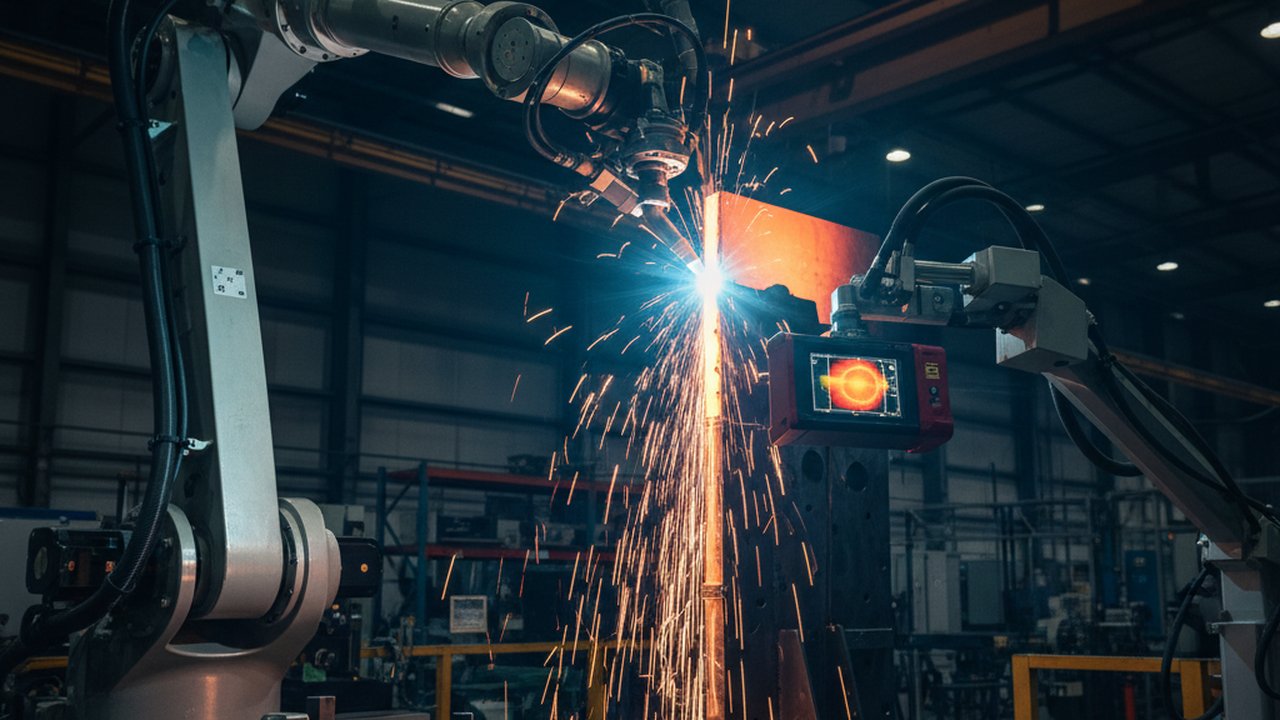
Most writing about in-process weld records assumes a robot: a controller that knows the program step, a PLC that marks arc-on and arc-off, a path that repeats identically on every part. A manual station has none of that. The welder decides where to start, how fast to move and when to stop, and the only electronics on the bench may be the power source.
That does not mean a manual station can only produce a paper traveller. Most of what a per-joint record needs can be captured automatically at the bench, and the rest can be tied to the joint at the moment of welding rather than reconstructed afterwards. This article lists what a manual station can record for each joint, what it cannot, and how to set the station up so the record holds. For how thermal, visual and process signals combine across a whole line, see the complete monitoring overview.
Key takeaways
- A manual station can record who welded, to which WPS, what the machine delivered, how long the arc was on and how the part heated up, for each joint.
- Arc-on and arc-off can be derived from the measured current, so no controller is needed to mark each weld.
- Travel speed is set by the welder. At a manual station it is an average derived from weld length and arc time, not a measured value.
- Torch angle, weave pattern and hand technique are not captured by these sensors.
- The station record shows what went into the weld. It does not replace the inspection the contract requires.
What a manual station can record for each joint
Who welded, and whether they were qualified to
The welder identity is captured at the station, by badge, login or selection, and checked against their qualification: process, material group, position and thickness range, plus continuity. A record that shows a joint was welded by someone outside their range of approval is a finding on its own, whatever the weld looks like. Welder continuity records under ISO 9606 cover the fields to keep.
Which joint, to which WPS
The joint reference comes from the job card or weld map: a barcode scan, or the welder selecting the joint at the station before striking the arc. The WPS reference follows from the joint. This is the step that turns a stream of measurements into a record of a specific weld.
What the machine delivered
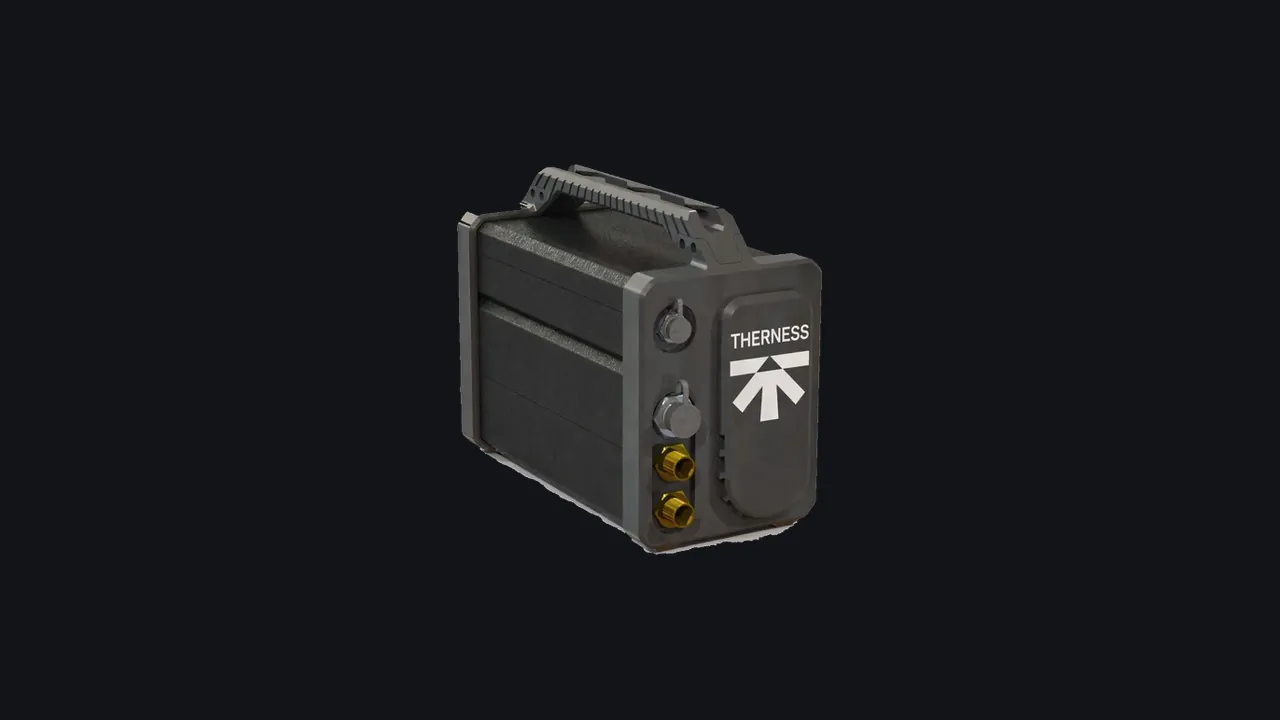
Voltage, current, wire feed speed and shielding gas flow can be measured at the station, independently of whether the power source has a data port. They are compared against the ranges in the WPS for that joint. At Therness, WeldTrace records voltage, current and wire feed speed at 25 kHz and gas flow at 10 Hz, over a single Ethernet cable that carries power and data.
When the arc was on
Without a controller, the start and end of each weld come from the measured current crossing a threshold. Arc-on time per weld is then available automatically, and so is the gap between passes, which matters when the WPS sets interpass limits.
How the part heated up
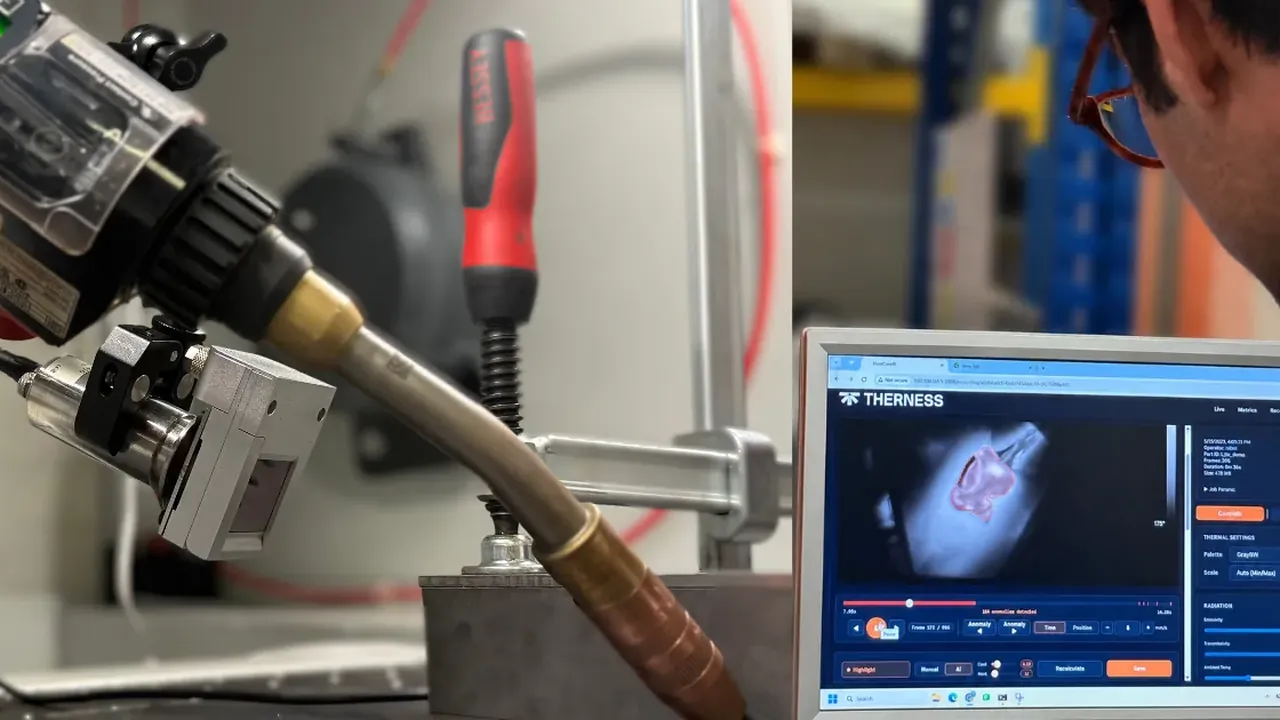
A thermal camera fixed on the fixture or the workstation reads the part itself: preheat before the first pass, interpass temperature before each following pass, and heat build-up where joints sit close together. HeatCore Basic is built for this case: an entry-level thermal kit for manual and semi-automated stations that mounts on fixtures or workstations, with statistical process control running locally and real-time control limits and alerts, and no cloud or IT dependency. A high-speed visual camera such as PoolDrop can be added to the same server when the weld pool itself needs to be recorded.
At a manual station, travel speed is the welder’s decision, so it is the one input no sensor on the bench measures directly. Heat input can still be estimated per weld from measured voltage and current, arc time and the weld length on the drawing, but it is an average along the weld, not a continuous trace.
What a manual station does not capture
- Torch angle and work angle. These are hand technique. A fixed camera may show them qualitatively on some joints, but they are not recorded as values.
- Weave pattern and bead placement in multi-pass joints. Visible in video on accessible joints, not measured.
- Continuous travel speed. Only an average per weld, as above.
- Internal discontinuities. Porosity, lack of fusion or cracks inside the weld are found by the inspection method the standard or contract requires. How inline evidence and manual visual inspection divide the work is covered in inline weld inspection vs manual visual inspection.
Being explicit about these gaps is part of the record. An auditor reading a station record should be able to see which fields were measured, which were derived and which were not captured at all.
Setting up the station
- Fix the joint reference first. Decide how each joint is identified at the moment of welding: scan, selection or job-card sequence. Without it, everything else is an unassigned trace.
- Check the camera field of view against the real joints. On small parts on a fixture, one fixed view usually covers every joint. On large parts, or when the welder moves around the workpiece, some joints fall outside it. Map which joints are covered before relying on thermal data for all of them.
- Set limits from the WPS, then from data. Start alarms at the WPS ranges. Tighten them only once a baseline of good welds on that station exists.
- Keep the welder in the loop. An alert at the station is useful only if the welder sees it before the next pass and knows what to do with it.
- Pilot on one station. Run it on real production for a few weeks, compare the records with inspection results, and adjust before rolling out to the next station.
See what your manual stations can record
Therness can help scope which welder, WPS, electrical and thermal fields a manual station can capture per joint, and what stays with inspection.
Discuss your stationsTherness solution: Welding parameter monitoring — Current, voltage, wire feed and gas recorded per weld, as WPS/PQR and heat-input evidence.
Frequently Asked Questions
Can a manual welding station produce a per-joint record without a robot?
Yes, for most of what the record needs: the welder and the validity of their qualification, the WPS and joint reference, the electrical values the machine delivered, arc time, and a thermal read of the part on the fixture. What it cannot capture automatically is how the welder moved the torch.
How is the start and end of each weld detected without a controller?
From the measured welding current: the arc is on when the current rises above a threshold and off when it falls back. That gives arc-on time per weld without any signal from a PLC. The joint reference comes from the job card, a barcode scan or the welder selecting the joint at the station.
Can heat input be calculated at a manual station?
Voltage and current are measured, and arc time comes from the current. Travel speed is set by the welder, not by a machine, so it has to be derived from the weld length on the drawing or weld map divided by arc time. The result is an average per weld, not a continuous value along it.
Where does a thermal camera go at a manual station?
On the fixture or the workstation, looking at the area where the joints are made. It records preheat, interpass temperature and heat build-up on the part. On large parts or when the welder moves around the workpiece, the field of view has to be checked against the actual joint positions.
What still needs inspection after the station records everything it can?
Internal discontinuities and anything the contract requires to be verified by a qualified inspection method. A station record shows what went into the weld; it does not replace the non-destructive testing or visual inspection the applicable standard or customer specification requires.