

Process piping fabricators under ASME B31.3 face an asymmetric inspection problem: the code requires examination of a fraction of welds during fabrication, but any undetected defect in an unsampled weld can produce a hydrotest failure — or a service leak in a hazardous fluid line. This guide covers the B31.3 welding requirements that matter most during fabrication, the examination framework governing acceptance, and how in-process monitoring with a thermal weld camera provides continuous evidence that supplements periodic NDE without replacing it.
What ASME B31.3 Governs and Who It Applies To
ASME B31.3 — Process Piping — is part of the ASME B31 Code for Pressure Piping. It covers piping systems within chemical plants, petroleum refineries, pharmaceutical production facilities, pulp and paper mills, and food processing plants, from the first weld upstream of the battery limits to the final connection at process equipment.
It does not govern building plumbing, power station steam headers (B31.1), or oil transmission pipelines (B31.8). It does govern the high-temperature, high-pressure, corrosive, and toxic-service piping where weld failure consequences range from costly downtime to loss of containment.
Fluid service categories determine the applicable examination requirements:
| Category | Typical examples | Minimum NDE |
|---|---|---|
| Category D | Low-pressure utility, steam ≤150 psi / 186°C | Visual only |
| Normal fluid service | Most refinery and chemical process lines | 5% progressive random + visual |
| Category M | Fluids toxic on single exposure | 100% RT or UT |
| High Pressure (HP) | Above ASME Class 2500 rating | Appendix X requirements |
| Severe cyclic | Displacement-controlled, high-cycle fatigue | 100% RT or UT |
WPS, PQR, and Welder Qualification
Welding Procedure Specification per ASME Section IX
Every B31.3 weld must be performed in accordance with a qualified Welding Procedure Specification (WPS) supported by a Procedure Qualification Record (PQR). ASME Section IX governs which variables are essential — changing them invalidates the existing WPS and requires requalification. Essential variables include base material P-Number, filler metal F-Number, post-weld heat treatment condition, and, when toughness requirements apply, heat input limits.
B31.3 fabricators typically maintain a WPS library covering P1 carbon steel, P5A and P5B chrome-moly (5Cr and 9Cr/P91), P8 austenitic stainless, P10H duplex stainless, and P43 nickel alloys. Each WPS defines a parameter band — amperage, voltage, travel speed — within which the welder must operate for every production weld to remain code-compliant.
Welder Performance Qualification and Continuity
Welders must hold a current WPQ for the applicable process, P-Number, and thickness range. Under ASME Section IX, a welder who has not used a qualified process for more than six months loses that qualification and must requalify before returning to production welding under B31.3.
Qualification continuity is frequently overlooked during project ramp-up. A welder returning from an extended outage may hold a lapsed WPQ for chrome-moly or stainless processes. Checking currency before assigning work prevents a rework situation that only surfaces during an audit.
Monitor every weld, not just the 5% sample
One defect in a random sample doubles your examination scope. In-process thermal monitoring watches every weld in real time and flags thermal drift early — before it reaches the examination lot.
See the welding monitoring systemPreheat, Interpass Temperature, and PWHT
Minimum Preheat (Para. 330 / Table 330.1.1)
Minimum preheat temperatures in ASME B31.3 are material-specific and apply immediately before arc ignition and after any welding interruption. Key values by P-Number group:
- P1 carbon steel, above 25 mm governing thickness: 10°C minimum
- P5A / P5B chrome-moly, above 13 mm: 175–200°C minimum per most WPS applications
- P10H duplex stainless: typically 15–50°C (controlled low preheat to avoid sigma-phase precipitation)
- P8 austenitic stainless (304/316): no minimum preheat, but interpass maximum is the critical constraint
The measurement must be taken within 75 mm of the weld joint on each side. Contact thermocouple, infrared pyrometer, and thermal cameras are all acceptable measurement methods under the code. The critical failure mode is not measuring incorrectly — it is not measuring at all and then completing the weld traveler based on assumption.
Maximum Interpass Temperature
Maximum interpass temperature is not universally mandated in B31.3 itself but is set in the WPS to protect the microstructure of sensitive materials:
- P91 / Grade 91 (9Cr-1Mo-V): WPS maximum typically 300°C. Exceeding it alters carbide precipitation kinetics, reducing long-term creep rupture strength in high-temperature service without any visible indication in the completed weld.
- Duplex stainless (S31803 / S32205): WPS maximum typically 150°C. Overheating promotes sigma phase formation in the HAZ, degrading both corrosion resistance and impact toughness.
- P8 austenitic stainless: prolonged exposure above 500°C risks sensitization — chromium carbide precipitation along grain boundaries leading to intergranular stress corrosion cracking in service.
Grade 91 chrome-moly is the material group with the highest rate of field failures in B31.3 process piping. Most root causes trace to inadequate PWHT, missed preheat, or interpass temperatures that exceeded the WPS maximum without being recorded. Failures appear years after hydrotest acceptance — as creep damage during high-temperature operation — by which time the fabrication traveler is unavailable or incomplete.
Post-Weld Heat Treatment (Para. 331)
B31.3 PWHT requirements depend on P-Number combination, governing thickness, and design pressure. P5 chrome-moly above 13 mm governing thickness requires PWHT at 730–775°C minimum soak temperature with controlled heating and cooling rates. PWHT records — thermocouple placement, soak temperature, hold time, heating and cooling rates — are mandatory examination records subject to Owner’s Inspector review. A failed or undocumented PWHT cycle is a code non-conformance requiring weld removal or a documented engineering alternative.
Examination Methods and Acceptance Criteria
Progressive Random Examination (Para. 341.3.4)
For Normal Fluid Service, B31.3 uses a progressive examination scheme that creates a direct quality incentive:
- Examine 5% of each welder’s production welds per examination lot (minimum one weld per welder)
- Perform RT, UT, MT, or PT depending on joint geometry, access, and material
- If the 5% sample contains a defect, examine two additional welds from the same welder
- If either of those two welds also contains a defect, examine all remaining welds by that welder on the job
- Repair all rejected welds; re-examination of repair welds follows the same rules as production welds
The progressive multiplier is the main cost risk in B31.3 fabrication. A single failed random sample on a large spool job can escalate to 100% examination of a welder’s entire backlog — a significant rework and schedule impact. Reducing the probability of random-sample failures through consistent process control is directly cost-effective.
Visual Acceptance Criteria (Table 341.3.2)
| Condition | Normal fluid service | Severe cyclic conditions |
|---|---|---|
| Cracks (any orientation) | Not acceptable | Not acceptable |
| Lack of fusion | Not acceptable | Not acceptable |
| Incomplete root penetration | Not acceptable | Not acceptable |
| Undercut depth | ≤1.6 mm | ≤0.8 mm |
| Surface porosity (isolated) | Acceptable if gradual | Not acceptable |
In-Process Thermal Monitoring for B31.3 Fabrication
The Gap Between NDE and Process Evidence
Radiographic and ultrasonic testing reveal what a weld looks like after solidification. They cannot retroactively confirm preheat temperature, interpass temperature peak, or heat input per pass — the process variables that determine whether the weld’s microstructure will meet its intended service life. Process piping welds are rarely single-pass, so the harder problem is holding preheat and interpass limits consistently across every pass on every joint — not just the ones NDE happens to sample. A welding monitoring system is built for exactly that: tracking thermal and visual data in real time, pass by pass, across the full joint.
A thermal camera such as HeatCore AI positioned over the welding station generates per-weld records including:
- Preheat temperature field: quantitative spatial map confirming minimum temperature across the full joint prior to arc ignition
- Interpass peak temperature: automatically flagged against the WPS maximum after each completed pass
- HAZ thermal cycle: width and peak temperature of the heat-affected zone, pass by pass
- Heat input proxy: arc energy distribution correlated to WPS essential variable limits — useful for Section IX compliance documentation
These records become part of the weld traveler — timestamped, welder-linked, and retrievable for Owner’s Inspector review alongside the NDE reports.
Two adjacent capabilities come up on most B31.3 jobs. Volumetric confirmation on joints where RT access is poor can be approached with a controlled heat pulse read by an IR camera, qualified under EN 16714 as an alternative volumetric route. And once the line is in service, the same infrared discipline is what drives insulation and hot-spot surveys on operating piping — a different job from weld NDE, but the same measurement physics.
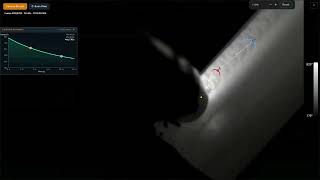
The T8/5 cooling time — the interval spent between 800°C and 500°C as the weld cools — is the same interpass-sensitive window governing HAZ toughness in P91 and duplex piping. Extracting it automatically from thermal data, pass by pass, is what turns the interpass and HAZ figures above from a spot-checked traveler entry into a continuous record. (Watch the cooling-time analysis in action.)
Three B31.3 Scenarios Where Monitoring Adds the Most Value
P91 piping fabrication is the highest-priority application. Grade 91 is sensitive to thermal input at every stage: preheat, interpass, and PWHT. Continuous thermal records create an audit-ready process history that survives the transfer from fabrication to plant operations — the point where paper travelers are most likely to be incomplete or unavailable.
Category M and severe cyclic service lines already require 100% volumetric NDE. Supplementary thermal monitoring reduces the residual risk that a passing radiograph conceals a process anomaly — undocumented preheat absence or missed interpass temperature limit — that will not appear as a volumetric indication but will degrade microstructural performance over time.
Remote and elevated welding positions in field construction are where monitoring most directly replaces manual checks. A sensor from the piping monitoring hardware range positioned at the joint produces continuous records without requiring an inspector to physically access a confined space or elevated position between every weld pass. This also reduces the temptation to estimate preheat rather than measure it when access is difficult.
For fabricators managing quality under ISO 3834-2 alongside B31.3, thermal monitoring records map directly onto the process monitoring evidence requirements in ISO 3834 Section 14 — preheat and interpass verification, heat input records, and process parameter traceability per the approved WPS.
Continuous Process Records for Every B31.3 Weld
Therness HeatCore AI generates per-weld thermal records — preheat map, interpass temperature, heat input — that satisfy Owner's Inspector documentation requirements across all ASME B31.3 fluid service categories.
Book a demo See the welding monitoring systemFrequently Asked Questions
What welding qualification standard does ASME B31.3 require?
ASME B31.3 requires welders and welding operators to be qualified in accordance with ASME Boiler and Pressure Vessel Code Section IX. Each welder must hold a valid performance qualification record (WPQ) covering the applicable process, base material P-Number, and thickness range. Qualification records must remain accessible during fabrication inspections.
What NDE is required for Normal Fluid Service welds under ASME B31.3?
For Normal Fluid Service, ASME B31.3 requires visual examination of all welds plus a minimum 5% progressive random examination for each welder by RT, UT, MT, or PT. If a random sample contains a defect, the examination scope doubles progressively until the failure rate drops to zero across two consecutive examinations.
How does preheat compliance work under ASME B31.3?
Preheat requirements in ASME B31.3 Table 330.1.1 are minimum values tied to material P-Number and governing thickness. They apply immediately before arc ignition and after any interruption. P5 chrome-moly piping above 13 mm typically requires 175–200°C minimum. Failing to reach preheat before welding can cause hydrogen-induced cracking in the HAZ that is not detectable by standard RT or UT.
Does in-process thermal monitoring satisfy B31.3 examination requirements?
Thermal monitoring does not replace the NDE methods specified in B31.3 for volumetric examination. It complements them by generating continuous process records — preheat temperature field, interpass temperature, heat input per pass — that demonstrate WPS compliance on every weld, not just randomly sampled ones. These records are available to the Owner's Inspector alongside NDE reports and reduce uncertainty about unexamined welds.


