Carbon Steel WAAM Thermal Video (Featured)
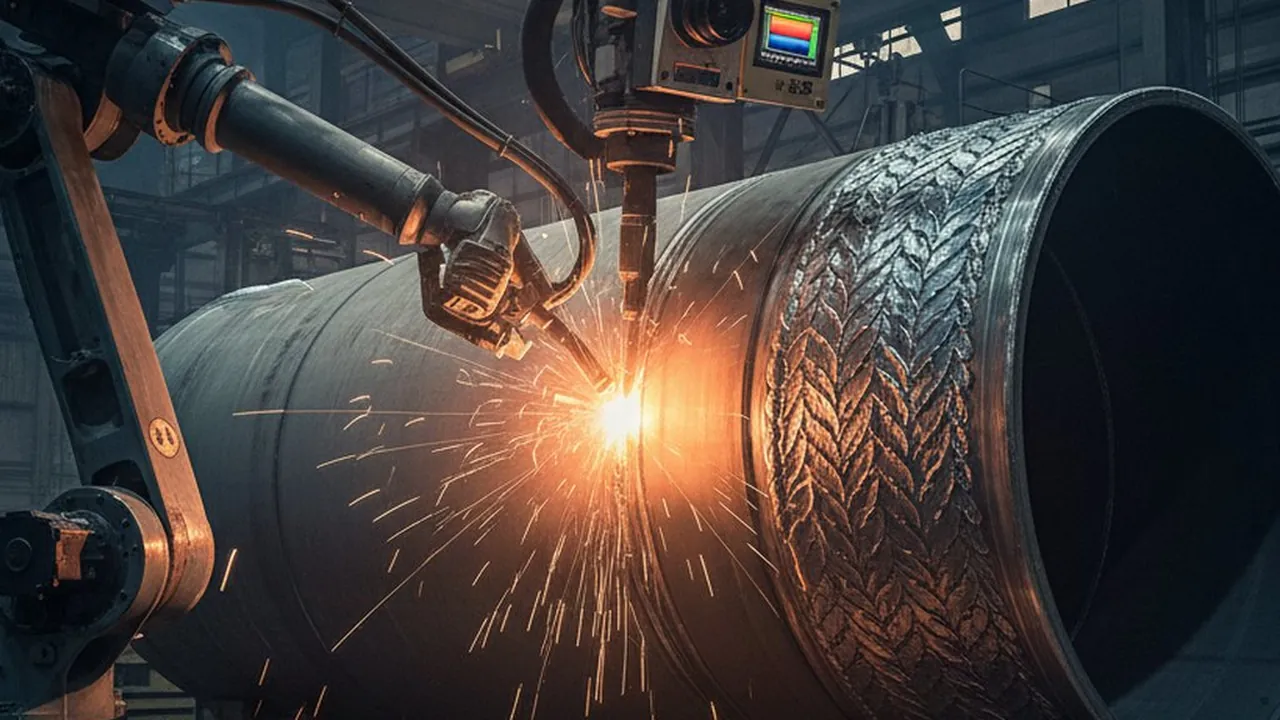
In this new video, Therness shows thermal imaging applied to carbon steel Wire Arc Additive Manufacturing (WAAM). The sequence captures the thermal behavior of deposition in real time, revealing how heat accumulates, dissipates, and changes from layer to layer. For manufacturers evaluating WAAM for structural components, this is not just a visualization tool — it is a practical quality-control signal.
WAAM has moved from experimental labs into real industrial production, especially where companies need large parts, lower material waste, and flexible manufacturing cells. But scale and speed are only useful when quality is stable. That is exactly where thermal monitoring becomes essential.

What WAAM Is and Why It Matters
Wire Arc Additive Manufacturing (WAAM) is a directed energy deposition process where metal wire is melted by an electric arc and deposited layer by layer to build near-net-shape parts. Instead of machining away a large amount of stock material, WAAM adds only what is needed, making it attractive for medium-to-large components.
For carbon steel applications, WAAM offers several advantages:
- Higher deposition rates than many powder-based additive methods
- Lower feedstock cost because wire is broadly available and easier to handle
- Scalability for large geometries and repair operations
- Integration with robotic welding platforms already used in fabrication plants
In short, WAAM combines the productivity of arc welding with the geometric flexibility of additive manufacturing.
However, WAAM quality is tightly linked to thermal history. Every deposited bead affects the next one through local heat accumulation, altered cooling rates, and microstructural evolution. Without consistent thermal control, manufacturers can face defects, distortion, variable hardness, and inconsistent mechanical performance.
Why Thermal Monitoring Is Critical for WAAM Quality
Unlike conventional welding of a fixed joint, WAAM is a multi-layer thermal process. Heat from each pass influences all subsequent passes. This creates challenges that are difficult to solve using only static machine settings.
1) Interpass temperature control
If interpass temperature is too high, deposited layers may lose geometric definition and encourage coarse microstructure growth. If too low, bonding behavior and deposition stability can drift from the intended process window. Thermal imaging helps operators and engineers maintain repeatable interpass conditions.
2) Melt pool and bead consistency
A stable melt pool supports uniform bead width, height, and fusion profile. Thermal maps reveal process drift early — for example, changes in arc behavior, wire positioning, or travel speed that alter local heat input.
3) Defect prevention instead of defect detection after the fact
Traditional quality control often catches issues late, after significant build time and material consumption. Real-time thermal monitoring turns quality into a live process signal, enabling intervention before defects propagate across multiple layers.
4) Traceability and qualification support
WAAM qualification for industrial use increasingly requires evidence of process consistency. Time-stamped thermal records provide objective documentation to support internal QA, customer requirements, and future certification pathways.
Key takeaway for production teams: In WAAM, thermal behavior is not secondary data. It is a primary indicator of process stability, layer quality, and downstream part performance.
What the Video Demonstrates About Carbon Steel WAAM
The featured video highlights a practical and important point: thermal imaging makes hidden process dynamics visible. You can watch the full carbon steel WAAM thermal sequence on our video hub.
As carbon steel is deposited, the thermal field continuously evolves. You can observe:
- Heat concentration near the active deposition zone
- Thermal decay behind the torch path
- Temperature interaction between fresh and previously deposited layers
- Progressive heat accumulation effects during sustained deposition
These insights are highly relevant for setting and optimizing key WAAM parameters:
- Travel speed
- Wire feed rate
- Current and voltage strategy
- Interpass dwell time
- Path planning sequence
By correlating thermal patterns with geometry and final part inspection, teams can identify robust process windows faster and reduce trial-and-error iterations.
How Therness Enables Real-Time WAAM Process Intelligence
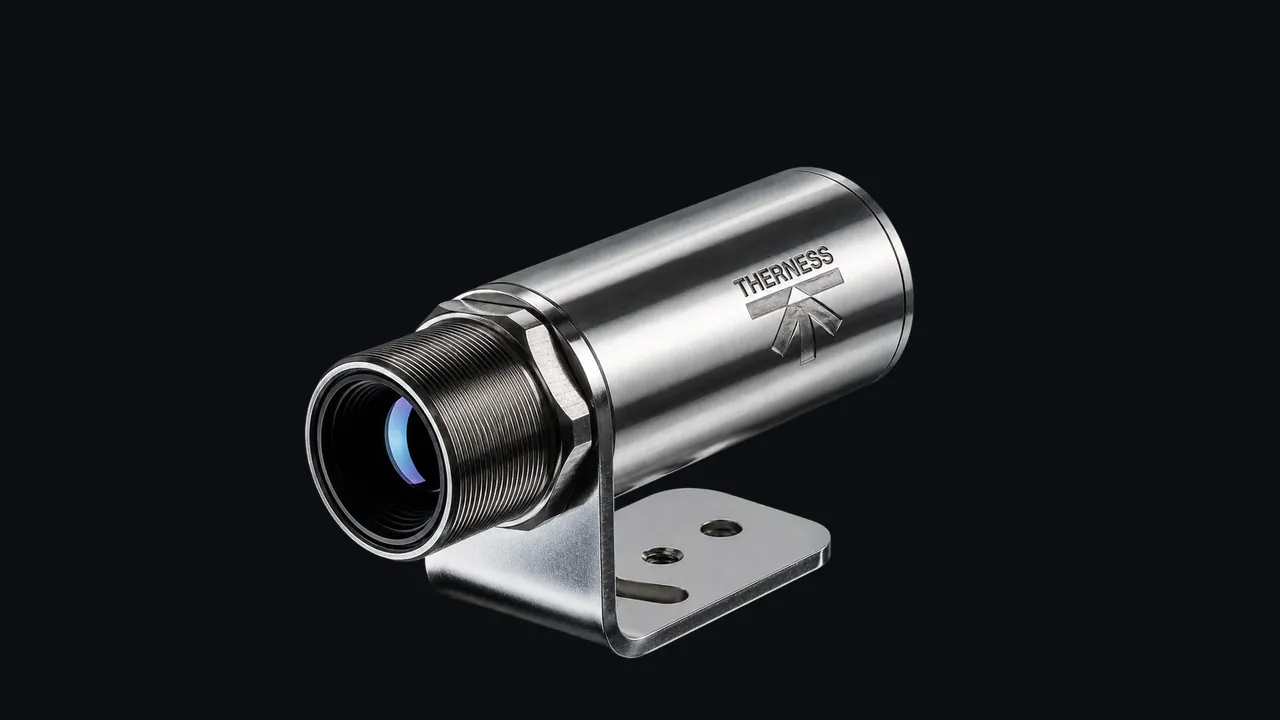
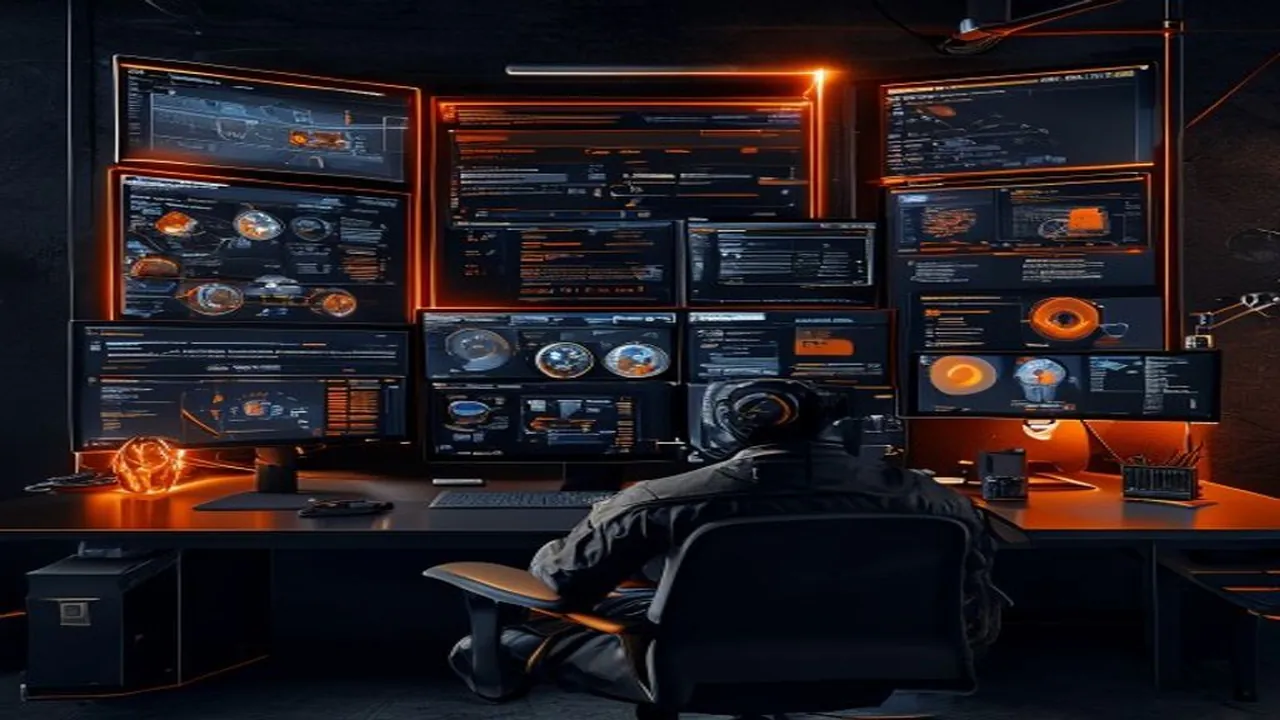
Therness applies thermal imaging and analytics through a real-time WAAM thermal monitoring platform to convert raw temperature video into actionable manufacturing intelligence. For WAAM teams, the value is not only seeing a hot area on screen — it is extracting process-relevant indicators that support real decisions.
Real-time visibility where it matters
Therness solutions provide high-value thermal observation of the deposition zone, enabling immediate awareness of process deviations while the build is still in progress.
Better root-cause analysis
When a bead geometry issue or local defect appears, historical thermal sequences help engineers investigate what changed in the process and when it changed.
Data-driven optimization cycles
Thermal signatures can be linked to process parameter sets, mechanical test outcomes, and visual/volumetric inspections. Over time, this creates a stronger empirical basis for WAAM parameter optimization.
Foundation for closed-loop control
As additive manufacturing systems evolve, real-time thermal monitoring becomes the backbone for automated control logic. This is the path from monitored WAAM to adaptive WAAM.
From Demonstration to Industrial Deployment
For many manufacturers, the practical question is not whether WAAM works, but whether WAAM can be run with predictable quality at production pace. The answer depends on process observability.
Thermal monitoring supports this transition in three phases:
- Pilot validation: confirm process stability and identify sensitivity to parameter changes
- Pre-production scaling: standardize interpass control and quality thresholds
- Operational production: monitor each build with live alarms, quality records, and continuous improvement loops
In all three phases, real-time thermal imaging reduces uncertainty and helps teams move faster with lower risk. You can also browse the Therness monitoring hardware and software to match a configuration to your deposition cell.
Conclusion
Carbon steel WAAM is a strong candidate for industrial additive manufacturing when productivity, cost efficiency, and geometric flexibility are required. But consistent quality depends on controlling heat across every layer.
The new Therness video demonstrates exactly why thermal monitoring is becoming central to WAAM success: it reveals process behavior in real time, supports better parameter control, and provides objective quality insight throughout the build.
If your team is evaluating or scaling WAAM, thermal imaging is one of the most direct ways to improve repeatability, reduce rework, and accelerate qualification.
Evaluate Thermal Monitoring for Your WAAM Process
Book a Therness demo to see how real-time thermal imaging can improve WAAM quality control, traceability, and process optimization in your production environment.
Book a WAAM Monitoring DemoTherness solution: Welding camera — Thermal and high-speed imaging that watches the arc, the pool and the cooling seam while the weld is made.