Thermography reaches plant assets in two ways. A thermographer walks a route once or a few times a year, images every asset on the list under load, and writes a report. Or a fixed thermal camera is mounted on one asset and watches it all the time. Both are useful, and neither is the right answer for every asset.
This article is about choosing between them for a given asset: a furnace shell, a kiln, a line, an electrical panel, a hot pipe. It gives the criteria that decide, not prices, because the answer depends on the asset and the cost of its failure, not on the equipment. It is written for maintenance, reliability and plant engineers. If the decision has already been made and a fixed system is being bought, what to write in an industrial thermography specification is the next step.
Key takeaways
- Decide per asset, not per plant. Most plants end up with a route survey for most assets and fixed cameras on a few.
- The main question is speed: can the fault develop from first sign to failure between two surveys?
- Load matters as much as time. A survey only sees the fault if the asset is under the load that reveals it on the day.
- Access and consequence can decide on their own: an asset that cannot be imaged safely in operation, or whose failure is severe, may need a fixed camera even if faults are slow.
- A fixed camera without an owner for its alarms is an archive, not monitoring.
Criterion 1: how fast the fault develops
Every thermal fault has a window between the moment it becomes visible in a thermal image and the moment it causes a failure. If that window is much longer than the survey interval, a periodic survey will usually catch it with time to plan the repair. If the window is shorter than the interval, the fault can start and finish between two visits.
Slow-developing faults, such as many loose or corroded connections, gradual insulation or refractory degradation and slowly building fouling, often suit a route survey. Faults that develop in hours or days, or that appear with a process change, favour continuous monitoring.
Criterion 2: when the load is present
Passive thermography sees a fault only when the asset is operating under a load that makes the fault produce heat. A survey sees one moment. If the critical load occurs at night, at the start of a batch, during a peak or only with certain products, a survey on a normal day may see a healthy asset. A fixed camera sees every load state, including the ones nobody schedules a survey for.
Criterion 3: access and safety
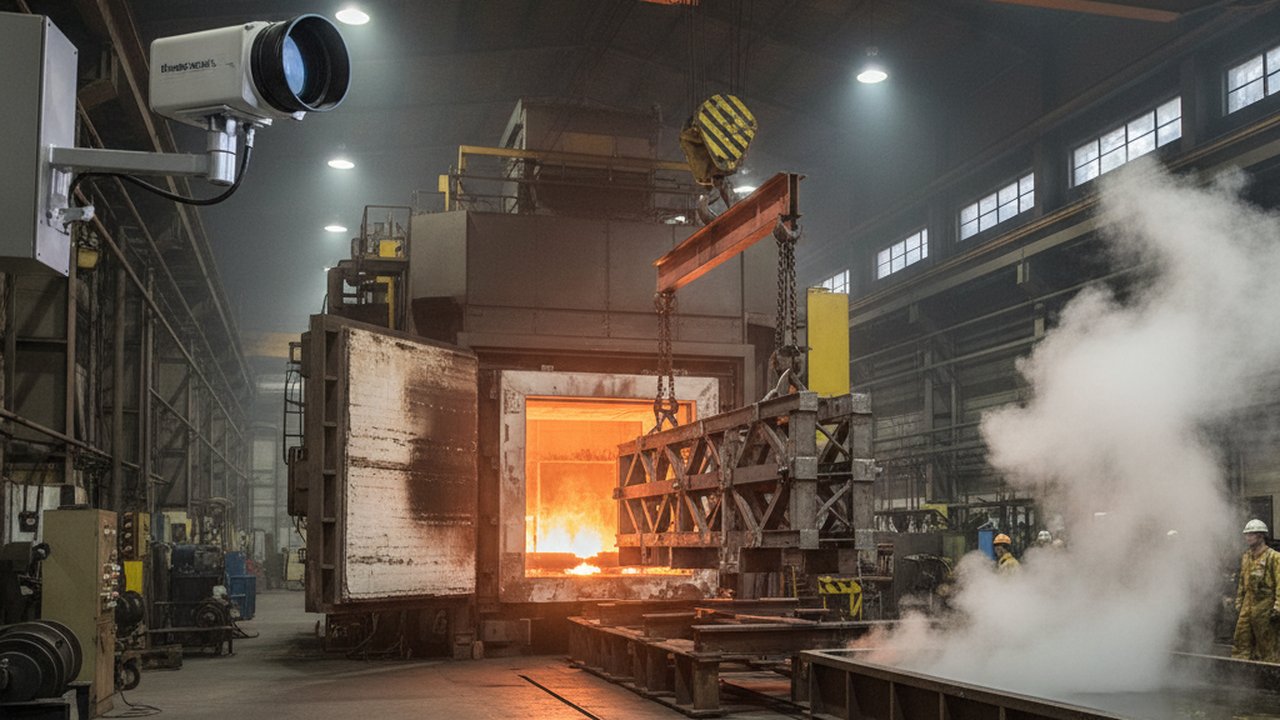
Some assets cannot be imaged safely during operation: they are behind guards, in restricted or hazardous areas, at height, or in places where a person should not stand while the equipment runs. Where the only safe survey is with the asset off or the load reduced, the survey may not see the fault at all. A camera installed once, during a planned stop, can then watch it in operation.
Criterion 4: consequence of a missed fault
Weigh what happens if a fault is missed between surveys: a fire, an unplanned stop of a whole line, a damaged product batch, a safety incident, or a minor repair. The higher the consequence, the less acceptable it is to rely on the next survey, even for faults that usually develop slowly.
Criterion 5: what the plant will do with the data
A survey report comes with an interpretation: severity classes, priorities and recommended actions. A fixed camera produces a continuous stream and alarms. That stream is useful only if thresholds are validated against real operating states, alarms reach a system that people watch (a control system, a maintenance platform, a PLC), and someone owns the response. If none of that exists, a fixed camera adds data without adding decisions.
Side by side
| Question | Periodic survey | Fixed thermal camera |
|---|---|---|
| Coverage | Many assets per visit | One field of view, continuously |
| Load states seen | Those present on the survey day | All, including rare or unscheduled ones |
| Detection gap | The survey interval | Limited by alarm settings and response |
| Access in operation | Needs a safe viewing position | Installed once, during a planned stop |
| Output | Report with severity and priorities | Trends and alarms; needs an owner |
| Upkeep | Repeat visits, comparable baselines | Mounting, optics or window, thresholds, integration |
Cost is compared asset by asset: the expected cost of a failure between surveys against the cost of installing, integrating and maintaining a fixed system on that asset. This article gives no prices on purpose; they depend on the asset, the site and the scope.
The common answer: both
In practice the two approaches work together. The route survey covers the plant and builds the history. When the survey or the failure record shows an asset where faults develop too fast, appear only under certain loads, or cannot be reached safely, that asset becomes a candidate for a fixed camera. The survey then keeps covering everything else, and it checks that the fixed installation still sees what it was installed to see.
Where Therness fits
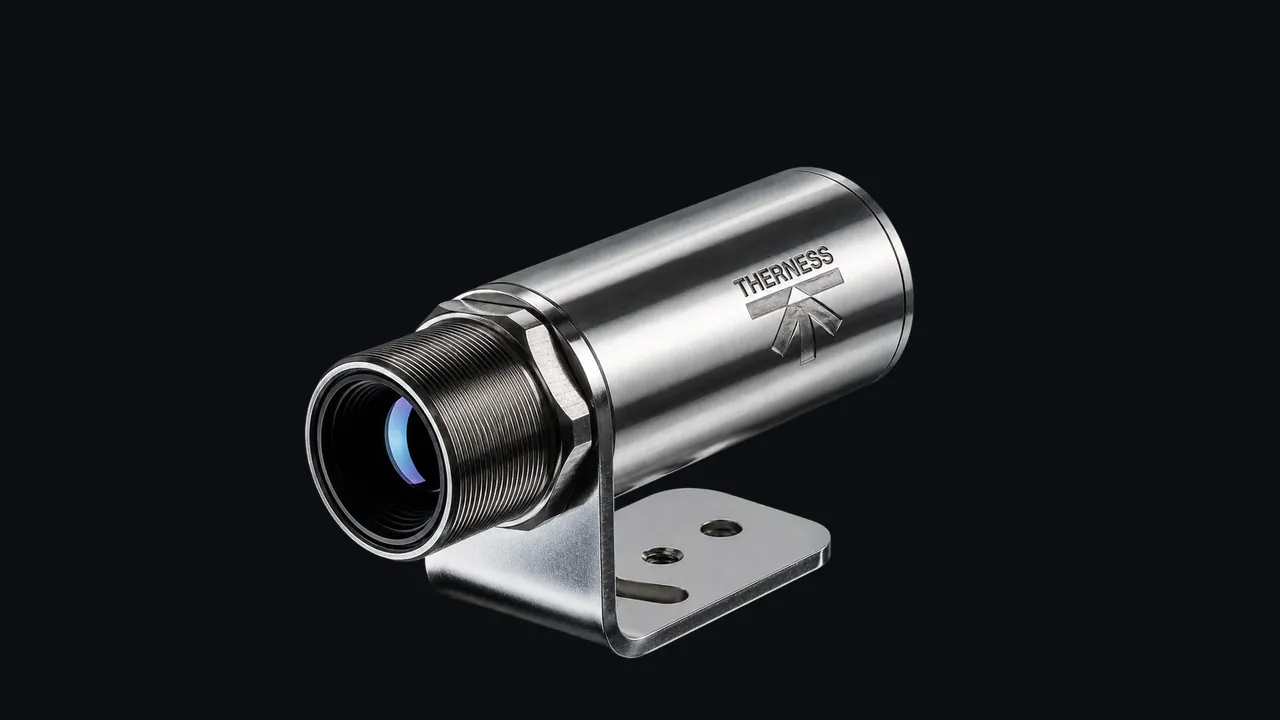
Therness provides both sides. Its industrial thermography inspection services run route surveys with documented measurement conditions and a prioritised report. For assets that need continuous watching, HeatCam IR-C is a cylindrical thermal camera for fixed installation that streams radiometric images over a single Ethernet cable, with PoE and Modbus connectivity. Where the asset or the process needs a specific setup, the custom thermal imaging solutions service scopes feasibility and permanently installed stations.
Survey, fixed camera, or both?
Therness can review your asset list with you and mark which assets a route survey covers and which may need a fixed thermal camera.
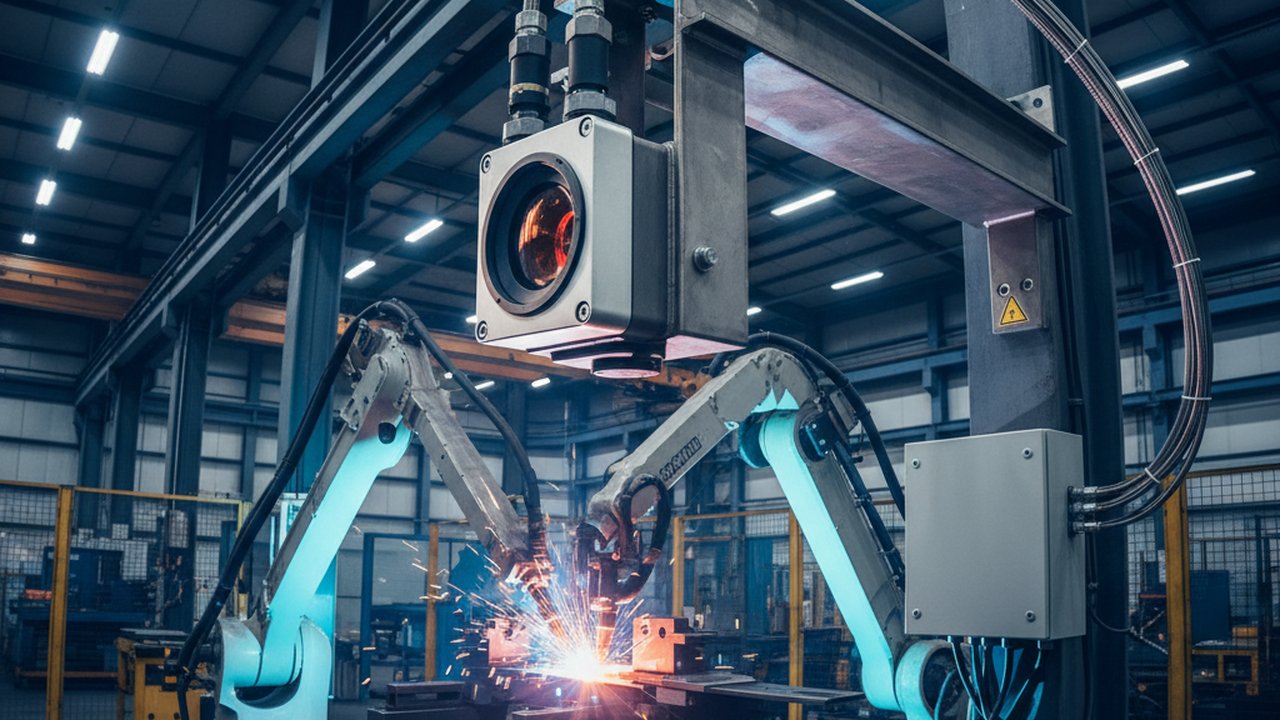
Discuss your assetsTherness solution: Welding camera — Thermal and high-speed imaging that watches the arc, the pool and the cooling seam while the weld is made.
Frequently Asked Questions
When is a periodic thermography survey enough?
When a fault develops slowly compared with the survey interval, the asset can be surveyed safely under a representative load, and a fault found at the next survey can still be planned for. Many electrical and mechanical assets on a route fit this pattern.
When does an asset need a fixed thermal camera?
When a fault can develop between two surveys, when the load that reveals the fault is present only at certain moments, when the asset cannot be reached safely during operation, or when a failure would be severe enough that waiting for the next survey is not acceptable.
Does a fixed camera replace the thermography survey?
Usually not. A fixed camera watches one field of view continuously; a survey covers many assets in one visit. Most plants that install fixed cameras keep a route survey for everything else and use it to decide where a fixed camera is worth adding.
How should the survey interval be chosen?
From how fast the fault develops and how much warning maintenance needs. The interval should be clearly shorter than the time between the first detectable sign and the failure, and long enough that surveys stay comparable with each other. Critical assets and assets with a poor history often need a shorter interval.
What does a fixed thermal camera need to stay useful?
A stable mounting and field of view, a clean optical path or protective window, measurement settings recorded for the target surface, alarm thresholds validated against real operating states, and someone who owns the alarms. Without an owner, a fixed camera becomes an unread archive.
How is the cost of the two approaches compared?
Not by list price alone. Compare the cost of a failure that happens between surveys, weighted by how likely it is, with the cost of installing, integrating and maintaining a fixed system on that asset. The answer changes from asset to asset, which is why the choice is made per asset, not per plant.