German and European OEM customers audit welding suppliers to a higher bar than most quality teams anticipate. VDA 6.3 is not a checkbox questionnaire — it is a structured process audit with a percentage-based scoring model where a single unscored critical question can cap your entire result below the threshold for series nomination. This guide breaks down the scoring mechanics, the question catalog structure relevant to welding, the most common defect findings, and the evidence strategy that moves a supplier from a B rating (conditionally capable) to an A.
What Is VDA 6.3?
VDA 6.3 (Prozessaudit) is published by the Verband der Automobilindustrie and is the mandatory process audit framework referenced in the supplier quality manuals of German OEMs and their Tier-1 and Tier-2 networks. The current edition (4th edition, 2023) covers the entire product realisation chain — from potential analysis through production and customer service — divided into seven process elements (P1 through P7).
For welding suppliers, the operationally critical element is P5: Process Step / Process Step Analysis. This element evaluates whether each welding process step is controlled, monitored, and documented to the degree required for repeatable, defect-free production.
VDA 6.3 is independent of, and additive to, ISO 3834 (welding quality requirements) and IATF 16949 (automotive QMS). Holding ISO 3834-2 certification does not satisfy a VDA 6.3 audit — it provides evidence for some questions but leaves many process-specific requirements unverified.
Process Element Structure
The seven P-elements form a logical chain from project start to field feedback:
| Element | Scope | Welding relevance |
|---|---|---|
| P1 | Potential analysis | Pre-nomination supplier capability assessment |
| P2 | Project management | APQP, resource planning, risk management |
| P3 | Product and process development | WPS development, PFMEA, control plan |
| P4 | Supplier management | Welding consumables, base material traceability |
| P5 | Process step / production | Welding station control, monitoring, traceability |
| P6 | Customer feedback | Warranty, field non-conformances |
| P7 | Customer service | Reaction time, escalation handling |
A full process audit of a welding supplier covers P2 through P7. P1 is only used for new supplier evaluations before series nomination. In practice, P5 carries the largest share of audit questions and the most critical-rated items for a welding manufacturing context.
P-Criterion Scoring System
Every question in the VDA 6.3 catalog receives one of four scores:
| Score | Status | Meaning |
|---|---|---|
| 10 | Fully met | Requirements fulfilled, evidence robust |
| 8 | Largely met (PI) | Potential for Improvement — minor gap, corrective action recommended |
| 4 | Partially met (WP) | Weak Point — significant gap, corrective action required |
| 0 | Not met (D) | Defect — requirement absent or non-functional |
Degree of Fulfillment (DoF):
DoF (%) = (Σ achieved points / Σ maximum points) × 100Overall rating thresholds:
| Rating | DoF | Interpretation |
|---|---|---|
| A | ≥ 90% | Capable — series production approved |
| B | ≥ 80% | Conditionally capable — corrective action plan required |
| C | < 80% | Not capable — series production blocked |
Questions marked with an asterisk (*) are critical. If any starred question is scored 0 or 4, the DoF for that process element is automatically capped at 80% — regardless of all other scores. A single Weak Point on a critical question locks out an A rating for the entire element.
Pre-Audit Checklist for Welding (P5 Focus)
Process Control and Parameters
The auditor will verify that every welding operation has documented, monitored process parameters derived from validated procedure qualification — not from trial-and-error adjustment over time.
- WPS available at each welding workstation, current revision
- PQR on file and traceable to active WPS (ISO 15614-1 or process-equivalent)
- Control plan lists monitored parameters: current/voltage/wire feed/travel speed/shielding gas flow, with accept/reject tolerances
- Parameter tolerances sourced from qualification data, not estimated
- Reaction plan defined for each out-of-tolerance condition
Monitoring and Process Evidence
- In-process monitoring active for critical weld parameters (current, voltage, heat input)
- SPC charts or time-series logs maintained for key characteristics
- Monitoring data retrievable by weld sequence, shift, and operator — not aggregated only
- Alarm and stop logic verified: out-of-tolerance event triggers production hold, not just alert
- Records retained for customer-specified period (commonly 15 years for safety parts)
Calibration and Equipment
- All measurement devices on calibration schedule — welding parameter analyzers, temperature gauges, flow meters
- Calibration traceable to national standards (DIN, PTB, or NIST)
- Calibration due dates visible at point of use
- Equipment maintenance log current; no deferred critical maintenance
Traceability and Documentation
- Weld maps for each assembly: joint references link to WPS, material heat/lot, operator, date, equipment ID
- Incoming material certificates (mill certificates, EN 10204 Type 3.1/3.2) linked to production lots
- Non-conformance records with root cause, containment, corrective action, and effectiveness check
- PFMEA updated after any new failure mode identified in production
Personnel Qualification
- Welders qualified per ISO 9606-1 (or equivalent), certificates not expired
- Welding coordinators designated per ISO 14731, competency documented
- Visual inspection personnel trained and verified to written acceptance criteria
Auditor expectation: documentation must be available at the workstation or retrievable within two minutes of request. Binders stored in an office three buildings away, or records requiring IT access not granted during the audit, are scored 4 (Weak Point) even if the records technically exist.
VDA 6.3 vs. CQI-15 vs. ISO 3834
Suppliers serving both North American and European automotive customers frequently face overlapping audit frameworks. Understanding the differences prevents duplicate effort and identifies genuine gaps.
| Dimension | VDA 6.3 | AIAG CQI-15 | ISO 3834-2 |
|---|---|---|---|
| Publisher | VDA (Germany) | AIAG (USA) | ISO (international) |
| Primary OEM users | German and European OEMs | North American OEMs | Any sector |
| Scoring model | 0/4/8/10, DoF % | 1–4, average score | Certification (pass/fail) |
| Critical veto | Starred questions cap DoF | Critical element score 1 = fail | N/A |
| Scope | Full value chain (P1–P7) | Welding system only | Welding quality requirements |
| Certification | Audit result letter (A/B/C) | Assessment result | Third-party certificate |
ISO 3834 certification is strong evidence for the documentation and qualification requirements in P3 and P5 but does not replace a VDA 6.3 audit. CQI-15 compliance demonstrates process control capability useful in P5 but uses different scoring and different critical thresholds.
Common Defect Findings in Welding Process Audits
Analysis of VDA 6.3 results across European Tier-1 and Tier-2 welding suppliers consistently surfaces five recurring critical-question failures:
1. Control plan divergence from PPAP submission. Production parameters have drifted — wire feed speeds adjusted for consumable batch variability, shielding gas pressure set by habit. The PPAP-approved tolerances no longer match the floor.
2. Monitoring without reaction logic. Current and voltage monitoring is active, but out-of-tolerance events generate alarms that are acknowledged and cleared without production hold or quarantine. Auditors check the alarm history: repeated out-of-tolerance events with no corrective action are a critical finding.
3. Calibration gaps on process monitoring equipment. Thermal cameras, weld analyzers, and inline inspection fixtures fall off calibration schedules during high-production periods. A single uncalibrated critical instrument caps the element at a B.
4. Expired welder qualifications. ISO 9606-1 qualification must be renewed every two years (with some extensions). Suppliers running large welder populations — 30 or more qualified individuals — routinely have 10–20% expired at any given audit.
5. Incomplete PFMEA linkage to control plan. The PFMEA identifies a failure mode (weld fusion deficiency under preheat drop), but the corresponding control plan entry does not list preheat monitoring as a critical characteristic. The disconnect between risk analysis and production control is a textbook P3/P5 weak point.
Continuous Monitoring as Audit-Ready Evidence
The shift from paper records to real-time process monitoring closes most of the recurring defect findings described above. An inline weld monitoring system that logs heat input, interpass temperature, and weld geometry for every joint — timestamped and operator-linked — provides the kind of continuous, retrievable evidence that consistently moves P5 scores from 8 to 10 on monitoring-related questions. Systems that generate audit-ready records with HeatCore AI build that evidence automatically, weld by weld.
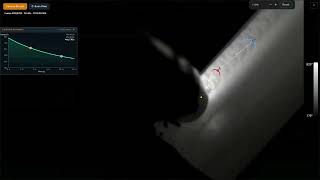
For welding suppliers targeting an A rating on VDA 6.3 P5, continuous monitoring is no longer optional infrastructure. It is the evidence base that satisfies critical-question requirements for process control, parameter monitoring, and traceability that paper-based systems structurally cannot provide. See a HeatCore AI live view for how that evidence is captured and reviewed.
A welding monitoring system is what turns this from a checklist item into standing practice: it captures current, voltage, and heat input on every weld automatically, flags out-of-tolerance events in real time instead of at the next audit cycle, and builds the timestamped, operator-linked record set that P5 auditors ask to see within two minutes of request. Compare the options across the Therness monitoring product family.
Internal links: see AIAG CQI-15 audit checklist for the equivalent North American framework, ISO 3834 audit checklist for quality management system requirements, and welding coordination software for ISO 14731 compliance tools.
Prepare your welding process for VDA 6.3
Therness inline thermal monitoring delivers the per-weld, per-parameter evidence that auditors expect for A-rated P5 scoring — retrievable, timestamped, and linked to weld maps.
Book a demoTherness solution: Welding monitoring system — Every weld inspected in the cycle, with defect flags and the ISO 3834 / ISO 17635 evidence kept per weld.
Frequently Asked Questions
What is VDA 6.3 and who must comply?
VDA 6.3 (Process Audit) is a German automotive industry standard published by the VDA (Verband der Automobilindustrie) that evaluates the process capability of suppliers to German OEMs and their Tier-1 and Tier-2 supply chains. Suppliers of safety-relevant welded assemblies (chassis, BIW, suspension, exhaust) are almost always required to pass a VDA 6.3 process audit as a condition of series nomination.
How is VDA 6.3 scored for a process audit?
Each question in the VDA 6.3 catalog is rated on a four-value scale: 10 (fully met), 8 (largely met — Potential for Improvement), 4 (partially met — Weak Point), or 0 (not met — Defect). Degree of Fulfillment (DoF) = (Σ achieved points / Σ maximum points) × 100%. Overall rating: A ≥ 90% (capable), B ≥ 80% (conditionally capable), C < 80% (not capable). Questions marked * are critical: a score of 0 on any starred question automatically limits the element DoF to a maximum of 80%, capping the overall result at B or C.
How does VDA 6.3 differ from AIAG CQI-15?
Both are welding process audits used in automotive supply chains, but they target different customer bases and use different scoring models. CQI-15 (AIAG) is used primarily by North American OEMs and rates elements on a 1–4 scale with "Critical" veto items. VDA 6.3 is used by German and European OEMs and applies a percentage-based Degree of Fulfillment scored 0/4/8/10 per question. Suppliers shipping to both customer bases must satisfy both audits independently.
How often is a VDA 6.3 process audit required?
Frequency depends on supplier risk classification set by the OEM customer. Capable (A-rated) suppliers may be audited every 3 years. Conditionally capable (B-rated) suppliers typically require annual follow-up. Not capable (C-rated) suppliers trigger immediate corrective action and re-audit within 6 months or less. After any significant process change — new welding equipment, material change, layout relocation — a scope-limited re-audit is normally mandatory.