Introduction
Wire Arc Additive Manufacturing (WAAM) is rapidly redefining how high-performance metal components are designed and produced. While metal AM technologies like L-PBF have been widely adopted for small, intricate parts, WAAM fills a crucial gap: the ability to fabricate large, structural, cost-efficient titanium components with outstanding mechanical potential.
Titanium’s exceptional strength-to-weight ratio, corrosion resistance, and aerospace pedigree make it the ideal candidate for WAAM. This article explores why titanium WAAM is gaining momentum worldwide, how the process works, what advantages it offers, and the metallurgical behavior behind its performance.
The post includes short clips from controlled experimental depositions conducted at Heggemann, used to validate monitoring strategies and evaluate the process window.
Why WAAM? Why Titanium?
WAAM is a Direct Energy Deposition (DED) process where an electric arc melts metal wire to build components layer by layer. It combines the efficiency of welding with the flexibility of additive manufacturing.
Titanium amplifies the benefits of WAAM:
- Exceptional mechanical properties even at high temperatures
- Low density for lightweight structures
- Excellent fatigue and corrosion resistance
- High material value, making reduced buy-to-fly ratios extremely attractive
Industries are adopting titanium WAAM for aerospace brackets, landing gear parts, motorsport components, and tooling that once required long manufacturing cycles and expensive forgings.
How WAAM Works — and Why It’s Successful
The appeal of WAAM lies in its simplicity: a wire, an arc, and a robotically controlled deposition path. Yet beneath this apparent simplicity lies a sophisticated thermomechanical process.
Melt Pool Physics
The stability of the arc, wire feed dynamics, shielding gas flow, and travel speed define bead geometry, heat input, cooling rate, and microstructure evolution. Titanium’s low thermal conductivity leads to steep thermal gradients, promoting the characteristic columnar β grains seen in WAAM builds.
Monitoring Is Essential
High-performance titanium deposition requires oxygen-free shielding, interpass temperature control, arc stability, and melt pool monitoring. These aspects determine metallurgical quality, residual stress levels, and geometric precision.
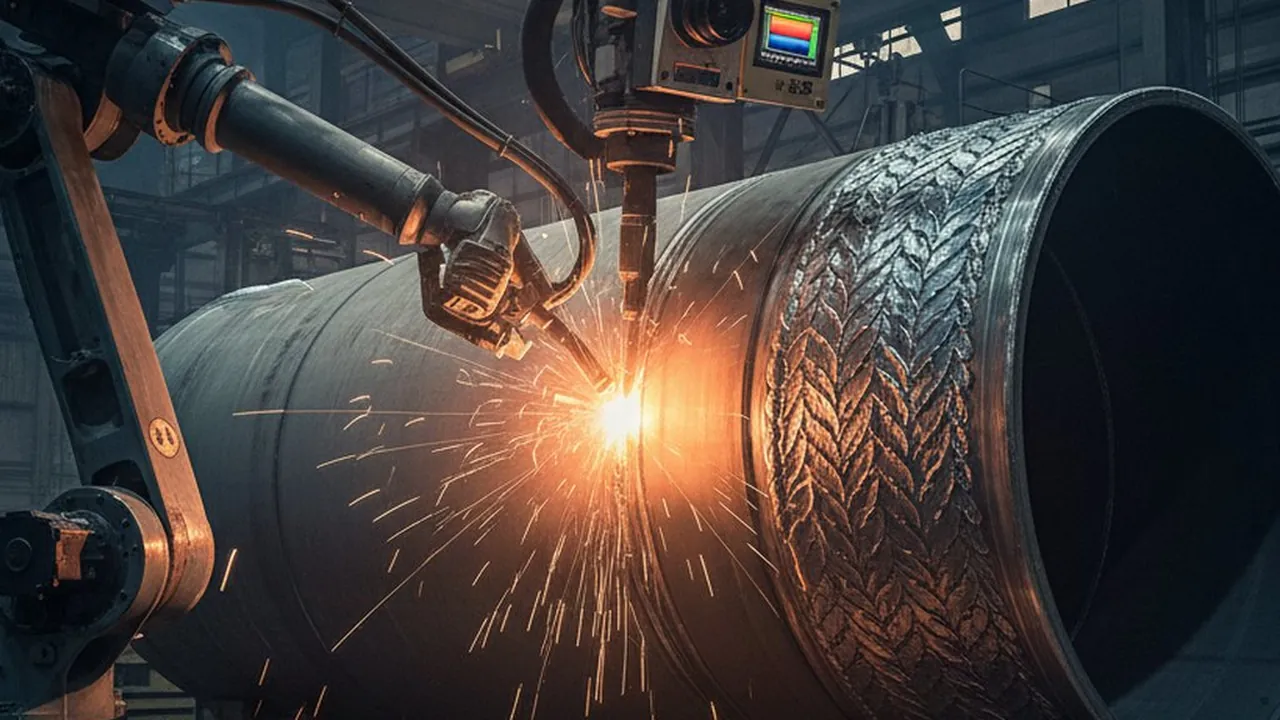
Our deposition tests captured real-time thermal evolution and bead formation, validating monitoring methodologies for future intelligent WAAM systems. This is the role of in-situ WAAM deposition monitoring, which reads the thermal signature of each layer as it is laid down.
Video Insights — Controlled WAAM Titanium Deposition
Tests conducted at Heggemann.


These clips highlight the arc behavior, shielding zone, melt pool oscillation, and early layer formation — all critical factors influencing microstructure and defect prevention. Explore the Therness product range for the cameras and AI units that track exactly these factors in production.
Metallurgical Behavior of WAAM Titanium
Titanium WAAM structures typically develop a columnar β grain framework aligned with the build direction. Rapid cooling forms a basket-weave network of α laths, while repeated thermal cycles refine the microstructure layer by layer.
What This Means for Mechanical Performance
- High tensile strength
- Stable creep behavior
- Strong fatigue potential after HIP or stress relief
- Anisotropy that must be accounted for in design
With optimized process parameters, WAAM titanium can achieve properties approaching wrought material.
Advantages for Industry and Future Adoption
WAAM is uniquely positioned for large, low-volume titanium structures where traditional methods fall short.
Key Industrial Advantages
- Near-net-shape production of meter-scale parts
- Drastic reduction in material waste
- Shorter lead times compared to forging
- Repair and refurbishment of high-value titanium components
- Easy integration with robotic manufacturing cells
As qualification frameworks mature, WAAM is becoming a strategic manufacturing technology for aerospace, defense, energy, and advanced mobility applications.
Towards Smarter WAAM Processes
The next generation of WAAM systems will rely on:
- real-time thermal imaging
- AI-enhanced melt pool analysis
- predictive distortion modelling
- closed-loop control of deposition parameters
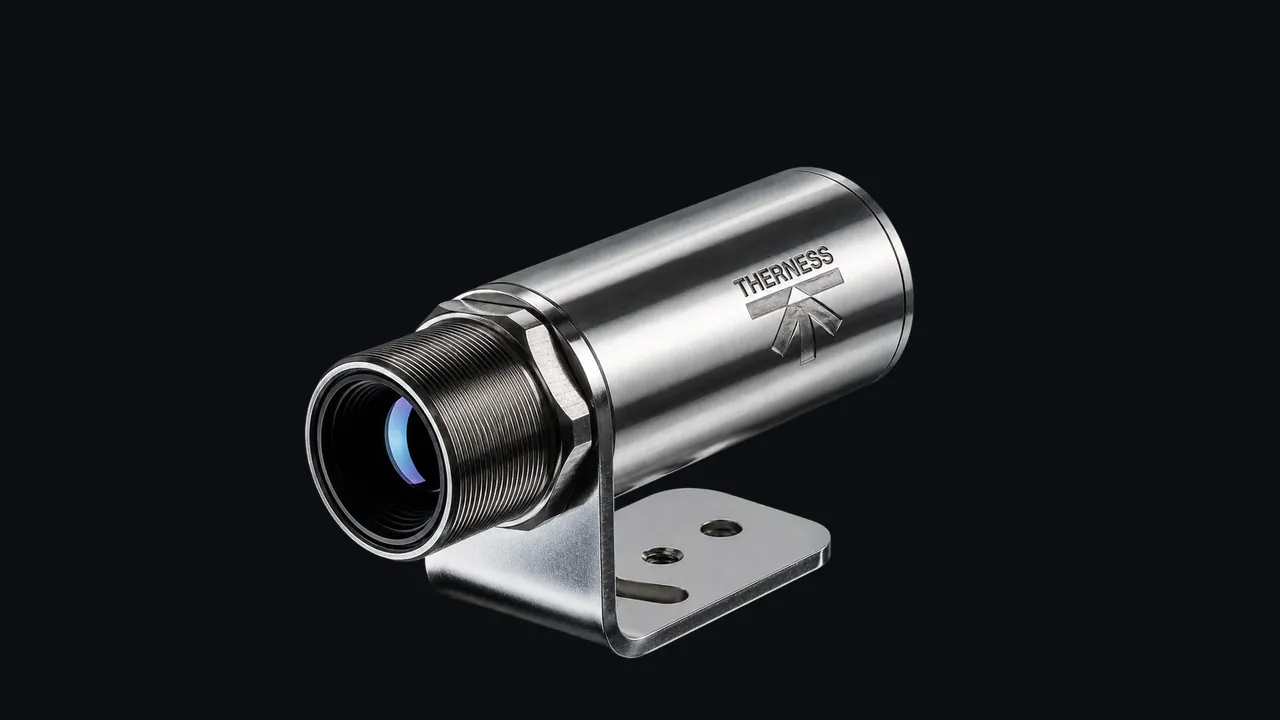
These tools will push titanium WAAM toward certified, repeatable, fully traceable production — aligning with the future vision of Therness. Compact thermal heads such as the HeatCam IR-S for WAAM and embedded setups make that real-time layer monitoring practical on a moving deposition head.
Next read: infrared thermography in welding · heat input & cooling rate (t8/5) · ai defect detection: thermal vs vision vs acoustic
Conclusion
Titanium WAAM stands at the intersection of innovation and industrial impact. Its ability to combine material efficiency, geometric freedom, and metallurgical performance places it among the most promising technologies for high-value structural components.
Our controlled deposition tests at Heggemann confirm the solid potential of titanium WAAM and support the development of monitoring strategies that will define the next generation of intelligent additive manufacturing.
Qualifying WAAM titanium for aerospace?
See how real-time thermal monitoring keeps titanium deposition inside its process window — interpass temperature, arc stability, and melt pool behaviour, layer by layer.
Book a demo Explore WAAM deposition monitoringTherness solution: Welding monitoring system — Every weld inspected in the cycle, with defect flags and the ISO 3834 / ISO 17635 evidence kept per weld.