From heat input to microstructure: why cooling curves matter
Cooling rate controls transformation kinetics in the HAZ and weld metal. Faster T8/5 tends to increase hardness and crack susceptibility, while slower T8/5 allows tougher phases to form but may reduce productivity. Understanding how parameters shift the cooling curve lets you tune procedures for both quality and throughput.
Calculating heat input and estimating T8/5 from thermal frames
A common engineering estimate for arc welding heat input (HI) in kJ/mm is:
HI ≈ (60 × V × I × η) / (1000 × travel_speed_mm_min)
Where V is arc voltage (V), I is current (A), and η is thermal efficiency (typical values: ~0.6–0.8 GTAW, ~0.8–0.9 GMAW, up to ~1.0 SAW). Use the value as a comparative indicator rather than an absolute guarantee of properties.
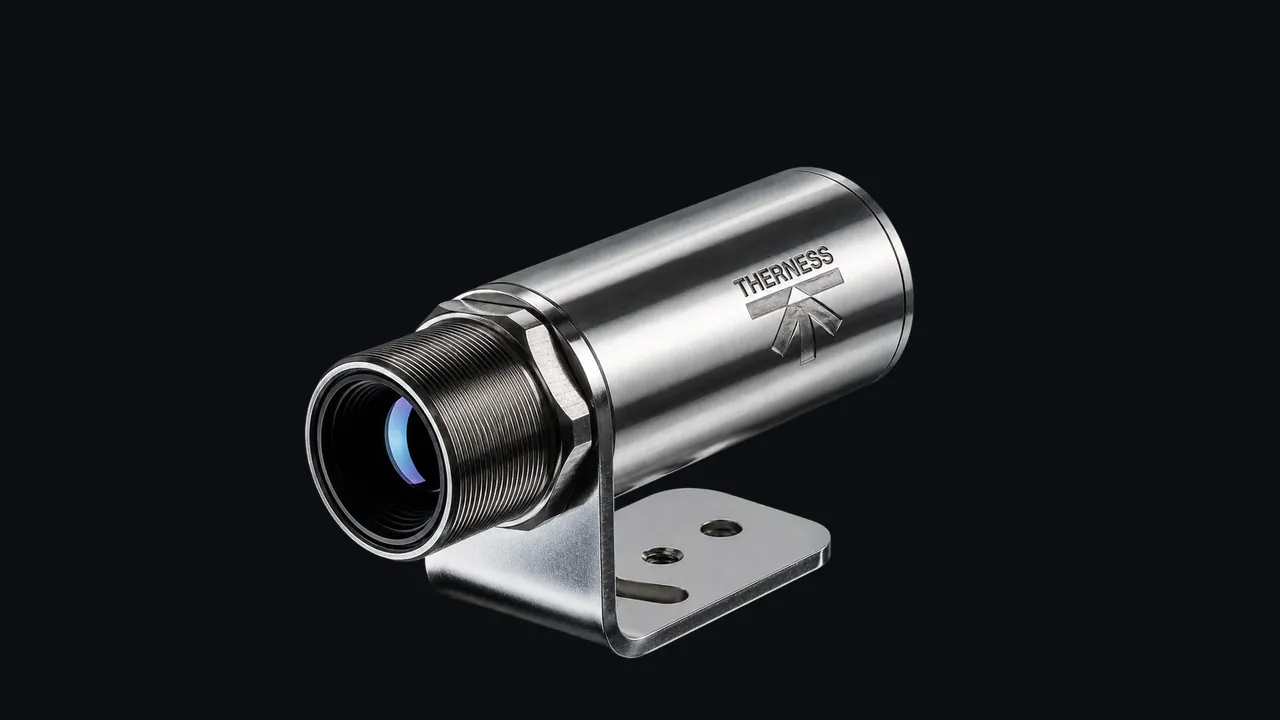
To estimate T8/5 from thermal frames, track a region of interest and measure the time taken to cool from 800 °C to 500 °C. Use a temperature‑calibrated camera where possible, and stabilize readings by averaging over a small ROI and applying noise‑robust interpolation rather than a single pixel. Validate with thermocouples during procedure qualification and after significant changes (materials, wire, gas, preheat). A real-time weld monitoring system can measure T8/5 on every production pass instead of relying only on calculated estimates.
Correlations: hardness, toughness, and defect likelihood
Relate measured T8/5 to hardness and impact test results by grade using data gathered during PQRs. For higher‑strength steels, very short T8/5 correlates with higher hardness and increased risk; longer T8/5 may mitigate crack susceptibility but can over‑soften certain zones. Keep production limits conservative until field evidence supports tightening.
Process parameters: travel speed, wire feed, shielding gas
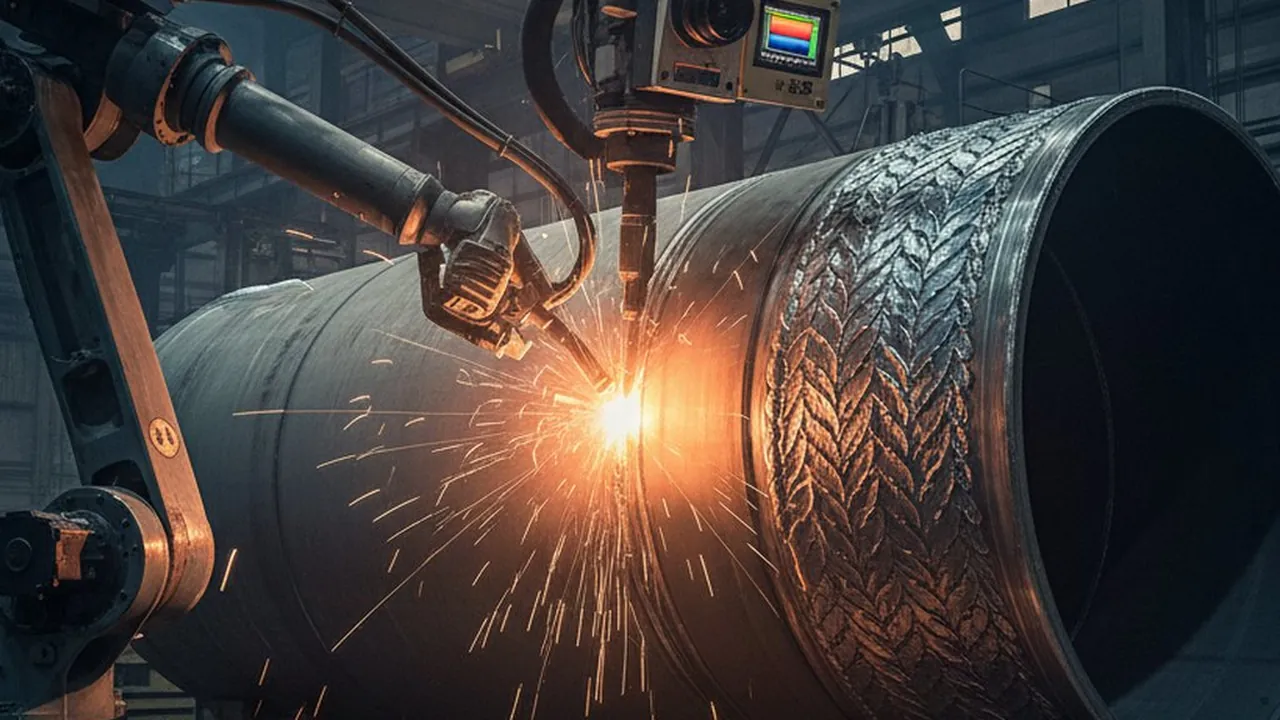
Travel speed, current density, and voltage shift heat input and thus the cooling curve. Preheat/interpass temperature and shielding gas composition also affect surface heat exchange. On automated cells, include feedback loops from thermal metrics to suggest parameter corrections before defects propagate; the Therness thermal monitoring instruments close that loop from live thermal data. Uncontrolled heat input variation is also a primary driver of weld distortion — real-time monitoring of heat input is the most effective way to prevent angular and longitudinal shrinkage in structural fabrication.
Calibration and validation: thermocouples vs infrared
Use thermocouples on representative coupons to validate T8/5 derived from IR. Track emissivity, viewing angle, and lens contamination over time; revalidate after maintenance or process changes. Where direct temperature accuracy is limited, use relative thermal metrics (cooling slopes, HAZ width) that are more robust to emissivity drift.
Examples: typical steel grades and expected cooling profiles
In common structural steels, T8/5 often spans tens to hundreds of milliseconds depending on thickness, heat input, and preheat. As section thickness increases or ambient conditions change, revisit your preheat and interpass tables to keep cooling rates within acceptable ranges for the grade and joint category.
Practical limits and uncertainty in field conditions
Field reflections, variable surface conditions, and motion blur add uncertainty. Use robust placement, optics, and filtering; document uncertainty bounds in your procedures and add a safety margin to limits. Where environmental control is weak, emphasize relative indicators and greater sampling in your review plan.
Related:
- Thermography fundamentals
- AI defect detection comparison
- Weld monitoring cameras for cooling-rate capture
- Preheat and interpass temperature monitoring with thermal cameras (ISO 13916)
- ISO 5817 Quality Levels B, C, D — Acceptance Criteria Guide — understanding how T8/5 control links to weld acceptance criteria
- Stainless steel welding quality monitoring: HAZ sensitization and thermal control — applying heat input and cooling rate principles to stainless grades
- Hydrogen-induced cracking prevention: thermal monitoring for preheat and cold crack control — how T8/5 and preheat compliance monitoring prevents HIC in high-CE steels
References
- EN 1011‑2 — Welding recommendations for arc welding of ferritic steels (preheat/interpass concepts)
- ISO 15614‑1 — Specification and qualification of welding procedures for metallic materials (PQR context)
- General engineering practice for heat input calculation and thermal efficiency factors
Watch: HeatCore AI — Automatic Weld Cooling Time Analysis: T8/5, T12/7 & Custom Intervals
Therness solution: Welding parameter monitoring — Current, voltage, wire feed and gas recorded per weld, as WPS/PQR and heat-input evidence.
Related Video