
CMT Weld Pool Solidification at 480fps
High-speed footage of a Cold Metal Transfer (CMT) process captured with the Therness Pool Drop Cam — melt pool solidification, droplet transfer, and the direct effect of interval parameters on bead geometry.
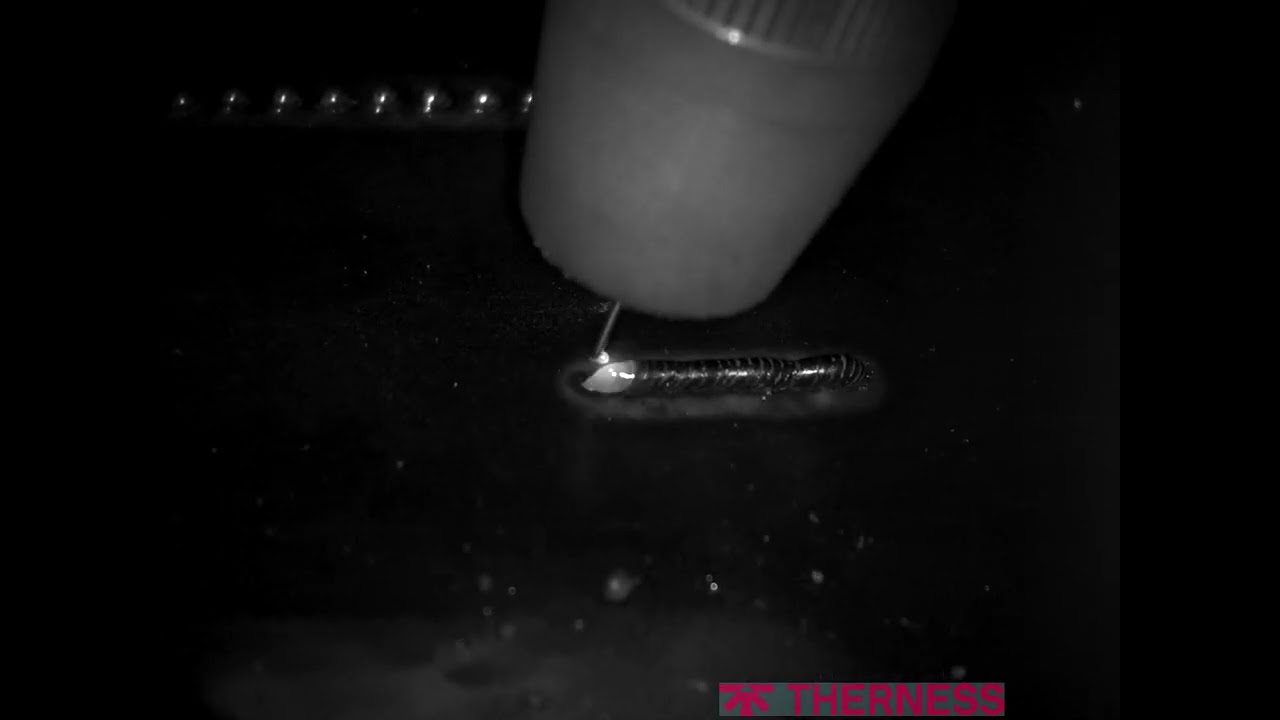
Watch the 480 fps Short

Key Takeaways
- Melt pool solidification behavior at 480fps — slow motion of every CMT cycle.
- Interval parameters visibly change droplet transfer and weld bead geometry.
- Arc-glare filtering keeps the pool, wire tip, and solidification front readable.
- Reference footage for numerical model validation and PQR documentation.
Deploy with Therness
- Pool Drop Cam mounts torch-side and films Full HD up to 480fps.
- Integrated laser-safe lighting suppresses arc glare without external optics.
- USB 3.0 into any HeatCore Basic or Pro server — visual + thermal in one record.
- Frame-accurate evidence for ISO 17637 visual testing and root-cause analysis.
The physics on screen
The most valuable detail in this longer landscape clip is the trailing edge of the pool, where molten metal freezes back into solid bead. Between fully liquid and fully solid there is a narrow mushy zone, and the rate at which that boundary sweeps forward sets the cooling rate — and with it the grain structure, hardness, and residual stress locked into the weld. The regular ripples left on the finished bead are a fossil record of that freezing: each ripple marks one oscillation of the pool as the interval parameters pulse heat in and let it drain away. When the interval is well tuned the solidification front keeps pace with the torch and the ripples stay even; detune it and an irregular front foreshadows undercut or lack of fusion. That is why footage like this doubles as validation data for solidification models and as frame-accurate backing for PQR-grade parameter records.
