AWS D1.1 and AWS D1.6 look like siblings — same committee, same general document structure, same “Structural Welding Code” naming pattern — and a fabricator moving from carbon steel to stainless work sometimes assumes D1.1 experience transfers directly. It does not. AWS D1.1 governs structural welding of carbon and low-alloy steel. AWS D1.6/D1.6M governs structural welding of stainless steel — a materially different metallurgical system with its own qualification variables, its own workmanship provisions, and failure modes (sensitization, chloride stress corrosion) that simply do not apply to D1.1’s carbon-steel scope. This guide covers D1.6 under its current edition, AWS D1.6/D1.6M:2017 (with Amendment 1, February 2021), naming the edition wherever a requirement is edition-dependent.
Why stainless structural welding needs its own code
D1.1’s essential variables, prequalified joint details, and workmanship tolerances are built around carbon and low-alloy steel’s metallurgical behaviour — hydrogen cracking risk, preheat and interpass temperature control tied to carbon equivalent, and a heat-affected zone that behaves predictably across the material grades D1.1 covers. Stainless steel does not share that behaviour. Depending on its metallurgical family, it can be susceptible to sensitization, hot cracking, or distortion patterns that carbon steel does not exhibit in the same way, and its corrosion resistance — the entire reason a designer specified stainless in the first place — can be locally destroyed by an improperly executed weld even when the joint is otherwise structurally sound. D1.6 exists because a code written for carbon steel cannot simply be applied to stainless with a note in the margin.
The three stainless families, and why the difference matters to a welder
Structural stainless steel used in D1.6 work falls into three broad metallurgical families, and the family determines the qualification and workmanship requirements that apply. Austenitic stainless steels (the 300-series grades most common in structural and architectural work) are non-magnetic, generally have the best weldability of the three families, and are the family most associated with sensitization risk in the heat-affected zone. Ferritic stainless steels are magnetic, generally lower in cost and nickel content, and carry different toughness and grain-growth considerations in the heat-affected zone than austenitic grades. Duplex stainless steels are a mixed austenitic-ferritic microstructure engineered for a combination of strength and corrosion resistance that neither single-phase family achieves alone, and they carry their own narrow heat-input and cooling-rate requirements to preserve the phase balance the material was designed around. A WPS qualified on one family does not qualify welding on another — D1.6 treats them as distinct qualification categories, consistent with how differently each family actually behaves under a welding arc.
Sensitization and carbide precipitation
Austenitic stainless steel’s corrosion resistance depends on a continuous chromium oxide layer that requires a minimum chromium content in the base metal to maintain. When austenitic stainless is held for a period within a specific temperature range during welding — most relevantly in the heat-affected zone adjacent to the fusion line — chromium can combine with carbon in the steel to form chromium carbides that precipitate preferentially at grain boundaries. Because that chromium is drawn from the immediately adjacent grain-boundary region rather than from the bulk material, the area right next to each grain boundary can become locally depleted in chromium, weakening the corrosion-resistant layer specifically along the grain boundaries even though the bulk material composition is unchanged. This condition is called sensitization, and a sensitized joint can suffer intergranular corrosion in service even though it passes every structural and dimensional inspection a fabricator runs at the time of construction — the failure mode shows up later, in the field, under corrosive exposure, not on the shop floor.
Low-carbon grades (the “L” grades, such as 304L and 316L) and stabilized grades (such as 321, stabilized with titanium) are the standard metallurgical response to sensitization risk, because both approaches limit the free carbon available to form chromium carbides in the first place. Controlling heat input and interpass temperature to limit the time the heat-affected zone spends in the sensitizing range is the welding-procedure-side control, alongside material selection — and this is exactly the parameter window that continuous thermal monitoring of stainless heat-affected zones is positioned to verify pass by pass, rather than inferring compliance from the qualified WPS’s stated heat-input range alone.
Filler metal selection: 309L as the dissimilar-metal and buffer filler
309L is an austenitic filler metal — a higher-chromium, higher-nickel composition than standard 308L filler — used most commonly as a buffer layer or transition filler when welding stainless to carbon steel, or when overlay cladding carbon steel with a stainless surface layer. Its higher alloy content is specifically formulated to tolerate dilution from the carbon-steel side of a dissimilar-metal joint while still solidifying with the ferrite-austenite phase balance a sound austenitic weld deposit needs. D1.6 qualification for a dissimilar-metal or overlay joint using 309L filler follows the same qualification logic as any other filler-to-base-metal combination: the WPS is qualified for the specific base metals and filler actually used in production, and a filler substitution — even one that looks metallurgically similar — requires its own qualification unless the code’s own filler-metal grouping rules already cover the substitution.
Procedure qualification
D1.6/D1.6M:2017 requires Welding Procedure Specifications qualified per the code’s own procedure qualification testing — or, where the fabricator elects to use them, prequalified joint details that do not require destructive testing provided every prequalification condition in the code is met exactly. Essential variables for stainless qualification include the base metal family (austenitic, ferritic, or duplex) and specific grade, the filler metal classification, heat input, and preheat/interpass temperature range, mirroring D1.1’s general qualification structure but keyed to the metallurgical variables that actually matter for stainless rather than to carbon-steel-specific variables like carbon equivalent.
Workmanship and fit-up
D1.6’s workmanship provisions — joint fit-up tolerances, alignment, and preparation before welding — address stainless-specific concerns that D1.1’s workmanship section does not need to, particularly around minimizing the total heat input and the time spent in the sensitizing range across a multi-pass sequence, and around avoiding contamination of the weld area with carbon-steel tooling, grinding residue, or handling equipment that has previously contacted carbon steel, since embedded iron contamination on a stainless surface can itself become a corrosion initiation site independent of anything happening in the weld metal itself.
Examination and acceptance
Examination methods and acceptance criteria under D1.6 follow the visual, radiographic, ultrasonic, and surface-method structure common to AWS structural codes, with acceptance limits set for the imperfection categories relevant to stainless structural work. Where a project specification requires reconciling D1.6 acceptance against an ISO-based quality level instead of, or alongside, the AWS D1.6 criteria — common on projects with both European and North American stakeholders — the ISO 5817 versus ASME/AWS comparison covers how the two acceptance frameworks’ imperfection categories and limits map to each other, and where they do not map cleanly.
Monitoring stainless welds in process
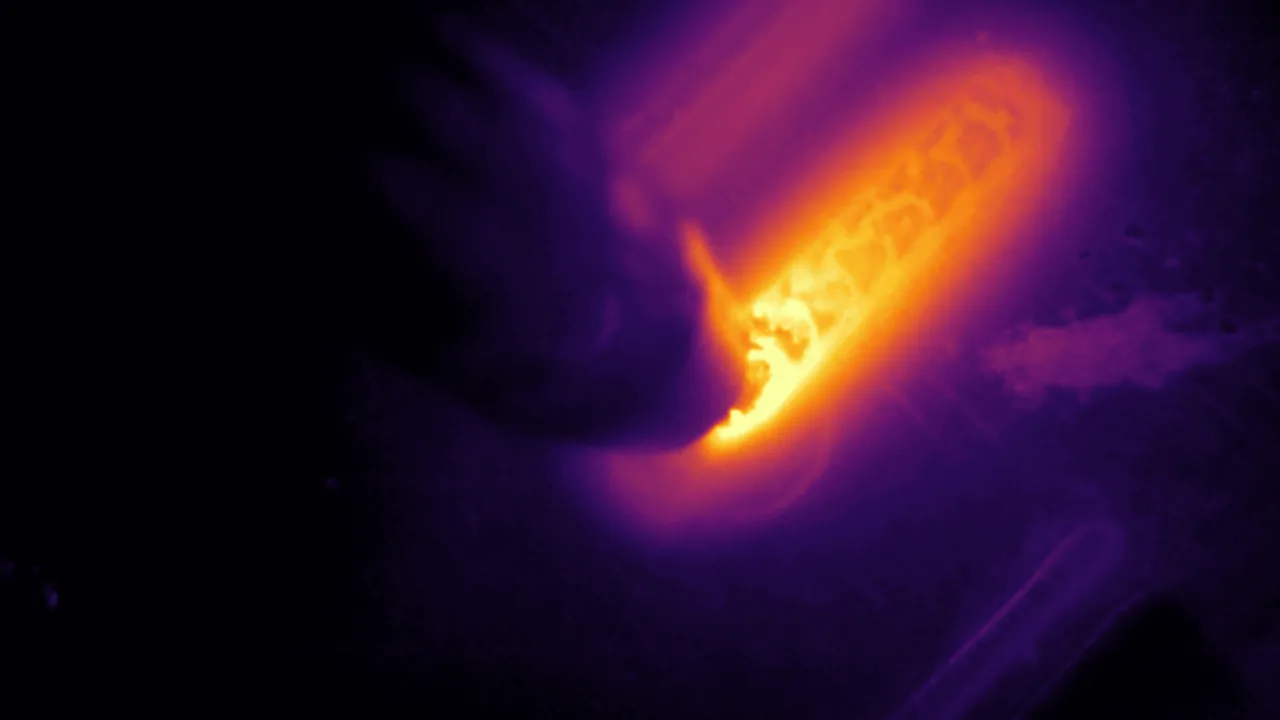
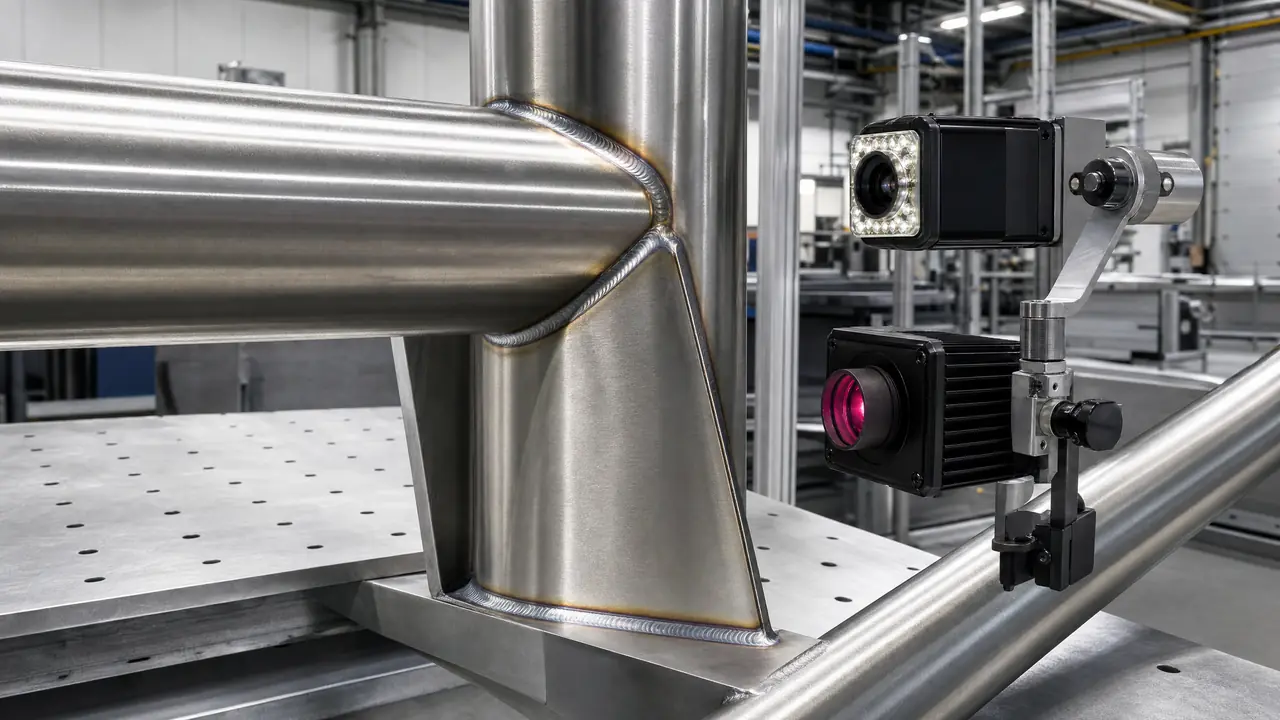
TIG/GTAW is the dominant process for structural stainless work where appearance, corrosion performance, and control over heat input into the heat-affected zone all matter more than deposition rate. Thermal imaging and process monitoring for TIG/GTAW covers how continuous observation of the weld pool and the surrounding heat-affected zone supports process control on stainless specifically — not by detecting sensitization directly, but by giving a continuous record of the heat input and interpass conditions the qualified procedure specifies, the same parameters that determine sensitization risk in the first place. For camera selection and mounting across stainless and mixed-material fabrication lines, the welding camera hub covers the system options relevant to shops running both carbon-steel D1.1 work and stainless D1.6 work on the same floor.
Practical scoping checklist
Before qualifying a D1.6 procedure: confirm the base metal’s actual family (austenitic, ferritic, or duplex) rather than assuming from the grade name alone, since some designations are less obvious than the 300-series/400-series convention suggests; select filler metal matched to the base metal and joint type, treating any substitution as requiring its own qualification; set heat input and interpass temperature limits with sensitization risk in mind for austenitic work specifically; and keep D1.6’s stainless-specific qualification and workmanship records entirely separate from any D1.1 carbon-steel qualification records the same shop holds, since a D1.1 qualification does not carry over to stainless work regardless of how similar the joint geometry looks on the drawing.
Where D1.1 and D1.6 boundaries get confused in practice
The most common scoping error is a mixed-material structure — a stainless handrail or platform welded onto a carbon-steel primary structural frame — where a fabricator qualifies the carbon-steel connections under D1.1 and then assumes the same qualification covers the stainless-to-stainless joints on the same assembly. It does not: the stainless joints need their own D1.6 qualification, and any stainless-to-carbon-steel dissimilar joint needs a qualification that specifically covers that combination, typically using a buffer filler such as 309L rather than either base metal’s own matching filler. The second common error runs the other way: treating a structural member simply because it is stainless as automatically outside D1.1’s scope, when in some mixed-code projects a specification may still reference D1.1 provisions for geometric and structural design requirements while directing D1.6 specifically for the welding and acceptance criteria — the governing specification, not the material alone, determines which code’s welding provisions actually apply on an ambiguous project.
Duplex stainless: a narrower process window than either single-phase family
Duplex grades deserve a specific caution beyond the general three-family split above, because their qualification and in-process control window is narrower than either austenitic or ferritic alone. The material’s mechanical and corrosion performance depends on maintaining a roughly balanced ratio of austenite and ferrite phases in the weld metal and heat-affected zone, and that balance is sensitive to cooling rate: cooling too fast after welding suppresses the austenite transformation and leaves the joint more ferritic than the base metal was designed to be, which can reduce toughness and corrosion resistance; cooling too slowly, or excessive heat input across a multi-pass sequence, can promote intermetallic phase formation that embrittles the joint. A D1.6 procedure qualified for duplex material is qualified within a heat-input and interpass-temperature range specifically because that range is what keeps the phase balance where the material’s design properties assume it will be — treating a duplex qualification’s heat-input range as a soft guideline rather than a hard qualified limit is a materially different risk than doing the same thing on an austenitic or carbon-steel joint.
Repair and rework
A D1.6 joint that fails examination follows the same general repair discipline as any AWS structural code: repair under a qualified procedure appropriate to the base metal family and joint configuration, followed by re-examination of the repaired area at the same method and extent the original joint required. Stainless work adds one practical constraint carbon-steel repair does not carry to the same degree: repeated repair heating cycles on austenitic material increase cumulative time in the sensitizing range, so a joint that has already been repaired once carries a materially different sensitization risk profile than the same joint on its first weld pass, even when each individual repair is executed to a fully qualified procedure. A fabricator’s internal repair-tracking should treat that cumulative exposure as a real variable on stainless work, not simply count repairs against a generic cap carried over from carbon-steel practice.
Documentation
D1.6 qualification records — WPS, PQR, and welder qualification documentation — along with joint-by-joint welding and examination records, form the same kind of permanent project file that other AWS and ASME structural and pressure codes require, and should identify the base metal family and specific grade explicitly on every record rather than a generic “stainless” designation, since qualification and acceptance requirements differ meaningfully across the austenitic, ferritic, and duplex families this code covers. Where continuous process and thermal monitoring is used alongside the code-required documentation, tying that monitoring data to the same joint identifiers used in the welding and examination records gives an auditor a single, coherent evidence chain for a joint rather than two files that have to be manually cross-referenced to reconstruct what actually happened during fabrication.
Monitor Heat Input on Every Stainless Joint
Therness continuous thermal monitoring tracks heat input and interpass conditions on stainless structural welds, the same parameters that drive sensitization risk. Book a demo to see it on your own D1.6 work.
Book a demoTherness solution: Welding monitoring system — Every weld inspected in the cycle, with defect flags and the ISO 3834 / ISO 17635 evidence kept per weld.