

Weld quality levels under ISO 5817 govern imperfection limits in the weld bead itself. But a structurally sound weld placed at the wrong position, on a distorted assembly, or on a frame that has bowed beyond engineering tolerances is still a non-conformance — just one that ISO 5817 will never catch.
That is the gap ISO 13920 fills. Published by ISO as General tolerances for welded constructions — Dimensions for lengths and angles — Shape and position, the standard defines four graduated tolerance classes (A, B, C and D) for the overall geometry of welded fabrications. Understanding how to select and apply those classes is foundational for any manufacturer building to EN 1090, EN 15085, or any quality framework that references dimensional conformance of welded assemblies.
What ISO 13920 Covers
ISO 13920 applies to the overall dimensions and shape of a welded construction, not to the weld bead geometry. Its scope includes:
- Linear dimensions: lengths, widths, heights, depths, diameters, and distances between features
- Angular dimensions: deviation from a specified angle or from perpendicularity
- Form tolerances: flatness, straightness, and parallelism of surfaces or edges on the finished welded assembly
The standard deliberately excludes weld bead imperfections (covered by ISO 5817 / EN ISO 10042 for aluminium), weld joint preparation geometry (ISO 9692 series), and tight positional tolerances assigned individually on engineering drawings — those override the general tolerance class wherever they appear.
ISO 13920 is a general tolerance standard: it applies to every dimension on a welded assembly that is not individually toleranced on the drawing. Specifying the class once in the title block or welding standard reference is enough to govern the entire fabrication.
The Four Tolerance Classes
ISO 13920 defines two sets of tolerance tables — one for linear dimensions and one for angular dimensions — each with four classes. Classes are labelled A through D, from tightest to most permissive.
Linear Dimension Tolerances
Linear tolerances are given as ±mm and scale with the nominal dimension:
| Nominal dimension (mm) | Class A | Class B | Class C | Class D |
|---|---|---|---|---|
| up to 30 | ±1 | ±2 | ±3 | ±4 |
| 30–120 | ±1 | ±2 | ±4 | ±5 |
| 120–400 | ±1 | ±3 | ±5 | ±8 |
| 400–1000 | ±2 | ±4 | ±6 | ±10 |
| 1000–2000 | ±3 | ±5 | ±8 | ±12 |
| 2000–4000 | ±4 | ±6 | ±10 | ±15 |
| above 4000 | ±5 | ±8 | ±12 | ±20 |
Abbreviated — refer to the published standard for the complete tables including intermediate ranges.
Angular Dimension Tolerances
Angular tolerances apply to the shorter leg of the angle and also scale with its length (in mm):
| Shorter leg (mm) | Class A | Class B | Class C | Class D |
|---|---|---|---|---|
| up to 30 | ±20’ | ±45’ | ±1° | ±1°30’ |
| 30–120 | ±15’ | ±30’ | ±45’ | ±1°15’ |
| 120–400 | ±10’ | ±20’ | ±30’ | ±1° |
| above 400 | ±5’ | ±10’ | ±20’ | ±45’ |
Flatness and Straightness Tolerances
Shape tolerances (flatness, straightness, parallelism) follow a separate table, again with four graduated classes. At a 1000 mm measurement length, Class A allows 3 mm deviation, Class B allows 6 mm, Class C allows 12 mm, and Class D allows 24 mm.
Connect ISO 13920 tolerances to in-process evidence
ISO 13920 defines dimensional and angular tolerances checked on the completed fabrication. In-process thermographic monitoring adds time-aligned process evidence that can help your team investigate thermal drift and document each weld consistently. It does not measure dimensions or establish conformity to a tolerance class.
Explore in-process monitoringSelecting the Right Class
Decision rule: specify the loosest class that still satisfies functional and structural requirements. Tighter classes cost more — they require more corrective passes, more fixturing, more distortion management, and longer cycle times.
The four classes map roughly to fabrication contexts as follows:
Class A is appropriate for precision assemblies where downstream machining clearances are tight, or where fit-up to mating sub-assemblies demands close control. Typical applications include machine frames, jigs and fixtures, precision structural nodes.
Class B is the most common production default for structural steel fabrication. EN 1090-2 — the execution standard for steel structures — references ISO 13920 Class B as the baseline for Execution Class 2 and 3 structures where no tighter tolerance is specified.
Class C is typical for large weldments in shipbuilding, civil structures, and storage tanks where the sheer scale of the assembly makes tighter control impractical and the structural function tolerates more variation.
Class D is used for coarse assemblies where only rough dimensional agreement matters — heavy earthmoving equipment skids, rough infrastructure frames, or non-critical bracketry.
Mapping to EN 1090 Execution Classes
EN 1090-2 links Execution Class (EXC) to ISO 13920 tolerance class as follows:
| EN 1090-2 Execution Class | Typical ISO 13920 class |
|---|---|
| EXC 1 | D or C |
| EXC 2 | B (default) |
| EXC 3 | B or A depending on engineering specification |
| EXC 4 | A, with individual tolerances specified on drawings |
For rolling-stock welding governed by EN 15085, the certification level (CL1–CL4) typically requires Class B or tighter for load-bearing joints, with Class A for safety-critical nodes such as bogie frames.
How to Specify ISO 13920 in Drawings and WPS
The standard defines a concise notation for the title block of engineering drawings:
ISO 13920 - BThis single line governs all un-toleranced linear and angular dimensions on the drawing. Where a specific feature requires a tighter or looser class, an individual tolerance annotation on that dimension takes precedence over the general class.
In the Welding Procedure Specification (WPS) or the welding plan, reference to ISO 13920 class should appear alongside the quality level reference (ISO 5817 / EN ISO 10042). A complete quality reference block typically looks like:
Weld quality: ISO 5817 - Level B
Fabrication tolerances: ISO 13920 - Class B
This separation is important: ISO 5817 Level B governs the weld bead; ISO 13920 Class B governs the finished assembly dimensions. Both must be satisfied independently.
Inspection and Verification
Verifying conformance to ISO 13920 requires dimensional measurement of the finished assembly. Common methods include:
- Manual measurement: steel rules, digital calipers, height gauges, angle gauges — adequate for Class C and D, labour-intensive for Class A
- Coordinate Measuring Machines (CMM): precise, traceable, suited for Class A and B in batch production
- Laser tracker and total station: preferred for large structures (shipbuilding, civil, wind tower) where CMM access is impractical
- Structured light scanning: fast surface capture for flatness and profile deviation, useful for Class B automotive and rolling-stock frames
Measurement records must be traceable to calibrated instruments per ISO 17662 and archived as part of the welding quality records required under ISO 3834.
Measuring a cold assembly is insufficient if the fabrication process introduces residual distortion that only becomes apparent after heat treatment or load application. Measure at the agreed reference condition (typically ambient temperature, unrestrained) specified in the engineering drawing.
Where Thermal Monitoring Adds Process Evidence
ISO 13920 acceptance remains a post-process dimensional measurement task. In-process thermographic monitoring does not measure dimensions or determine whether a completed fabrication conforms to a tolerance class. It records thermal behaviour during welding so engineers can compare process events with later inspection results.
A welding monitoring system can create time-aligned records for each observed pass. Depending on the configured sensors and analysis, those records can include thermal images, timestamps, temperature history and cooling intervals. They give welding engineers and QA teams additional evidence when they investigate drift, review a welding sequence or document how a weld was produced.
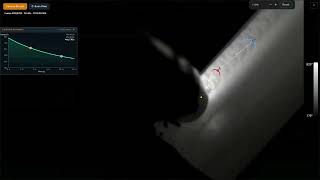
The cooling-time analysis shown above illustrates one form of process record: the software extracts T8/5 and T12/7 intervals from thermographic data and associates the result with the weld timeline. This can support process investigation and traceable records, but the applicable procedure still defines how temperature is measured and how the result is evaluated.
Process evidence and dimensional acceptance answer different questions. Monitoring can show what happened during welding; calibrated dimensional inspection shows whether the completed fabrication meets the specified ISO 13920 limits. Monitoring is not certification, defect detection, an acceptance decision or a substitute for visual inspection or NDT.
The software behind the cooling-time analysis above is described on the HeatCore AI weld monitoring platform page. If you want to check how per-pass thermal records would fit alongside dimensional inspection in your fabrication workflow, ask a Therness engineer about monitoring for ISO 13920 fabrications.
Common Non-Conformance Scenarios
Three scenarios account for the majority of ISO 13920 non-conformances in production:
Bowing of long weldments — Longitudinal shrinkage across multiple passes bows beams and columns. Cause: inconsistent heat input or incorrect bead sequence. Prevention: balanced welding from the neutral axis outward, verified by thermal monitoring.
Angular distortion of plate-to-plate T-joints — Transverse fillet shrinkage rotates the vertical plate relative to the baseplate. Cause: single-side welding without counterbalancing. Prevention: alternate-side weld sequence or pre-set angular offset, monitored thermally.
Accumulated positional error in multi-joint assemblies — Individual joints within Class B tolerance compound to put a final feature outside limits. Cause: no intermediate check at sub-assembly stage. Prevention: stage inspection at defined assembly checkpoints with measurement records per ISO 3834 quality plan.
Summary
ISO 13920 is the general tolerance standard for welded constructions. Its four classes — A (tightest) through D (most permissive) — govern linear dimensions, angular dimensions, and shape tolerances for the finished assembly, independent of weld bead quality limits under ISO 5817. Class B is the production default for structural steel under EN 1090-2 EXC 2–3; Class A applies to precision and safety-critical assemblies in EN 15085 and EXC 4.
Specifying the correct class at design stage, referencing it in the title block and WPS, and verifying compliance through calibrated dimensional inspection with traceable records are the three non-negotiable steps for a conformant welding quality system.
In-process thermographic monitoring can add time-aligned process evidence to the quality record. It does not measure the completed assembly or establish ISO 13920 conformance, so dimensional acceptance remains with the specified measurement and inspection methods.
Add process evidence to your dimensional-control workflow
Tell us your welding process, component geometry, production constraints and dimensional-control plan. We will outline a monitoring approach for process visibility and traceable records; ISO 13920 verification remains with your specified dimensional measurement and inspection methods.
Discuss your application Explore in-process monitoringFrequently Asked Questions
What does ISO 13920 cover?
ISO 13920 covers general tolerances for welded constructions: linear dimensions (lengths, widths, heights), angular dimensions, and form tolerances (flatness, straightness, parallelism). It applies to the overall geometry of a finished welded assembly, not to the weld bead imperfections themselves.
What are the four ISO 13920 tolerance classes?
ISO 13920 defines four classes: A (tightest), B, C, and D (most permissive). Each provides graduated tolerance values for linear dimensions, angular dimensions, and shape. Class A suits precision assemblies; Class B is the production default for structural steel; Classes C and D cover large-scale or non-critical weldments.
How does ISO 13920 differ from ISO 5817?
ISO 5817 governs weld bead imperfection limits (porosity, undercut, cracks), while ISO 13920 governs the overall dimensions and shape of the finished assembly. Both standards must be satisfied independently: a weld meeting ISO 5817 Level B can still fail ISO 13920 Class B if the assembly is distorted beyond its tolerance limits.
How do I specify ISO 13920 on an engineering drawing?
Add the notation "ISO 13920 - B" (or the applicable class) to the title block of the drawing. This single entry governs all un-toleranced linear and angular dimensions on the entire fabrication. Where a specific feature needs a different class, annotate it individually on that dimension — the individual tolerance overrides the general class.
Which ISO 13920 class applies to EN 1090 structures?
EN 1090-2 maps execution class to ISO 13920 as follows: EXC 1 uses Class D or C; EXC 2 defaults to Class B; EXC 3 uses Class B or A depending on specification; EXC 4 uses Class A with individually specified tolerances. For EN 15085 rolling-stock, Class B or tighter is required for load-bearing joints.


