English version
The qualification route is chosen by the construction code and contract, not by whichever certificate a welder already has. ISO 9606-1 and ASME BPVC Section IX can both qualify welding personnel, but they organise scope and records differently. Treating the names as interchangeable creates a gap before the arc starts.
This guide is about welder qualification. It does not replace the procedure qualification, design code or finished-weld acceptance requirements that the project also names. Use the decision flow below to identify the route, then check the certificate and the production record against that route.
Start with the code that governs the work
Ask one question first: which construction code or contract requirement applies to the item being made? If it invokes the ISO route, begin with ISO 9606-1. If it invokes ASME Section IX, use the ASME IX scope reference. A customer specification may require one route even when the other certificate looks technically similar.
| Decision point | ISO 9606-1 route | ASME IX route | Evidence to keep |
|---|---|---|---|
| What is being qualified? | A welder performing manual or partly mechanized fusion welding of steel | A welder or welding operator under the construction code that invokes Section IX | Certificate or performance qualification record linked to the person |
| What sets the boundary? | The tested process, material group, thickness or diameter, position, consumable and continuity rules | The applicable essential variables on the performance qualification record; supplementary essential variables apply to the procedure/WPS/PQR when impact testing is required | A scope check against the job, WPS, applicable code edition and required impact-test conditions |
| What is separate? | The welder certificate does not qualify the welding procedure | Personnel qualification and procedure qualification are separate records | WPS/PQR or equivalent procedure record alongside the performance record |
| What proves production control? | Traceable activity and continuity evidence inside the approved range | Measured production variables and the records required by the construction code | Per-weld identifier, welder, parameters, thermal record and review status |
The table is a decision aid, not a reproduction of either standard’s tables. Check the project edition and exact variable ranges in the controlled copy.
What ISO 9606-1 proves
ISO 9606-1 is the steel part of the ISO 9606 welder-qualification series. It tests a person under defined conditions and extends the result into a range of approval. A certificate therefore answers a bounded question: does this process, material, joint, position and size fall inside its scope?
The practical check is a match between the assignment and the certificate. Confirm the process, material group, test-piece thickness or pipe diameter, position, filler and the continuity or reconfirmation status. If one essential variable falls outside the approved range, the correct action is a new qualification, an allowed extension or a reassignment. Do not solve a scope gap by writing a broader description on the job card.
The ISO 9606-1 range-of-approval guide explains the certificate boundaries. The welder continuity record guide covers the evidence trail that keeps it current. Neither makes a qualification blanket authorisation.
What ASME Section IX proves
ASME BPVC Section IX is the route used when the governing construction code invokes it. It covers welding procedures and the performance qualification of welders and welding operators. Keep those records distinct: the performance record covers the person; the procedure record covers the qualified process.
The scope check follows the variables on the relevant record. For a welder or operator, a change beyond a performance essential variable requires requalification; supplementary essential variables apply to the procedure/WPS/PQR when impact testing is required. Production evidence must identify the weld, person, procedure revision and measured values. A normal-looking bead is not proof that variables stayed inside scope.
Make either route auditable in production
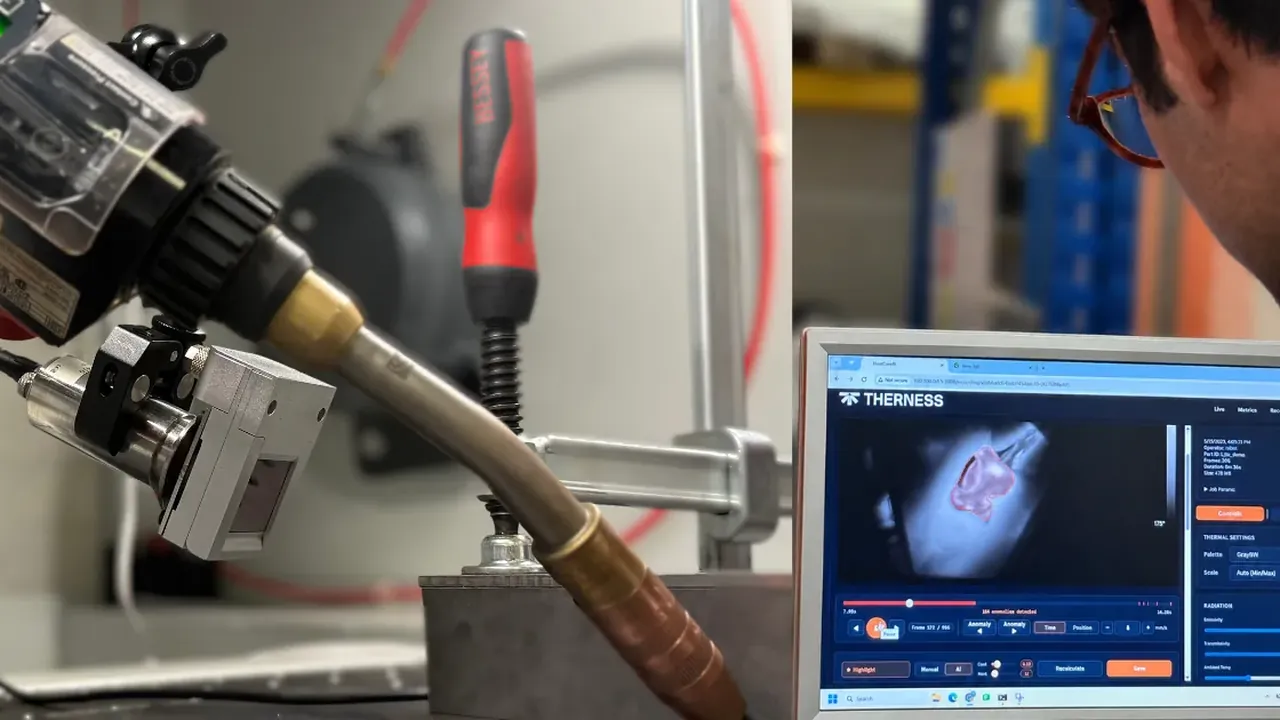
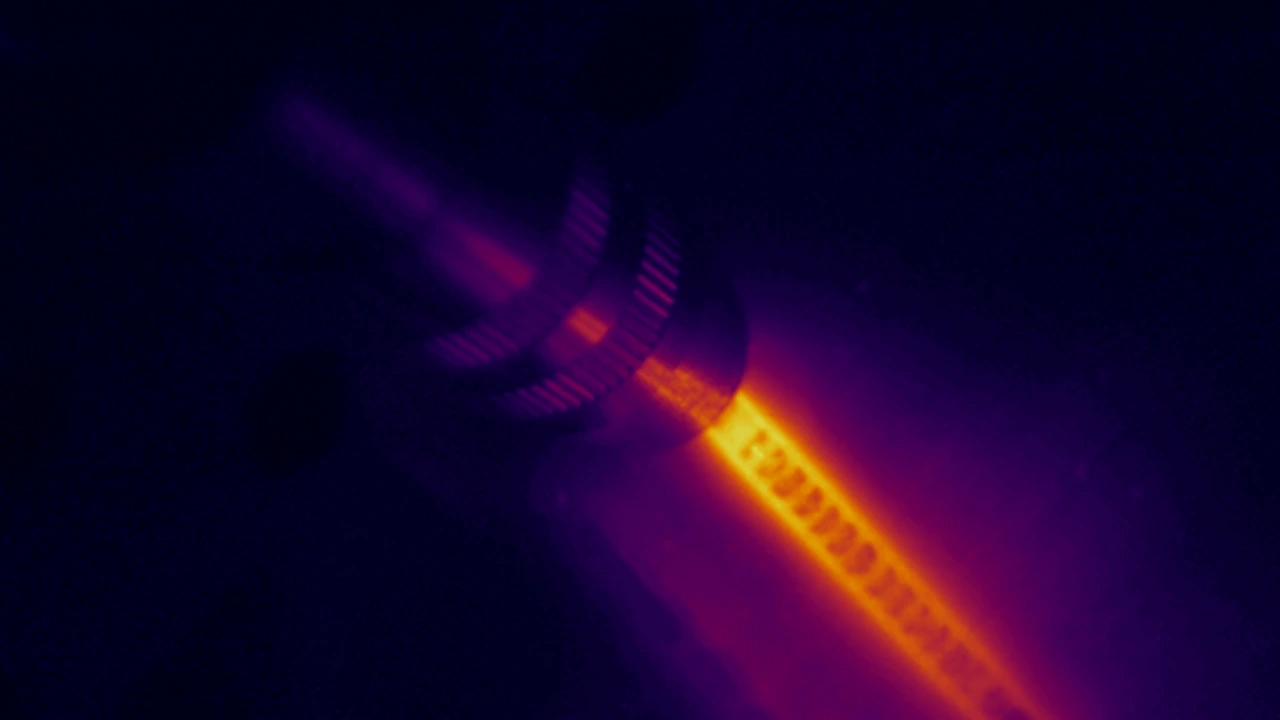
The same control pattern works across both schemes: identify the welder, connect the job to the qualification and WPS, record what the machine delivered, and retain the review. WeldTrace associates process values with each weld; HeatCore AI adds a thermal record when needed. These records support a check; they do not issue a certificate or decide acceptance.
Before release, a welding coordinator should be able to answer four questions from the file: which route did the code require, which certificate covered the person and joint, what did production actually deliver, and who reviewed the result? If the answer is split across an unlinked job card, machine display and spreadsheet, the technical work may be correct but the audit trail is fragile.
Versione italiana
La norma da seguire dipende dal codice di costruzione e dal contratto, non dal certificato già posseduto. ISO 9606-1 e ASME BPVC Section IX qualificano il personale, ma organizzano ambito e documenti in modo diverso. Trattare i due percorsi come equivalenti crea una lacuna prima dell’arco.
Questa guida riguarda la qualificazione del saldatore. Non sostituisce la qualificazione della procedura, il codice di progettazione o i requisiti di accettazione del giunto finito indicati dal progetto.
Parti dal codice applicabile
Chiedi prima quale codice di costruzione o requisito contrattuale governa il componente. Se richiama il percorso ISO, consulta ISO 9606-1. Se richiama Section IX, usa la scheda di ambito ASME IX. Una specifica può imporre un percorso anche quando il certificato dell’altro schema sembra simile.
| Punto | Percorso ISO 9606-1 | Percorso ASME IX | Evidenza |
|---|---|---|---|
| Cosa si qualifica | Il saldatore che esegue saldatura manuale o parzialmente meccanizzata dell’acciaio | Il saldatore o operatore secondo il codice che richiama Section IX | Certificato o record di prestazione collegato alla persona |
| Cosa delimita l’ambito | Processo, gruppo di materiale, spessore o diametro, posizione, consumabile e continuità | Variabili essenziali applicabili al record di prestazione; quelle supplementari riguardano il record della procedura quando è richiesto il test d’impatto | Confronto tra lavoro, WPS, edizione del codice e condizioni di impact test |
| Cosa resta separato | Il certificato del saldatore non qualifica la procedura | Qualifica del personale e qualifica della procedura sono record distinti | WPS/PQR o record equivalente insieme alla prestazione |
| Cosa dimostra la produzione | Attività tracciabile e continuità nell’intervallo approvato | Variabili di produzione misurate e richieste dal codice | ID del giunto, saldatore, parametri, termografia e revisione |
La tabella orienta la scelta, non riproduce le tabelle dei limiti. Verifica l’edizione controllata e le variabili applicabili.
Il significato dei due certificati
ISO 9606-1 dimostra che il saldatore ha superato una prova in condizioni definite, estesa a un intervallo di approvazione. Verifica processo, materiale, spessore o diametro, posizione, apporto e continuità. Se una variabile esce dall’intervallo, serve una nuova qualifica, un’estensione ammessa o una riassegnazione.
Section IX è il percorso richiamato dal codice di costruzione ASME. Comprende procedura e prestazione, ma i record restano distinti: uno copre la persona, l’altro il processo qualificato. Per il saldatore o operatore, una modifica oltre una variabile essenziale della prestazione richiede una nuova qualifica; le variabili essenziali supplementari riguardano la procedura/WPS/PQR quando è richiesto il test d’impatto.
Tieni insieme qualifica ed evidenza
Per entrambi gli schemi collega saldatore, WPS e giunto; registra ciò che la macchina ha erogato; conserva l’esito della revisione. WeldTrace associa i valori al record, mentre HeatCore AI aggiunge l’evidenza termica. Per la visione complessiva, consulta il sistema di monitoraggio della saldatura. I dati sostengono la verifica, ma non emettono certificati né sostituiscono il responsabile qualità.
Sources
- ISO 9606-1 scope reference — Therness
- ASME BPVC Section IX scope reference — Therness
- ISO 9606-1 official standard page
- ASME BPVC Section IX official code page
Map qualification scope to production evidence / Collega la qualifica all’evidenza di produzione
Therness helps quality teams connect welder qualification, WPS scope and per-weld records before an audit. / Therness aiuta i team qualità a collegare qualifica del saldatore, ambito WPS e record di ogni giunto prima dell’audit.
Talk to an expert / Parla con un espertoTherness solution: Welding monitoring system — Every weld inspected in the cycle, with defect flags and the ISO 3834 / ISO 17635 evidence kept per weld.