The Inspection Dilemma: 10% Sampling is Not Enough
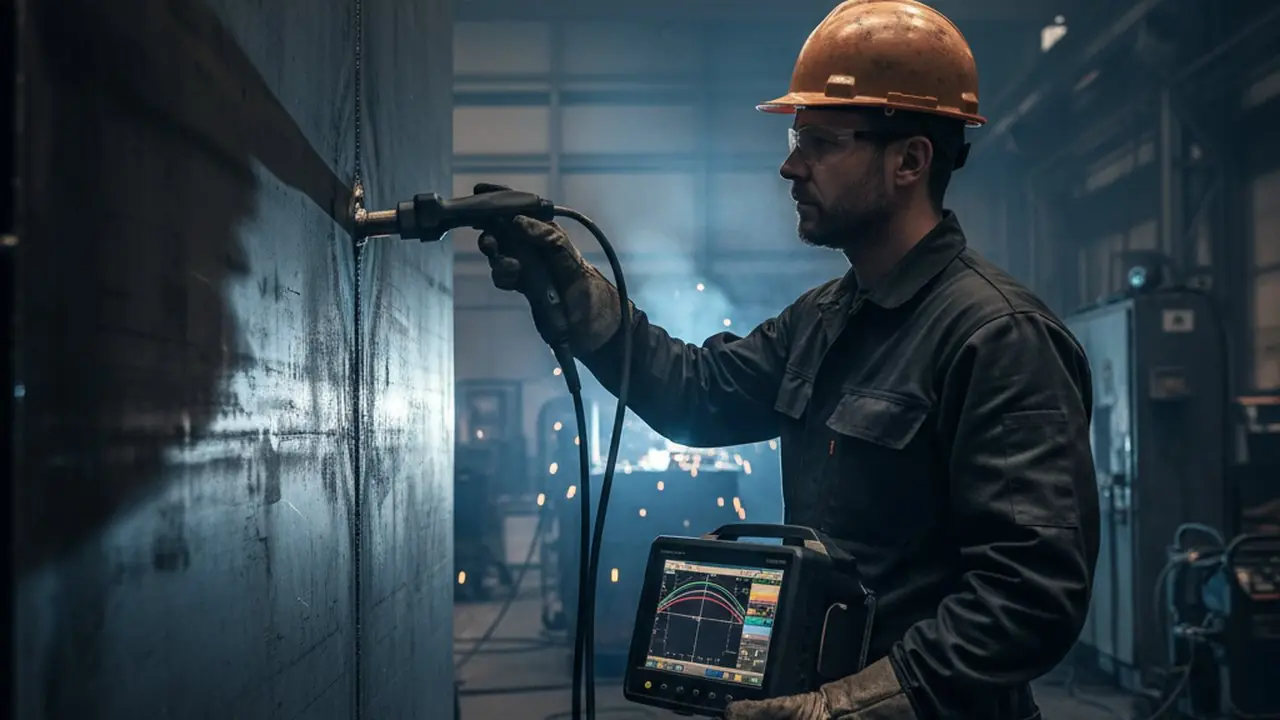
Imagine a typical fabrication shop: you are running critical welds all week. You rely on a 10% Radiographic Testing (RT) or Ultrasonic Testing (UT) sample to verify quality. On Friday afternoon, the NDT technician flags a crack in one of the sample parts. Suddenly, you are faced with quarantining the entire week’s production, costly re-inspections, and potential delivery delays.
This scenario highlights the core limitation of traditional sampling: it detects defects after they happen, often too late to prevent bulk rework. The choice and mix of inspection methods define not just your quality, but your operational risk and lead times.
Method Overview: VT vs. NDT vs. Monitoring
Understanding the strengths and weaknesses of each method is key to optimizing your Quality Assurance (QA) plan.
| method | coverage | defect types | cycle time impact | skill level | typical use |
|---|---|---|---|---|---|
| Visual (VT) | surface only | surface cracks, porosity, profile | high (manual) | low/med | first pass, all welds |
| Radiography (RT) | volumetric | internal porosity, inclusions, cracks | very high (offline) | high | critical joints, sampling |
| Ultrasonic (UT/PAUT) | volumetric | fusion, cracks, depth sizing | high (post-weld) | high | thick sections, critical structural |
| Inline monitoring (AI) | process proxy | instability, anomalies, trends | zero (real-time) | med (setup) | 100% verification, process control |
Where Traditional NDT Wins (and Its Limits)
Radiographic (RT) and Ultrasonic (UT/PAUT) testing remain the gold standard for verifying the internal integrity of critical structural welds. They provide definitive evidence of the weld interior. However, they are inherently reactive.
- Blind spots: Sampling means most production may go unchecked until a failure occurs later.\n- Bottlenecks: Moving parts to an NDT bunker or waiting for technicians creates WIP piles.\n- Late discovery: Finding a defect after machining or painting amplifies the cost of scrap exponentially.
- Blind spots: Sampling means most production may go unchecked until a failure occurs later.
- Bottlenecks: Moving parts to an NDT bunker or waiting for technicians creates WIP piles.
- Late discovery: Finding a defect after machining or painting amplifies the cost of scrap exponentially.
What “Real‑Time Weld Monitoring” Actually Does
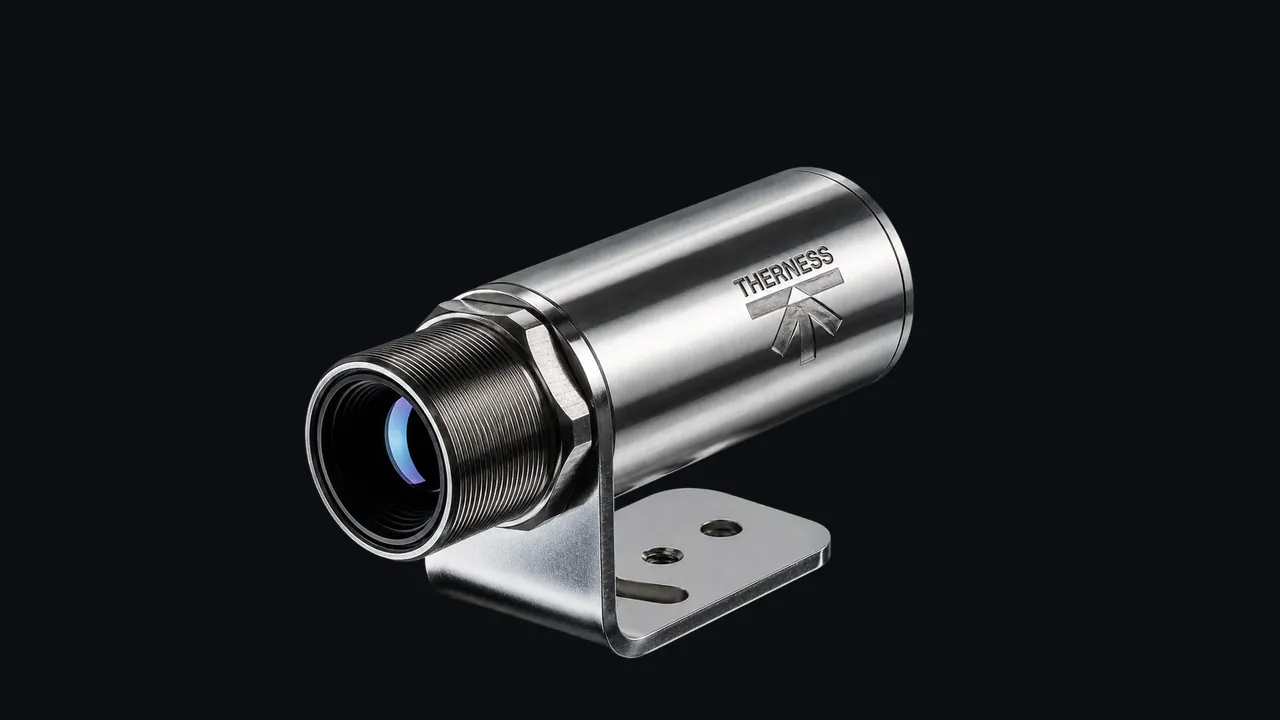
Real-time monitoring, using technologies like infrared thermography and AI, shifts the focus from sorting bad parts to preventing them. By analyzing the thermal signature and cooling rates (t8/5) of every weld as it happens, it identifies deviations instantly. A purpose-built real-time weld monitoring system does this on every joint — see thermal imaging of a live weld to understand what it captures.
It doesn’t replace NDT for code-required final acceptance in all cases, but it acts as a filter: only “healthy” process welds reach the expensive NDT stage, and process drift is flagged before it creates a pile of scrap.
Cost & Risk Comparison: The Hybrid Approach
Comparing a “Traditional” approach (sampling NDT, high rework risk) vs. a “Hybrid” approach (100% monitoring + targeted NDT): the hybrid approach reduces cost of poor quality (COPQ) by catching instability immediately and routing only suspect parts to deeper inspection.
If you want to quantify payback, use the real-time monitoring ROI calculator.
How to Design a Layered Inspection Strategy
Don’t view it as “Monitoring vs. NDT”. View it as layers of defense:
- Layer 1: Real-Time Monitoring (100%) — catch drift, arc instabilities, and thermal anomalies instantly; auto-flag for rework.\n2. Layer 2: Visual Inspection (VT) — quick check for obvious surface issues on parts that passed Layer 1.\n3. Layer 3: Targeted NDT — perform RT/UT on the code-mandated percentage (e.g., 5–10%) and on any parts where monitoring is marginal.
- Layer 1: Real-Time Monitoring (100%) — catch drift, arc instabilities, and thermal anomalies instantly; auto-flag for rework.
- Layer 2: Visual Inspection (VT) — quick check for obvious surface issues on parts that passed Layer 1.
- Layer 3: Targeted NDT — perform RT/UT on the code-mandated percentage (e.g., 5–10%) and on any parts where monitoring is marginal.
This strategy maximizes safety while minimizing cost and bottlenecks. Explore the Therness monitoring products that implement Layer 1 across a full cell.
For Layer 3, thermographic NDT testing offers a fast, non-contact alternative to manual PAUT or RT for subsurface defect detection. Learn how pulsed, lock-in, and induction thermography methods work in production environments: Active Thermography for Weld Inspection: Detecting Subsurface Defects in Real Time.
For a deeper analysis of how combining thermal, vision, and acoustic sensors improves detection rates across all defect classes, see Sensor Fusion Weld Quality Monitoring: Thermal, Vision, and Acoustic Combined.
Cut NDT sampling cost with 100% in-process monitoring
Route only suspect welds to expensive RT/UT while real-time monitoring covers every joint. Book a demo to see the layered strategy scoped to your weld mix.
Book a demo Explore the weld monitoring systemTherness solution: Welding monitoring system — Every weld inspected in the cycle, with defect flags and the ISO 3834 / ISO 17635 evidence kept per weld.