

Magnetic particle testing (MT) is the standard surface NDT method for ferromagnetic weld inspection. Fast, portable, and highly sensitive to surface-breaking cracks, it is called up by fabrication codes such as EN 1090, AWS D1.1, ASME VIII, API 650, API 1104 and EN 15085. Yet MT is routinely mis-specified: applied to austenitic stainless welds where it is physically impossible, used to “verify” internal soundness it cannot reach, and documented in ways that fail ISO 3834 and EN 1090 audit reviews. This guide covers the physics, procedure, standards, acceptance criteria, and documentation requirements a welding quality engineer needs to apply MT correctly.
Magnetic particle testing of welds at a glance
Magnetic particle testing of welds magnetises the joint and applies fine iron particles; a surface or near-surface imperfection disturbs the field and the particles gather over it as a visible indication. It works only on ferromagnetic materials. Three ISO standards cover it:
- Method — ISO 17638:2016 (second edition). Welds are magnetised in two directions roughly perpendicular to each other, with at most 30° deviation (5.6.1). Alternating-current yokes, prods or coils are the default; DC electromagnets and permanent magnets only by agreement at enquiry and order (5.5.1). For structural steels a tangential field of 2 kA/m to 6 kA/m (r.m.s.) is recommended (5.5.2).
- Viewing — ISO 3059:2012, called up by ISO 17638. Colour-contrast inspection needs 500 lx or more at the test surface; fluorescent inspection needs UV-A irradiance of 10 W/m² or more with no more than 20 lx of visible light.
- Acceptance — ISO 23278:2015, last confirmed by ISO in 2025. The test surface is the weld metal plus 10 mm of parent metal on each side (5.1). Table 1 limits:
| Indication | Level 1 | Level 2 | Level 3 |
|---|---|---|---|
| Linear (length > 3 × width), length l | ≤ 1.5 mm | ≤ 3 mm | ≤ 6 mm |
| Non-linear (length ≤ 3 × width), major dimension d | ≤ 2 mm | ≤ 3 mm | ≤ 4 mm |
Levels 2 and 3 can be specified with the suffix X (2X, 3X): every linear indication detected is then assessed to level 1. ISO 23278 does not cover grouped indications, and it points to ISO 17635 for how its levels relate to the ISO 5817 quality levels.
How Magnetic Particle Testing Works
MT exploits the permeability contrast between intact ferromagnetic material and discontinuities. When a weld is magnetised, a surface or near-surface crack interrupts the flux path and creates a leakage field that projects above the surface. Ferromagnetic particles applied to the surface migrate toward this leakage field and accumulate, forming a visible indication.
Two primary magnetisation configurations are used for weld inspection:
| Technique | How it works | Best for |
|---|---|---|
| AC/DC electromagnetic yoke | Field induced between two poles placed on the surface | Portable field inspection; butt and fillet welds |
| Prod magnetisation | Direct current passes between two contact electrodes | Large plate areas; localised HAZ inspection |
| Coil / through-current | High current through a coil or the part itself | Fixed-equipment inspection of smaller components |
Directional sensitivity: a crack parallel to the magnetic flux lines creates minimal leakage and will not produce a reliable indication. The induced field must be oriented perpendicular to the expected crack plane — this is the most common cause of missed defects in field MT.
Detection depth: MT finds surface-breaking and near-surface discontinuities; how deep it reaches depends on the field, the current type and the part. MT is not a substitute for volumetric NDT (PAUT, RT) for internal flaws.
Material constraint: MT applies only to ferromagnetic materials — carbon steel, low-alloy steel, martensitic and ferritic stainless. It cannot inspect non-ferromagnetic materials such as austenitic stainless steels, aluminium, titanium, or most nickel alloys.
Applicable Standards Overview
EN ISO 17638 — Examination Method
EN ISO 17638:2016 (Non-destructive testing of welds — Magnetic particle testing) defines the examination procedure requirements:
- Information to agree before testing, including personnel certification, the acceptance level and any demagnetisation (5.1)
- Surface condition: dry, improved by abrasive paper or local grinding where needed to interpret indications (5.4)
- Magnetising equipment: AC yokes, prods or coils by default; DC electromagnets and permanent magnets only by agreement (5.5.1)
- Verification of magnetisation: 2 kA/m to 6 kA/m (r.m.s.) tangential field recommended for structural steels, proven on a representative component, by Hall-probe measurement or by calculation; shim-type flux indicators give a guide only (5.5.2)
- Two field directions roughly perpendicular (max. 30° deviation) and overlap between testing areas (5.6)
- Detection media, viewing conditions per ISO 3059, recording of indications, demagnetisation and the test report (5.7–5.14)
EN ISO 23278 — Acceptance Levels
EN ISO 23278:2015 (Non-destructive testing of welds — Magnetic particle testing — Acceptance levels) defines three acceptance levels, 1 (most stringent) to 3, for indications in ferromagnetic steel welds. The limits are in the table at the top of this guide. Annex A (informative) recommends a fine surface for level 1, a smooth surface for level 2 and the general as-welded surface for level 3. The link between these levels and the ISO 5817 quality levels is given in ISO 17635, not in ISO 23278.
The level must be specified in the contract, the Inspection and Test Plan, or the welding quality plan — not left to the inspector’s judgment on-site.
North American Codes
AWS D1.1 (structural steel), ASME (Section V Article 7 for the examination method, with acceptance in the construction code such as Section VIII), API 650 (storage tanks) and API 1104 (pipelines) each define their own MT requirements and acceptance criteria. Take the clause from the edition of the code named in the contract.
When working under both European and North American codes (common in LNG, offshore, and energy projects), specify which code governs the MT inspection and do not mix acceptance tables.
Step-by-Step MT Procedure for Weld Inspection
1. Pre-Inspection Planning
Define in the Inspection and Test Plan (ITP):
- Joint references and weld map identifiers
- Applicable standard (EN ISO 17638) and acceptance level (EN ISO 23278 level 1, 2, or 3)
- Inspection stage: post-weld, post-PWHT, post-repair, or in-service
- Personnel qualification: ISO 17638 (5.3) recommends ISO 9712 or an equivalent standard at an appropriate level in the relevant industry sector (ASNT or PCN where the code calls for them)
2. Surface Preparation
- Remove weld spatter, heavy scale, oil, and grease from the weld bead, toes, and the parent metal beside them. The ISO 23278 test surface is the weld metal plus 10 mm of parent metal on each side, so the clean band must cover at least that, plus room for the yoke or prods.
- ISO 17638 (5.4) requires a dry surface unless products for wet surfaces are used, and allows abrasive paper or local grinding where the as-welded surface does not allow accurate interpretation. ISO 23278 Annex A links the surface condition to the acceptance level: the tighter the level, the smoother the surface needed.
- A thin coat of white contrast aid paint is permitted — and often necessary — for colour-contrast MT on dark-coloured weld surfaces.
Any post-weld grinding or mechanical dressing must be completed before MT, not after. Grinding introduces its own surface cracks that MT must detect; performing MT before grinding hides this risk.
3. Magnetisation
Position the yoke or prods so the induced field is perpendicular to the expected crack orientation:
- Transverse cracks (crossing the weld axis, typical in high-restraint joints and hydrogen cracking): magnetise longitudinally along the weld.
- Longitudinal cracks (along the weld bead, typical of solidification cracking and undercut cracking): magnetise transverse to the weld.
- For complete coverage, ISO 17638 (5.6.1) requires two magnetisations approximately perpendicular to each other, with a maximum deviation of 30°, and adequate overlap between testing areas. The zone next to each pole or prod tip cannot be tested because the field there is too strong.
Field adequacy check (ISO 17638, 5.5.2): for structural steels a tangential field of 2 kA/m to 6 kA/m (r.m.s.) is recommended. Prove it on a representative component with fine discontinuities, by Hall-probe measurement as close to the surface as possible, or by calculation. Shim-type flux indicators placed on the surface give only a guide to the field’s magnitude and direction; ISO 17638 says they should not be used to verify that the field strength is acceptable. The magnetising equipment itself must conform to ISO 9934-3 (5.5.1).
4. Particle Application and Examination
Apply particles during active magnetisation (continuous method):
- Wet fluorescent: spray or flow bath, then inspect under UV-A with visible light of 20 lx or less at the test surface and UV-A irradiance of 10 W/m² or more, both measured under working conditions (ISO 3059).
- Wet colour contrast: spray, then inspect under white light of 500 lx or more at the test surface, measured with an illuminance meter (ISO 3059).
Scan the weld bead, both toes, and the parent metal at least 10 mm either side of the weld (the ISO 23278 test surface), or wider if the procedure says so.
5. Indication Classification and Recording
Classify each indication before evaluating it:
- Linear indication: length greater than three times the width (ISO 23278, 3.1) — crack-type, highest severity
- Non-linear / rounded indication: length less than or equal to three times the width (ISO 23278, 3.2) — pore-type, lower severity
- Pseudo-indication: caused by geometric features (weld toe radius, backing bar edge, fit-up gap) — confirmed non-relevant by re-magnetising at 90°
Indications closer together than the major dimension of the smaller one are assessed as a single continuous indication (ISO 23278, 5.1). Record each rejectable indication: position on the weld map, type (linear/non-linear), measured length and width, and a photograph with a scale reference. Under ISO 23278 acceptable indications do not have to be recorded, but many contracts ask for them.
6. Evaluation Against Acceptance Criteria
Compare measured indication dimensions against the specified level of ISO 23278:2015 Table 1:
| Indication type | Level 1 | Level 2 | Level 3 |
|---|---|---|---|
| Linear, accepted if length l | ≤ 1.5 mm | ≤ 3 mm | ≤ 6 mm |
| Non-linear, accepted if major dimension d | ≤ 2 mm | ≤ 3 mm | ≤ 4 mm |
With the suffix X (level 2X or 3X), every linear indication detected is assessed to level 1, but ISO 23278 warns that indications smaller than the original level may have a low probability of detection. Grouped indications are not covered by the standard. Where the product specification permits, local grinding may reduce or remove the imperfection; the area is then re-tested and evaluated with the same magnetic system and technique (5.2).
Do not pick the level on site. Take it from the contract or the application standard; for welds made to an ISO 5817 quality level, ISO 17635 gives the matching MT acceptance level. For structural steel see how EN 1090-2 execution classes set the inspection scope.
7. Demagnetisation
Components that will be subsequently arc-welded, or that are sensitive to residual magnetism (bearings, instruments, hydraulic components), must be demagnetised using a decreasing AC field after MT. ISO 17638 lists any demagnetisation among the information agreed before testing (5.1), so the residual-field limit comes from the contract or the application standard; measure it with a calibrated instrument and record the result in the inspection report.
MT vs Other Surface and Near-Surface NDT Methods
| Method | Standard | Sensitivity | Materials | Documentation |
|---|---|---|---|---|
| MT (magnetic particle) | EN ISO 17638 / 23278 | Surface + near-surface | Ferromagnetic only | Indication map + photo |
| PT (penetrant testing) | EN ISO 3452 | Surface-breaking only | All metals, some plastics | Indication map + photo |
| PAUT (phased array UT) | EN ISO 13588 | Volumetric, full thickness | All metals | Digital C-scan, TOFD |
| VT (visual) | ISO 17637 | Gross surface defects | All | Checklist + photo |
MT is preferred over penetrant testing (PT) for ferritic and martensitic welds because it detects near-surface discontinuities (not just open-to-surface), covers more area per cycle, and does not require the drying time that PT demands on porous or heavily scaled surfaces. When austenitic stainless steel, aluminium, or titanium welds require surface NDT, PT is the mandatory choice. For volumetric defects or full-thickness inspection, PAUT or radiographic testing are required — MT does not complement them, it precedes them in the inspection sequence.
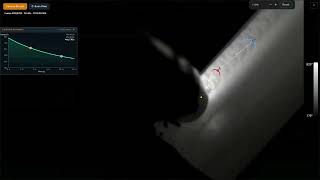
MT, PT, and PAUT all share one limitation: they inspect after the weld is complete and cooled, so a rejectable indication is only found once the joint (and any post-weld heat treatment already applied to it) has to be reworked. Active thermography closes part of that gap by monitoring the weld pool and cooling pattern in real time with a system like HeatCore AI, flagging the asymmetric cooling signatures associated with porosity and lack of fusion while the joint is still being welded — narrowing which joints need MT attention rather than replacing it.
Digital Documentation and ISO 3834 Compliance
Paper-based MT reports — hand-drawn indication maps, unlabelled photographs, unsigned PDFs — are a frequent gap in ISO 3834-2 and EN 1090 third-party audits. The standard requires full traceability: joint reference, material heat number, operator name and qualification number, equipment calibration status, applicable standard and acceptance level, and the actual result (accept / reject with evidence).
A digital welding quality system links MT records directly to the weld traveller, the WPS, and the heat number of the joint material. This eliminates the transcription errors that generate non-conformances at certification bodies and customer audits. See the Therness monitoring product family behind those digital records.
Therness integrates NDT inspection records — MT, PT, PAUT, visual — with real-time thermal weld monitoring and ISO 3834 audit dashboards. Eliminate paper-based inspection reports and close the traceability gap before the next audit.
Book a demoKey Takeaways
- MT detects surface and near-surface cracks in ferromagnetic welds fast and at low cost — it is not a substitute for volumetric NDT for internal flaws.
- ISO 17638:2016 governs the method; ISO 23278:2015 provides acceptance levels 1 (most stringent) through 3: linear indications up to 1.5, 3 and 6 mm, non-linear up to 2, 3 and 4 mm.
- Take the acceptance level from the contract or application standard; ISO 17635 maps ISO 5817 quality levels to MT acceptance levels.
- Magnetise perpendicular to the expected crack orientation — a yoke parallel to a transverse crack will miss it.
- Two magnetisations roughly perpendicular to each other (max. 30° deviation) are required to find imperfections in every orientation.
- Demagnetise after MT whenever the component will be arc-welded or is sensitive to residual magnetism.
- Complete, traceable NDT records are expected under ISO 3834-2 and EN 1090 certification; keeping them digital makes them faster to retrieve in an audit.
Therness solution: Welding monitoring system — Every weld inspected in the cycle, with defect flags and the ISO 3834 / ISO 17635 evidence kept per weld.
Frequently Asked Questions
What is magnetic particle testing (MT) for welds?
Magnetic particle testing (MT or MPI) is a non-destructive examination method that detects surface and near-surface discontinuities in ferromagnetic weld joints by applying a magnetic field and ferromagnetic particles. Particle accumulations form at flux leakage points caused by cracks, lack of fusion at the surface, or undercut cracking.
Which standards govern MT inspection of welds?
EN ISO 17638 specifies the MT examination method for fusion-welded joints. EN ISO 23278 defines acceptance levels 1, 2, and 3 for MT indications. In North America the governing code (for example AWS D1.1, or ASME Section V Article 7 for the method under ASME) sets its own method and acceptance clauses. ISO 17638 recommends personnel qualified to ISO 9712 or an equivalent standard at an appropriate level.
What defects does MT detect in welds?
MT detects surface-breaking and near-surface discontinuities: transverse and longitudinal cracks, weld toe cracks, HAZ hydrogen cracking, surface-breaking lack of fusion, undercut cracking, and post-weld grinding cracks. It does not detect internal porosity, buried inclusions, or other volumetric defects deeper in the weld — those require UT, PAUT, or RT.
Can you do magnetic particle testing on stainless steel?
Only on ferromagnetic grades. ISO 17638 covers welds in ferromagnetic materials, and ISO 23278 sets acceptance levels for ferromagnetic steel welds. Martensitic and ferritic stainless steels can be tested with MT; austenitic stainless steels such as 304 and 316 are not ferromagnetic, so their welds are tested for surface imperfections with penetrant testing (PT) instead.
What are the ISO 23278 acceptance levels for magnetic particle testing?
ISO 23278:2015 Table 1 accepts linear indications (length more than three times the width) up to 1.5 mm at level 1, 3 mm at level 2 and 6 mm at level 3, and non-linear indications up to a major dimension of 2 mm, 3 mm and 4 mm. Levels 2 and 3 can carry the suffix X, which means every linear indication detected is assessed to level 1. Grouped indications are not covered.


