

A bogie frame failure at 300 km/h is not a warranty claim — it is a catastrophe. This is why railway welding operates under a certification regime that most industrial sectors do not face: every manufacturer who welds railway vehicles or safety-critical components in Europe must hold an EN 15085 certificate, and that certificate must be maintained through documented quality management and periodic surveillance audits.
This guide explains what EN 15085 requires, how certification levels map onto your production, how the standard relates to ISO 3834, and what auditors actually look for during an on-site assessment.
What EN 15085 Covers
The EN 15085 series — published as a five-part standard — governs the welding of railway vehicles and components. Its scope includes:
- Complete vehicle bodies (car bodies, carbodies)
- Running gear: bogies, axle boxes, bogie frames
- Couplers and draft gear
- Sub-assemblies and components classified as safety-critical by the vehicle design authority
The standard was developed within CEN Technical Committee TC 256 and is mandatory under European railway interoperability directives. Any supplier delivering welded metallic assemblies to a European rolling stock OEM must either hold their own EN 15085 certificate or operate under the OEM’s quality umbrella — a position most OEMs refuse to grant.
Certification Levels: CL1 to CL4
EN 15085 assigns each welded joint — not the entire manufacturer — to a certification level (CL) based on the consequence of failure.
| Level | Failure consequence | Typical application |
|---|---|---|
| CL1 | Loss of life or serious injury likely | Bogie frames, primary structural welds, brake beam attachments |
| CL2 | Injury possible; secondary structural relevance | Car body underframe, secondary brackets, floor-panel frames |
| CL3 | No direct safety impact | Interior fittings, HVAC brackets, non-load-bearing panels |
| CL4 | No structural relevance | Cosmetic welds, seat rail covers |
A manufacturer certified to CL1 may perform all lower-level welding. Certification to CL3 does not authorise CL1 or CL2 work.
The certification level of the component — determined by the design authority or OEM — dictates the minimum certification level your facility must hold.
How EN 15085 Maps to ISO 3834
EN 15085’s quality requirements are built on top of ISO 3834, the international series for quality requirements in fusion welding. The mapping is direct:
| EN 15085 Level | Required ISO 3834 Part |
|---|---|
| CL1 + CL2 | ISO 3834-2 — Comprehensive requirements |
| CL3 | ISO 3834-3 — Standard requirements |
| CL4 | ISO 3834-4 — Elementary requirements |
If your facility already holds ISO 3834-2 certification, you have the quality management backbone for CL1/CL2 work. EN 15085 then adds railway-specific requirements on top: design drawings, weld joint category tables, traceability to EN 15085 Part 2 joint types, and surveillance audit cadence.
Weld Joint Design Categories
Beyond the certification level, EN 15085 Part 3 defines weld quality classes for individual joints. These are expressed as design class (CP A through D) and NDT class (CT 1 through 4, or CT 0 for no NDT required).
| Design class | Joint stress category | Typical NDT class |
|---|---|---|
| CP A | Highly stressed, failure = loss of control | CT 1 (100% UT or RT) |
| CP B | Stressed, failure = serious degradation | CT 2 (partial UT/RT + VT) |
| CP C | Moderate stress, secondary role | CT 3 (VT + spot RT/UT) |
| CP D | Low stress, no safety function | CT 4 (VT only) |
The design engineer — not the welder or QA manager — must assign CP and CT classes on the drawing package. This is one of the most common audit non-conformities: drawings reaching the shop floor without CP/CT designations, which makes correct NDT planning impossible.
What Auditors Examine
EN 15085 Part 1 defines the certification procedure. An accredited certification body (typically notified by a national railway authority) conducts an initial audit and annual surveillance audits. The audit scope covers:
1. Welding Coordinator
A Responsible Welding Coordinator (RWC) holding a qualification compliant with EN ISO 14731 must be identified and present. For CL1 work, the RWC typically requires International Welding Engineer (IWE) qualification.
2. Welder and Operator Qualification
All welders performing CL1/CL2 work must hold current EN ISO 9606-1 (or equivalent) qualifications for the process, material group, and thickness range. Weld test certificates must be current, and requalification records must be on file.
3. Welding Procedure Specifications
Every production weld must be covered by a qualified WPS validated through a Welding Procedure Qualification Record (WPQR) per EN ISO 15614. For aluminium railway structures, EN ISO 15614-2 applies; for steel, EN ISO 15614-1.
4. NDT Personnel and Equipment
NDT personnel must hold Level 2 certifications per EN ISO 9712 for the applicable method (VT, UT, RT, MT, PT). Equipment calibration records must be traceable and current.
5. Records and Traceability
EN 15085 requires that each weld joint can be traced back to:
- The welder who performed it (stamp or digital ID)
- The WPS used
- The consumable batch (certificate, heat number)
- NDT results and acceptance/rejection decision
- Any repair history
Missing traceability is a CL1 major non-conformity — it can suspend certification immediately.
- CP/CT class not marked on production drawings
- WPS does not cover actual welding position or thickness
- Welder qualification expired or range not covering production parameters
- Consumable storage non-compliant (moisture, segregation)
- NDT records reference wrong joint IDs — manual transcription errors
- Preheat/interpass temperature not recorded for P355 and higher-strength steels
EN 15085 and Real-Time Monitoring
Items 5 and 6 from the list above — temperature records and traceability gaps — are the two areas where digital process monitoring makes the biggest compliance impact.
A thermal imaging system mounted at the weld station provides:
- Continuous preheat and interpass temperature logging referenced to joint ID, time, and welder — replacing paper check-sheets that get completed retrospectively
- Geometric weld bead evidence for each pass, exportable as a traceable record linked to the WPQR
- Anomaly alerts for excessive heat input, which affects HAZ properties in high-strength CrMo steels common in bogie frames
For CP B and CP C1 joints where 100% visual inspection is mandated, camera-based visual inspection records for weld classes capture the surface evidence auditors expect alongside the thermal trace.
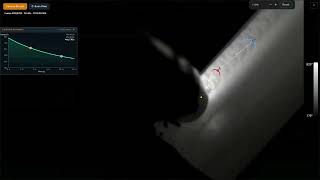
The T8/5 cooling window is the same interval an auditor’s technical reviewer will ask about when a CrMo bogie-steel WPS is under scrutiny — a computed cooling curve tied to joint ID is a more defensible answer than a stopwatch reading transcribed onto a traveler (watch the full HeatCore cooling-time analysis).
When auditors ask “show me the interpass temperature record for joint BF-047-L”, a system that pulls up a timestamped thermal trace with operator ID answers that question in seconds. Manual records typically answer it in minutes — or not at all.
If you’re building the traceability and monitoring layer to support a CL1/CL2 audit, a welding monitoring system is what turns “we recorded it on paper” into a queryable, joint-by-joint digital record the certification body can trust on sight.
The railway weld monitoring page shows how that record is built on rolling-stock joints, from spot-welded car bodies to multi-pass bogie welds, starting with a pilot on one cell.
For further reading on thermal imaging in welding quality control, see our guide on welding preheat and interpass temperature monitoring and the overview of real-time weld quality monitoring.
Certification Roadmap: From Zero to CL1
If your facility currently has no EN 15085 certification and needs CL1 within 12–18 months:
- Gap analysis against ISO 3834-2 — most facilities already have partial compliance; the gap is usually in traceability and records
- Appoint or hire an IWE-qualified RWC — this is often the longest lead-time item
- Qualify WPSs for all production joint types — EN ISO 15614 procedure qualification tests, including impact testing for P420/S420 and above
- Implement a weld records system — paper is permitted but creates audit risk; digital systems with joint-level traceability reduce nonconformity exposure significantly. See the Therness monitoring and camera range for joint-level options.
- Train and qualify all relevant welders to EN ISO 9606-1
- Engage a notified certification body — an accredited body recognised for EN 15085 certification (for example TÜV, Lloyd’s Register or Bureau Veritas)
- Pre-audit with the certification body — strongly recommended before the formal assessment
The certification body will issue the certificate against EN 15085-1 with the certified level (CL1, CL2, or both) and scope of materials, processes, and joint types. Annual surveillance audits maintain the certificate.
See how Therness HeatCore supports EN 15085 compliance
Automated preheat/interpass logging, joint-level traceability, and anomaly detection — purpose-built for high-consequence welding environments. For continuous thermal monitoring on the shop floor, the HeatCam IR-C is a cylindrical thermal camera for fixed production-line installs — see how it compares to arc-visualization weld cameras.
Book a demoTherness solution: Welding monitoring system — Every weld inspected in the cycle, with defect flags and the ISO 3834 / ISO 17635 evidence kept per weld.
Frequently Asked Questions
What is EN 15085 and who needs it?
EN 15085 is the European standard for welding of railway vehicles and components. It applies to manufacturers of rolling stock, bogies, car bodies, and safety-critical welded assemblies supplied to European rail operators.
What are the four EN 15085 certification levels?
CL1 covers the most demanding safety-critical joints; CL2 applies to load-bearing structures with secondary safety relevance; CL3 covers joints with no direct safety relevance; CL4 applies to cosmetic or non-structural welds. Higher certification levels impose stricter quality requirements.
How does EN 15085 relate to ISO 3834?
EN 15085 defines certification levels that directly map to ISO 3834 quality requirements: CL1 and CL2 require ISO 3834-2 (comprehensive), CL3 requires ISO 3834-3 (standard), and CL4 requires ISO 3834-4 (elementary).


