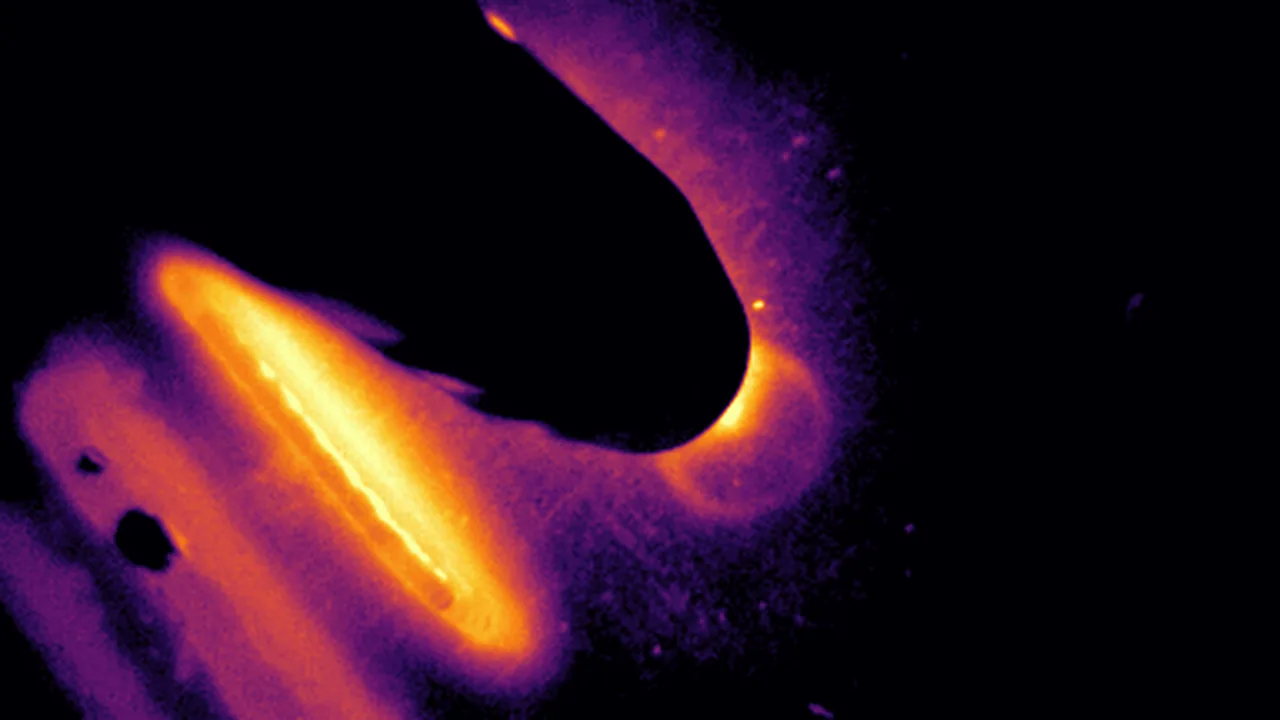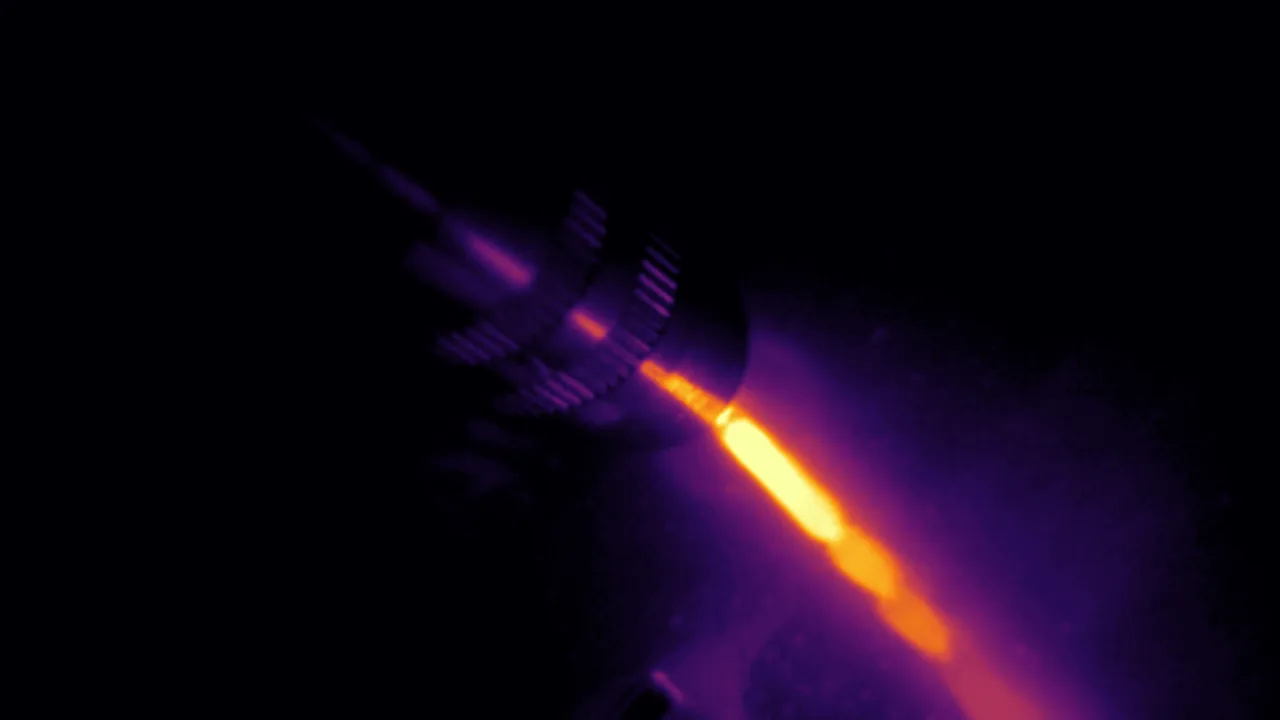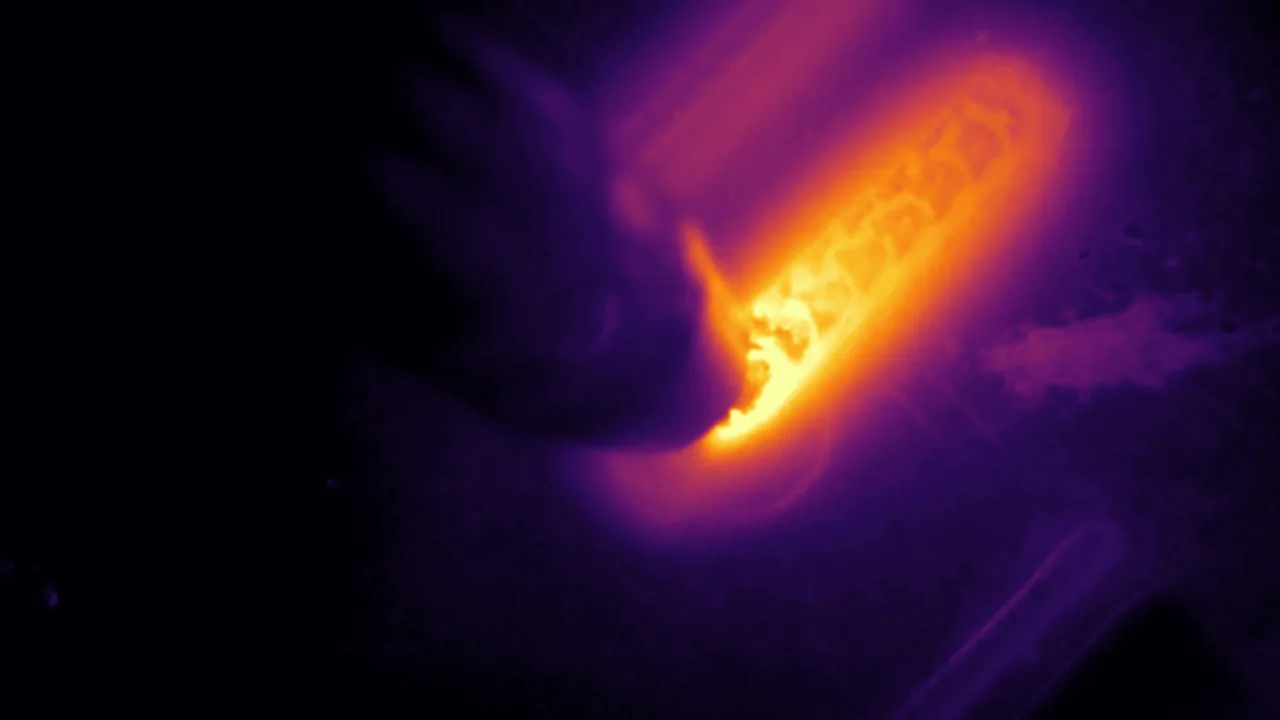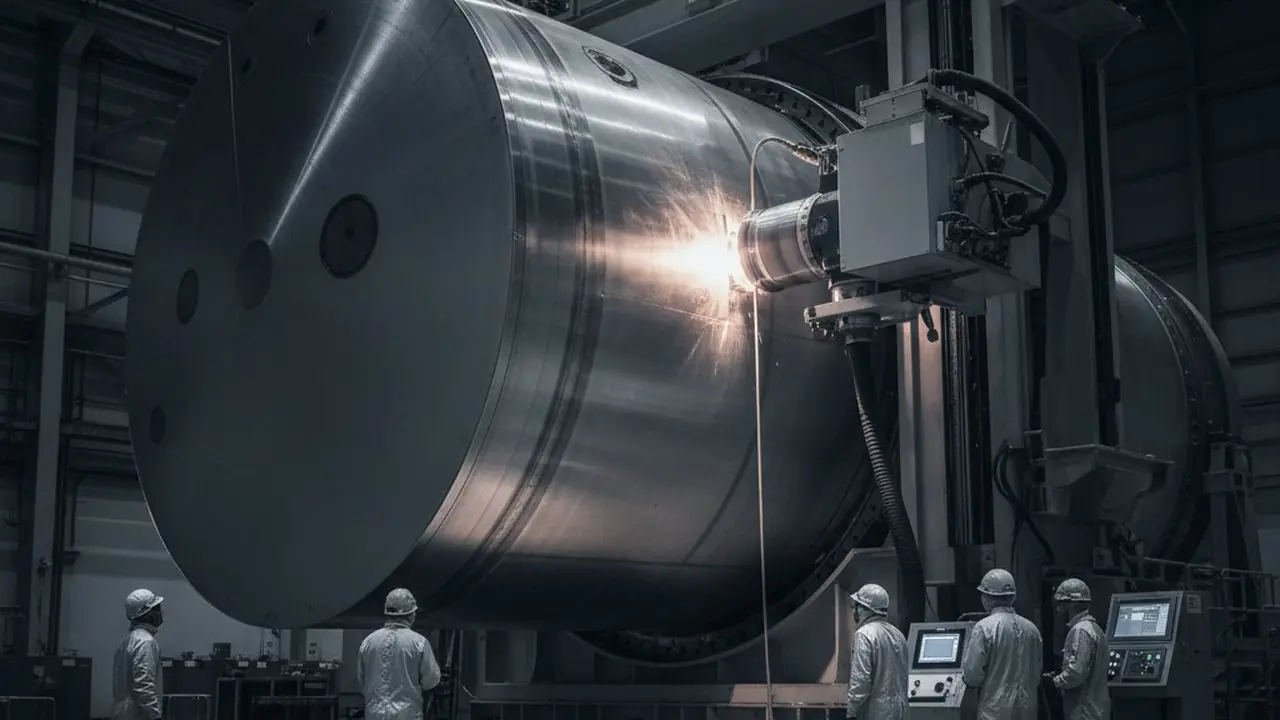
Artemis 2 is confirmed to launch aboard NASA’s Space Launch System (SLS) Block 1 rocket on or after February 8, 2026. The SLS relies extensively on friction stir welding (FSW)—a revolutionary solid-state joining process—to construct its core stage, creating nearly 0.5 miles of defect-free welds to withstand cryogenic propellants and launch loads.
Executive Summary
Artemis 2 represents the first crewed test flight of NASA’s new deep-space architecture, utilizing the SLS Block 1 configuration. Standing 98 meters tall and generating 39 million newtons of thrust, the SLS is a precision-engineered heavy-lift vehicle. The core stage forms the backbone of this system, requiring advanced manufacturing techniques to join the thickest aluminum structures ever welded for spaceflight.

The Core Stage: Architectural Overview
The SLS core stage consists of five major structural sections, all joined via FSW:
- Forward Skirt: Provides structural continuity.
- Liquid Oxygen (LOX) Tank: Stores super-cooled liquid oxygen (-183°C).
- Intertank Structure: Connects the two propellant tanks.
- Liquid Hydrogen (LH₂) Tank: The largest vessel, holding 537,000 gallons of H₂ at -253°C.
- Aft Engine Section: Houses the four RS-25 main engines.
Together, these sections involve nearly 0.5 miles (≈800 meters) of friction stir welds.
Welding Process Technologies: A Technical Deep Dive
Friction Stir Welding (FSW): The Foundation
Unlike traditional fusion welding that melts base materials, Friction Stir Welding operates entirely in the solid state. A rotating pin tool generates frictional heat to soften the aluminum alloy to a plastic state, mechanically stirring it to form a bond.
Why FSW for SLS?
- Zero Porosity: Eliminates solidification cracking and gas porosity inherent to fusion welding.
- Strength: Retains higher parent material strength, critical for weight optimization.
- Cryogenic Performance: Superior toughness at liquid hydrogen temperatures.
- Corrosion Resistance: Essential for the humid coastal environment of Kennedy Space Center.
Self-Reacting Friction Stir Welding (SR-FSW)
For the circumferential welds joining the massive tank barrels and domes, NASA employs Self-Reacting FSW. This technique uses a tool with two shoulders—one on the outer surface and one on the inner surface—clamped together.
[!NOTE] SR-FSW Advantage: It eliminates the need for massive internal backing anvils, solving the accessibility problem for the 27.6-foot diameter tanks. The reaction forces (40-100 tonnes) are contained within the tool itself. The process uses a floating root shoulder that automatically tracks the inner surface, ensuring consistent root penetration despite minor thickness variations.
Friction Pull Plug Welding (FPPW)
A unique challenge of SR-FSW is the “exit hole” left when the tool retracts. NASA solves this with Friction Pull Plug Welding:
- The exit hole is drilled to a precise diameter.
- An aluminum plug is inserted from the inside and pulled outward by a rotating tool.
- The friction process bonds the plug seamlessly into the tank wall, creating a hermetic seal.
Material Selection: Al 2219 Aluminum-Copper Alloy
The SLS core stage uses Al 2219, distinct from the Al 2195 (Al-Li) used on the Shuttle Super Lightweight Tank.
| Property | Al 2219 (Selected) | Al 2195 (Shuttle) | Engineering Decision Factor |
|---|---|---|---|
| Weldability | Excellent in thick sections | Complex | 2219 allows for 0.5-inch thick single-pass FSW. |
| SCC Resistance | Superior | Adequate | 2219 is critical for long pad stays in Florida salt air. |
| Cost | Lower | Higher | 2219 reduces machining complexity and raw material cost. |
| Cryogenic Strength | Excellent | Higher | Strength trade-off deemed acceptable for reliability. |
Propellant Tank Assembly Sequence
Liquid Hydrogen Tank (LH₂)
The LH₂ tank assembly highlights the scale of the operation:
- Level 1 (Vertical Weld Center): Panels are welded vertically to form barrels (approx 22 ft tall).
- Level 2 (Vertical Assembly Center): Five barrels, two rings, and two domes are stacked and circumferentially welded. The Vertical Assembly Center (VAC) is the world’s largest robotic FSW machine, standing 170 feet tall.
Liquid Oxygen Tank (LOX)
Similar in construction but smaller (two barrels), the LOX tank presents unique stiffness challenges due to its thicker walls relative to its length.
Advanced Structures: The LVSA Challenge
The Launch Vehicle Stage Adapter (LVSA) represents a different set of welding challenges compared to the core stage:
- Material Change: Unlike the core stage’s Al 2219, the LVSA uses Al 2195 (Aluminum-Lithium). This alloy is significantly lighter but harder to weld.
- Geometric Complexity: The cone shape required a unique “two-cone” manufacturing approach.
- Precision Requirements: Extensive 3D laser scanning was required to ensure the tapered diameter met strict tolerance requirements for mating the core stage to the ICPS (Interim Cryogenic Propulsion Stage).
The Machines Behind the Metal
The Michoud Assembly Facility hosts some of the world’s most advanced robotic welding tools:
| Tool | Purpose | Key Spec |
|---|---|---|
| Vertical Assembly Center (VAC) | Final Stage Assembly | 170 ft tall; world’s largest spacecraft welding tool. |
| Vertical Weld Center (VWC) | Barrel Panel Welding | Welds 0.5-inch plate in single passes. |
| Circumferential Dome Weld Tool | Dome Fabrication | Horizontal gantry for complex curves. |
Challenges and Lessons Learned
The path to Artemis 2 involved overcoming significant manufacturing hurdles:
- Wall Thickness: Welding 0.5-inch aluminum in a single pass required extensive parameter development to manage heat input and distortion.
- Tooling Alignment: Early Artemis I welds faced defects due toVAC misalignment, leading to rigorous laser-metrology protocols for Artemis 2.
- Exit Hole Verification: The reliability of the Friction Pull Plug weld is critical, verified by phased array ultrasonic testing (PAUT).
NASA catches these issues after the weld is done — laser metrology audits alignment, and PAUT scans verify the plug weld once the tool has retracted. On a production line running the same alloy and wall thickness day after day, that inspection can move upstream: a welding monitoring system reads the arc’s thermal and visual signature pass by pass, flagging a misaligned root or an emerging defect while the weld is still running instead of on the next scan. It applies the same thermography-based NDT principles NASA relies on in aerospace, brought inline. You can see the method in this real-time thermal imaging of a running weld, and the same signatures drive the full Therness inspection systems built for high-integrity fabrication.
Conclusion
Artemis 2 is not just a mission of exploration but a triumph of modern manufacturing. The SLS core stage fails or flies based on the integrity of its welds. By leveraging Friction Stir Welding, NASA has created a vehicle capable of withstanding the most extreme mechanical and thermal loads in flight history.
For welding engineers, Artemis 2 validates solid-state joining as the premier technology for next-generation aerospace structures.
References & Citations
- Official Mission Overview: NASA Artemis II
- Launch Specs: Kennedy Space Center Event
- FSW Technology: SLS upper-stage dome friction stir welding (industry report)
- Material Science: ASM International - Al 2219 vs 2195
- Detailed Welding Analysis: MMS Online - FSW for SLS
- Michoud Assembly Facility: NASA MAF
- AWS Friction Welding Standards: American Welding Society
Analyze Your Welding Quality
Therness provides the same advanced thermography technology used in aerospace to detect weld defects in real-time. Verify your process stability today.
Therness solution: Welding monitoring system — Every weld inspected in the cycle, with defect flags and the ISO 3834 / ISO 17635 evidence kept per weld.