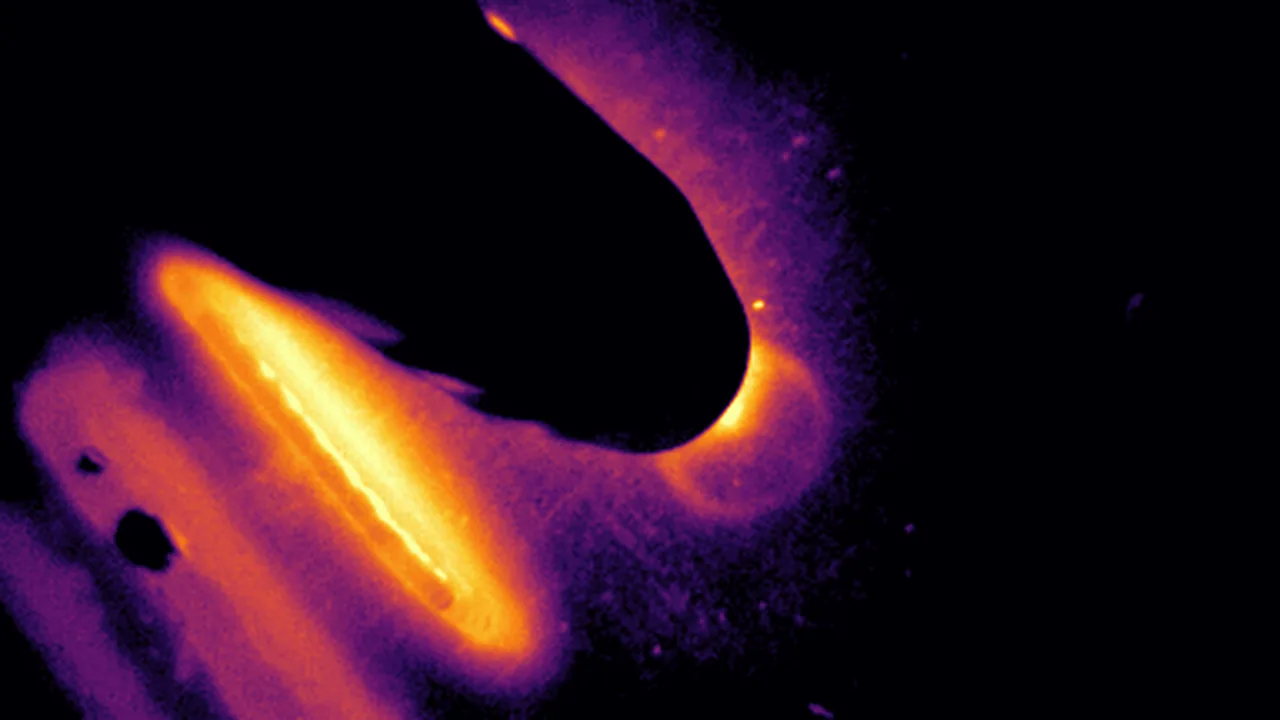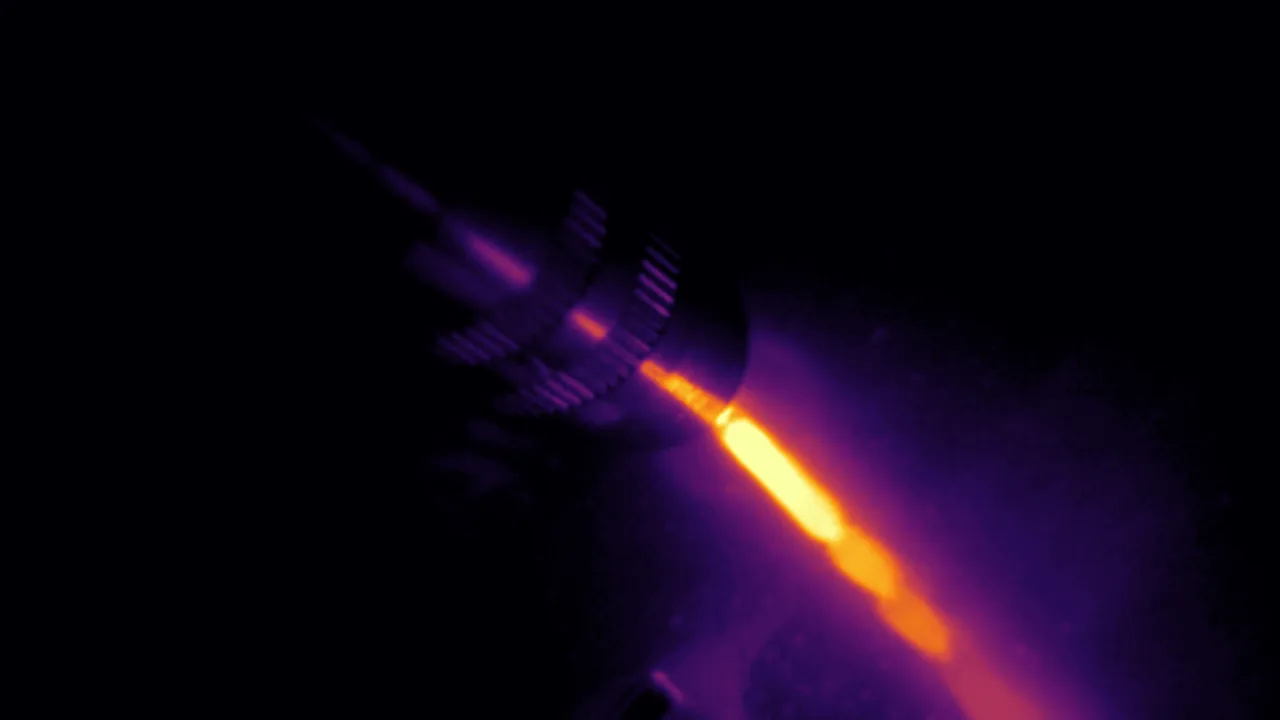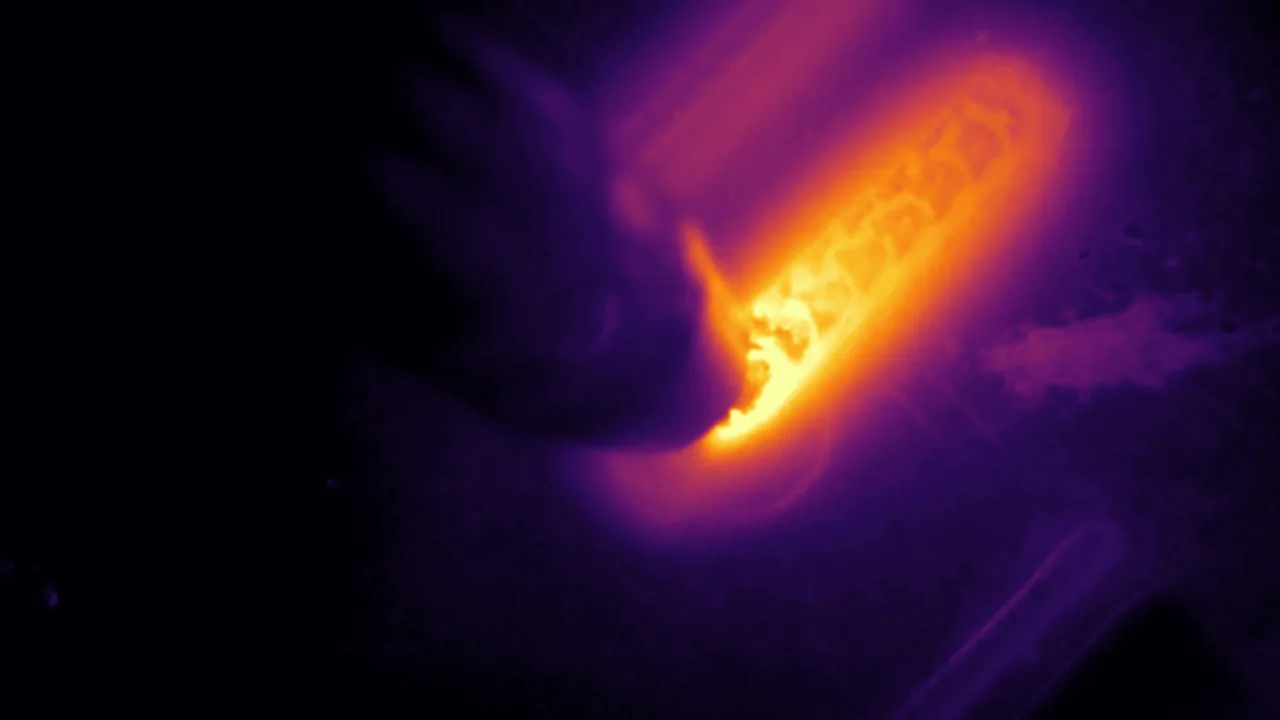
Thermal C-scan imaging from thermography reveals weld misalignment defects non-destructively by mapping heat flow disruptions along the joint. This technique catches hi-lo offsets exceeding ASME or API tolerances before destructive testing.

Fig 1: Defective Weld
Bright vertical streaks at edges signal hi-lo offset.

Fig 2: Quality Weld
Uniform thermal distribution indicates correct geometry.
What is Weld Misalignment?
Weld misalignment, or hi-lo, occurs when joined plates or pipes offset internally or externally, creating uneven gaps up to 1/8 inch (3.2 mm). Causes include poor preparation, heat distortion, or improper fixturing during welding. Exceeding tolerances like ASME B31.3’s 1/16-1/8 inch risks stress concentrations and cracks. Learn more about weld misalignment causes.
Common Causes:
- Poor joint preparation
- Heat distortion during welding
- Improper fixturing
[!IMPORTANT] Exceeding tolerances like ASME B31.3’s 1/16-1/8 inch risks stress concentrations and cracks, often leading to premature structural failure.
Thermal C-Scan: How It Detects Misalignment
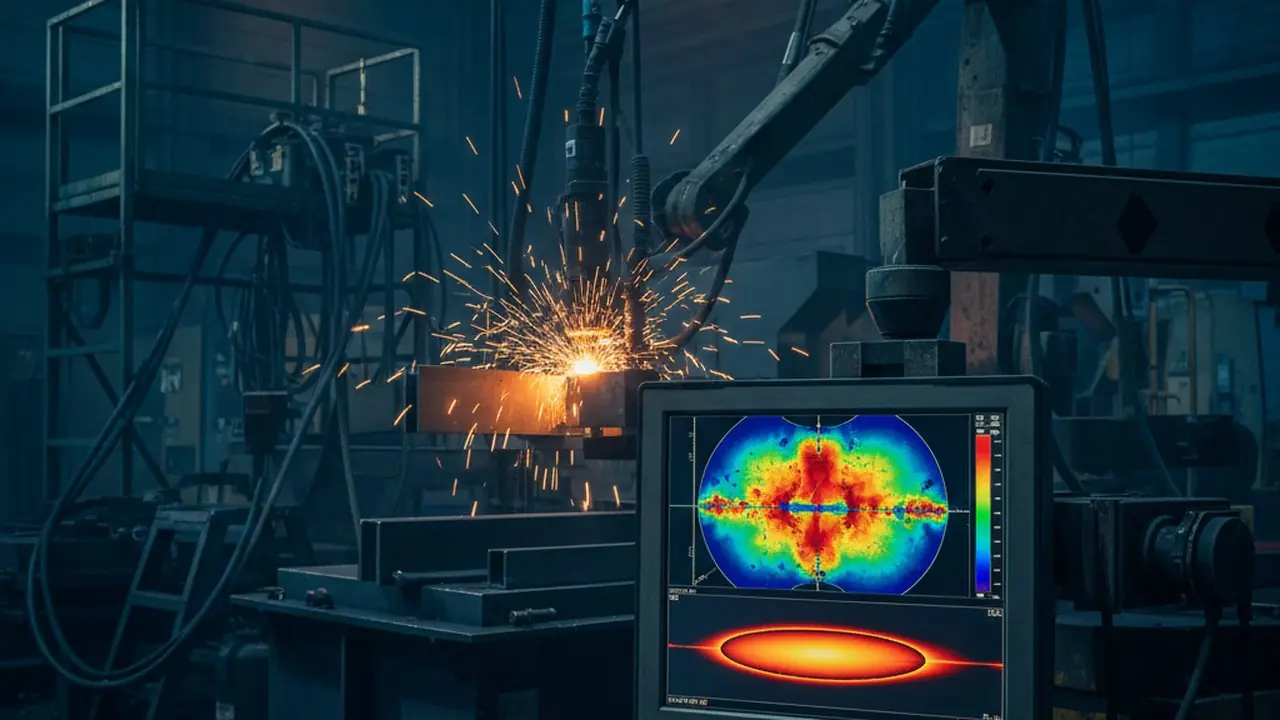
C-scan generates a plan-view heat map from line-scan or pulsed thermography data, where misalignment disrupts lateral heat diffusion. Hotter or cooler streaks indicate offsets, unlike uniform good welds. Laser or induction excitation in a thermographic testing plan boosts sensitivity for inline use, providing real-time NDT inspection capabilities.
Industry Standards for Tolerances
| Standard | Misalignment Limit | Application |
|---|---|---|
| ASME B31.3 / Section IX | 1/16-1/8 inch (1.6-3.2 mm) | Piping, pressure vessels Reference |
| API 650 | ≤10% plate thickness or 3 mm (plates >16 mm); ≤1.5 mm (≤16 mm) | Storage tanks API 650 tolerances |
| ISO 3834 / EN 1090 | Traceable metrics like HAZ width | Compliance via thermography ISO traceability |
Refer to full codes at ASME.org or API standards.
Benefits in Welding Quality Control
- Real-time Detection: Thermography spots misalignment as it happens, cutting scrap versus ultrasonic post-weld checks. See real-time thermal imaging in action.
- Traceability: Generates ISO 17635 evidence packs for every weld, ensuring compliance with international NDT standards.
- Automation: Pairs with AI for pass/fail automation in high-volume production.
Integrate Thermography at Therness
Therness thermographic inspection systems deliver C-scan NDT for welds, supporting WAAM and arc processes. Contact us for demos or explore resources.
Ready to automate your weld inspection?
See how Therness real-time monitoring can reduce your scrap rate by up to 30%.
Therness solution: Welding camera — Thermal and high-speed imaging that watches the arc, the pool and the cooling seam while the weld is made.