English version
A welder on copper alloys is qualified to ISO 9606-3, on nickel alloys to ISO 9606-4, and on titanium or zirconium alloys to ISO 9606-5. Those three parts date from 1999 and 2000 and are still the current editions. ISO is now drafting a single ISO 9606 that will replace all five parts, steels and aluminium included. It is a draft: nothing changes on your certificates until it is published.
This guide covers the non-ferrous parts and the revision. How the steel part sets the range of approval is in ISO 9606-1 range of approval; choosing between the European and the American route is in ISO 9606 or ASME IX.
Which part applies to which metal
| Part | Material group | Edition | Title wording | Status at ISO |
|---|---|---|---|---|
| ISO 9606-1 | Steels | 2012, with two corrigenda | Qualification testing | Current, to be revised |
| ISO 9606-2 | Aluminium and aluminium alloys | 2004 | Qualification test | Current, to be revised |
| ISO 9606-3 | Copper and copper alloys | 1999 | Approval testing | Current, to be revised |
| ISO 9606-4 | Nickel and nickel alloys | 1999 | Approval testing | Current, to be revised |
| ISO 9606-5 | Titanium and titanium alloys, zirconium and zirconium alloys | 2000 | Approval testing | Current, to be revised |
The wording is a hint of the age gap. Parts 1 and 2 were retitled as “qualification test(ing)”; parts 3 to 5 still carry the older “approval testing” title and were never brought in line with the 2012 steel part. A shop that welds steel and nickel alloys therefore runs two generations of the same standard side by side.
Why the old parts still matter
Many certificates for copper, nickel and titanium work were issued against these 1999/2000 editions, and they stay the reference until a new edition replaces them. Do not read a non-ferrous certificate with the steel part in mind. For each one, check:
- the standard number and edition year printed on it;
- the material group, process and other variables it covers, read against the part it was issued under;
- who examined the test and signed the certificate;
- how continued work in the qualified scope is confirmed, and where that confirmation is recorded.
The last point is where most gaps hide. Keep the confirmations in one place per welder and per certificate: the welder continuity record template shows a layout that an examiner or an auditor can read in minutes.
One standard instead of five
The ISO catalogue lists ISO/DIS 9606.2, “Qualification testing of welders — Fusion welding”, from ISO/TC 44/SC 11. It is a 55-page draft with no part number, and ISO states that it will replace ISO 9606-1:2012, ISO 9606-2:2004, ISO 9606-3:1999, ISO 9606-4:1999 and ISO 9606-5:2000.
The draft has already been through two enquiry ballots. The first closed on 25 December 2024; a new draft ballot was decided in May 2026, opened on 1 June 2026 and closed on 28 July 2026. ISO has not announced a publication date.
What this means today:
- the current parts still apply; a draft is not a standard and cannot be quoted as a requirement;
- how existing certificates move to the new edition will be set by the published text: confirm it there and with your examiner or examining body, not from a draft or a summary;
- the change will reach every material group at once, so the review is best planned as one exercise across the shop.
What to prepare before the new edition
- Inventory certificates by part and edition. One list: welder, part, edition year, process, material group, examiner, last continuity confirmation.
- Close the continuity gaps now. A confirmation that is missing today will still be missing when the certificates are reviewed.
- Link production evidence to each certificate. For every weld, record welder ID, WPS revision and the measured current, voltage, wire feed speed and travel speed, plus a thermal record where you have one.
- Read the transition clause when the standard is published, before you plan any retest or reissue.
- Ask your examiner or examining body how they will apply that clause to your certificates, in writing.
Where process data fits
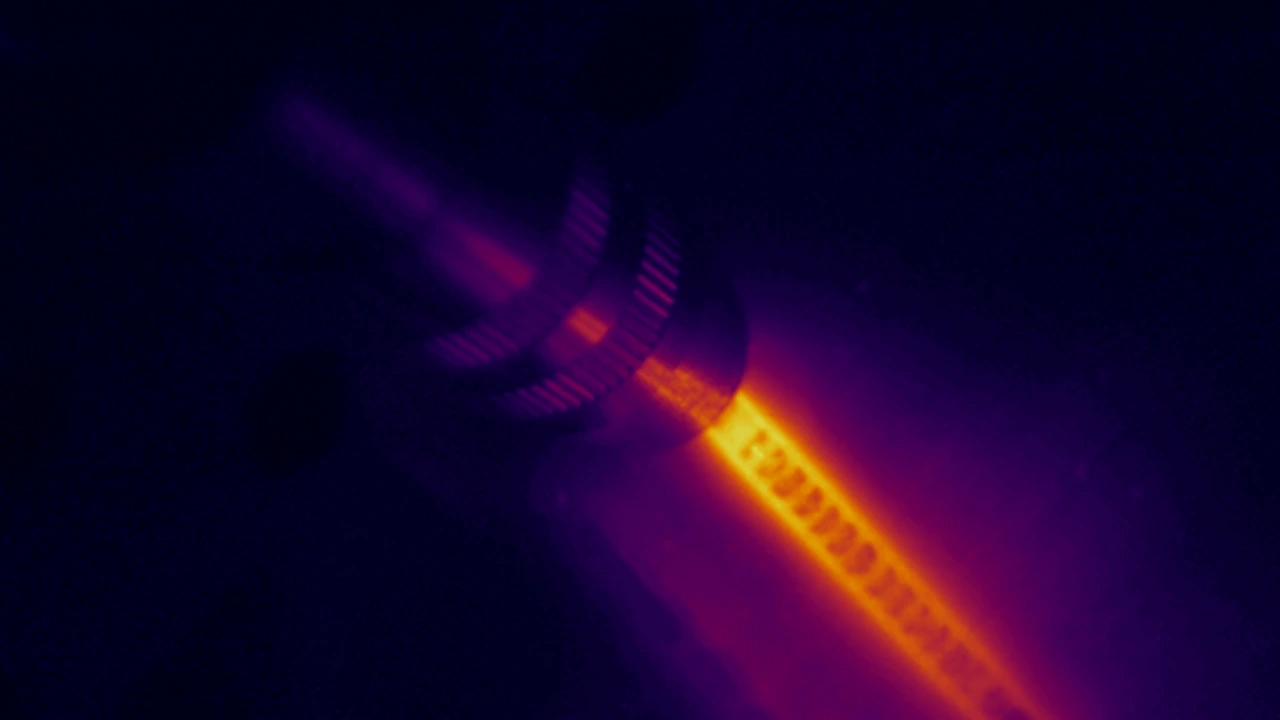
Production records show what a welder actually welded, on which joint and with which parameters. They support the continuity confirmation and give an auditor something better than a signature, but they do not replace the qualification test or the examiner’s decision. WeldTrace acquires current, voltage, wire feed speed and gas flow per weld; HeatCore AI adds thermal evidence of the weld pool. Both feed the same per-weld record, described in the welding monitoring system overview.
Versione italiana
Un saldatore su leghe di rame si qualifica secondo ISO 9606-3, su leghe di nichel secondo ISO 9606-4, su leghe di titanio o zirconio secondo ISO 9606-5. Queste tre parti sono del 1999 e del 2000 e sono ancora le edizioni in vigore. ISO sta preparando una ISO 9606 unica che sostituirà tutte e cinque le parti, acciai e alluminio compresi. È una bozza: sui tuoi certificati non cambia nulla finché non viene pubblicata.
Il campo di validità della parte sugli acciai è spiegato in ISO 9606-1 range of approval; la scelta tra percorso europeo e americano in ISO 9606 o ASME IX.
Quale parte per quale metallo
| Parte | Gruppo di materiali | Edizione | Titolo | Stato in ISO |
|---|---|---|---|---|
| ISO 9606-1 | Acciai | 2012, con due errata corrige | Qualification testing | In vigore, da rivedere |
| ISO 9606-2 | Alluminio e leghe | 2004 | Qualification test | In vigore, da rivedere |
| ISO 9606-3 | Rame e leghe di rame | 1999 | Approval testing | In vigore, da rivedere |
| ISO 9606-4 | Nichel e leghe di nichel | 1999 | Approval testing | In vigore, da rivedere |
| ISO 9606-5 | Titanio e leghe, zirconio e leghe | 2000 | Approval testing | In vigore, da rivedere |
Le parti 1 e 2 sono state reintitolate «qualification test(ing)»; le parti 3, 4 e 5 portano ancora il vecchio titolo «approval testing» e non sono mai state allineate alla parte sugli acciai del 2012. Chi salda acciaio e leghe di nichel lavora quindi con due generazioni della stessa norma.
Perché le parti vecchie contano ancora
Molti certificati per rame, nichel e titanio sono stati emessi su queste edizioni e restano il riferimento finché una nuova edizione non le sostituisce. Non leggere un certificato non ferroso con in mente la parte sugli acciai. Per ciascuno controlla: numero della norma e anno di edizione stampati; gruppo di materiali, processo e altre variabili coperte, letti sulla parte di emissione; chi ha esaminato la prova e firmato; come si conferma il lavoro continuativo nel campo qualificato e dove è registrato. Tieni le conferme in un unico posto per saldatore e per certificato: il modello di registro di continuità mostra un formato leggibile in pochi minuti.
Una norma invece di cinque
Il catalogo ISO elenca la ISO/DIS 9606.2, «Qualification testing of welders — Fusion welding», dell’ISO/TC 44/SC 11: una bozza di 55 pagine senza numero di parte che, secondo ISO, sostituirà ISO 9606-1:2012, ISO 9606-2:2004, ISO 9606-3:1999, ISO 9606-4:1999 e ISO 9606-5:2000. Il primo voto si è chiuso il 25 dicembre 2024; un nuovo voto sulla bozza è stato deciso a maggio 2026, aperto il 1° giugno e chiuso il 28 luglio 2026. ISO non ha annunciato una data di pubblicazione.
Oggi quindi: le parti attuali restano valide e una bozza non è un requisito; il passaggio dei certificati esistenti lo stabilirà il testo pubblicato, da confermare lì e con il tuo esaminatore o ente; la revisione riguarderà tutti i gruppi di materiali insieme, quindi conviene pianificarla come un unico lavoro.
Cosa preparare prima della nuova edizione
- Inventario dei certificati per parte ed edizione: saldatore, parte, anno, processo, gruppo di materiali, esaminatore, ultima conferma di continuità.
- Chiudi ora i buchi di continuità: una conferma che manca oggi mancherà anche alla revisione.
- Collega le prove di produzione a ogni certificato: per ogni saldatura ID del saldatore, revisione della WPS, corrente, tensione, velocità del filo e di avanzamento misurate, più il record termico dove c’è.
- Leggi la clausola di transizione quando la norma sarà pubblicata, prima di pianificare nuove prove o riemissioni.
- Chiedi per iscritto al tuo esaminatore o ente come applicherà quella clausola ai tuoi certificati.
Dove entrano i dati di processo
I record di produzione mostrano che cosa ha saldato davvero un saldatore, su quale giunto e con quali parametri. Sostengono la conferma di continuità e danno all’auditor più di una firma, ma non sostituiscono la prova di qualifica né la decisione dell’esaminatore. WeldTrace acquisisce corrente, tensione, velocità del filo e portata del gas per ogni saldatura; HeatCore AI aggiunge l’evidenza termica del bagno. Entrambi alimentano lo stesso record per saldatura, descritto nella pagina del sistema di monitoraggio della saldatura.
Sources
- ISO/DIS 9606.2 — Qualification testing of welders — Fusion welding (ISO catalogue, stage and replaced standards)
- ISO catalogue, ICS 25.160.01 — status of ISO 9606-1 to -5
Keep every welder certificate tied to the welds it covers / Lega ogni certificato del saldatore alle saldature che copre
Therness links welder, WPS revision and per-weld process and thermal data in one record, ready for the continuity check and the audit. / Therness collega saldatore, revisione WPS e dati di processo e termici di ogni saldatura in un unico record, pronto per la verifica di continuità e l'audit.
Talk to an expert / Parla con un espertoTherness solution: Welding monitoring system — Every weld inspected in the cycle, with defect flags and the ISO 3834 / ISO 17635 evidence kept per weld.