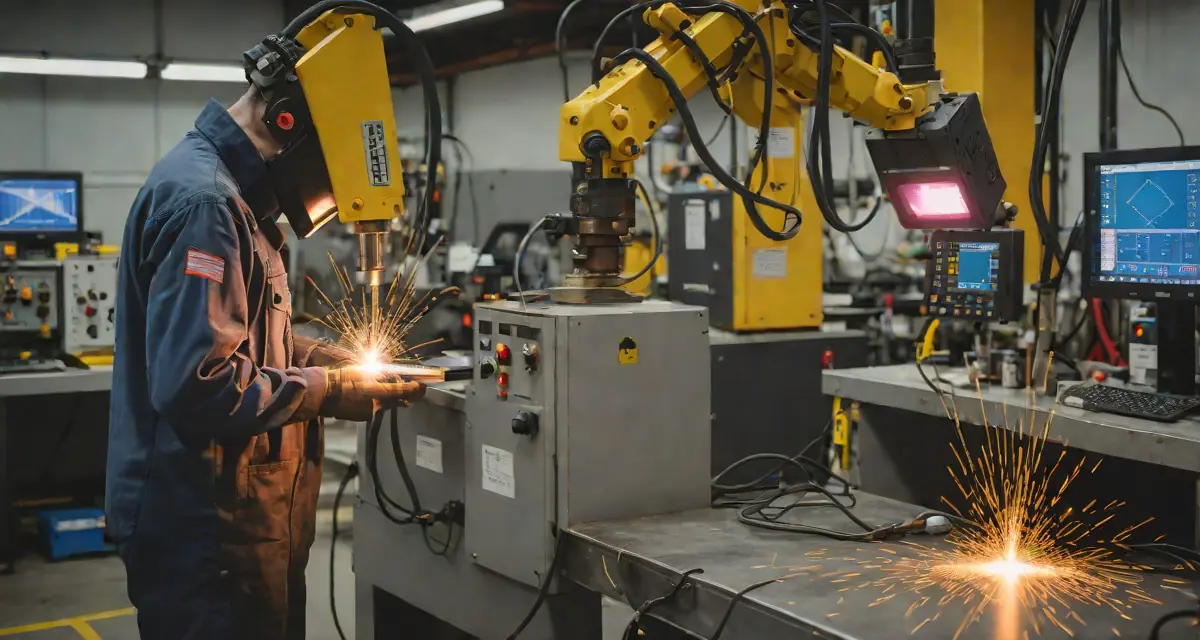
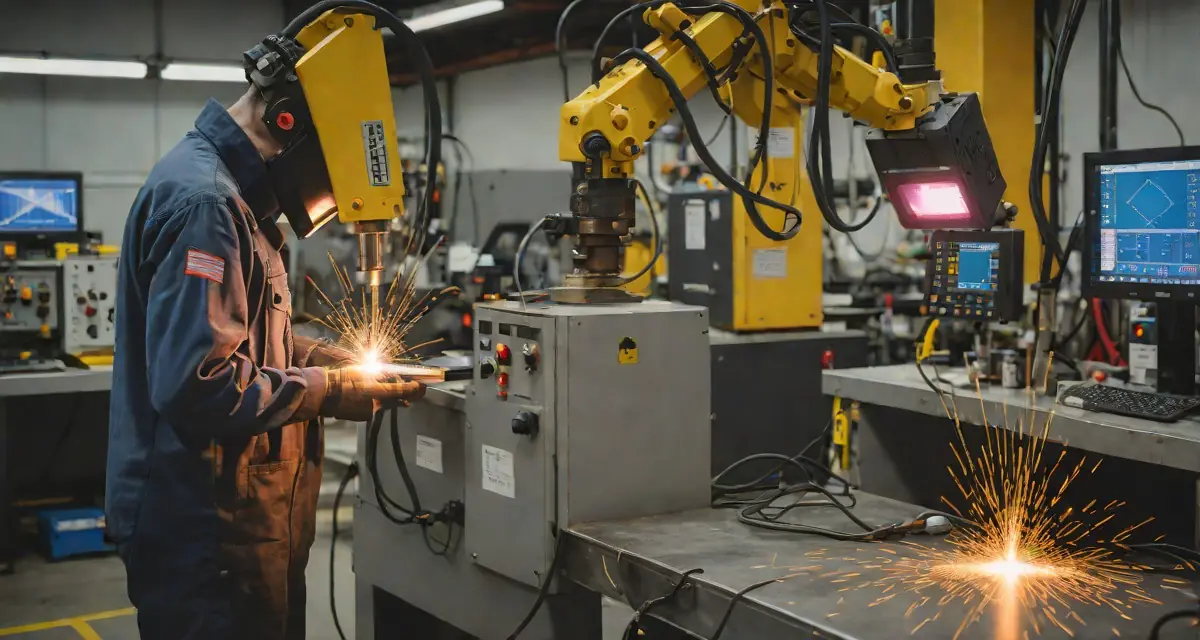
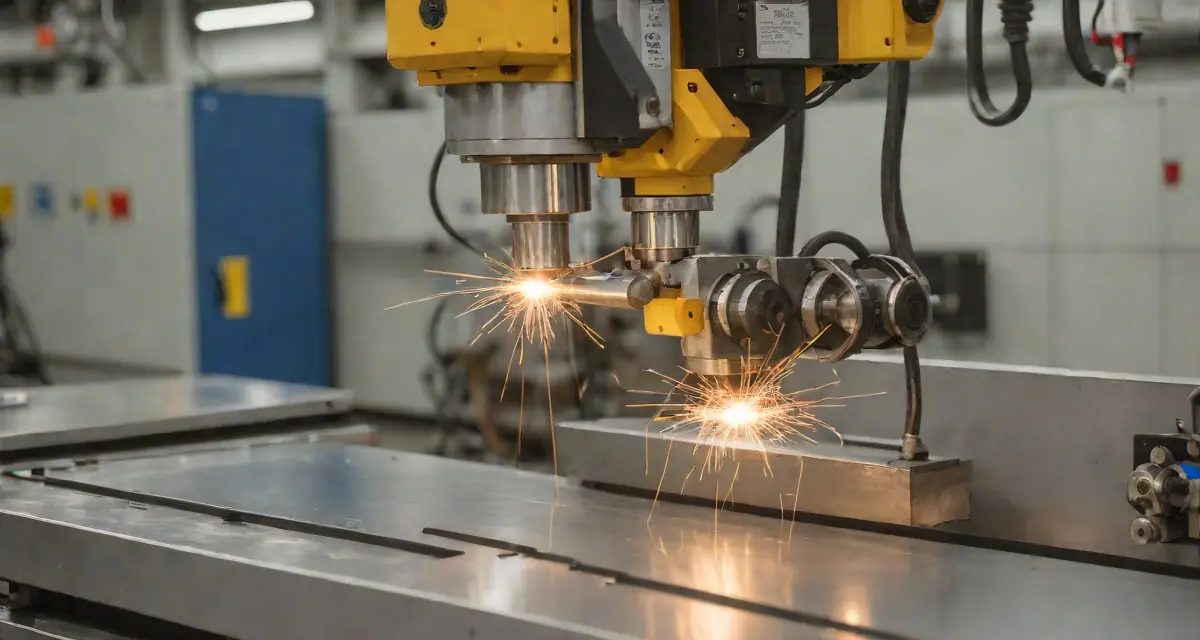
Titanium welding quality monitoring is among the most demanding challenges in precision manufacturing. Ti-6Al-4V and related alloys combine exceptional strength-to-weight ratios with extreme reactivity at elevated temperatures-creating a process window so narrow that traditional quality assurance methods often fail to catch defects before catastrophic propagation.
Titanium’s affinity for oxygen, nitrogen, and hydrogen at temperatures above 540C (1000F) demands meticulous atmospheric control. A single excursion into the danger zone creates alpha case-a brittle, oxygen-enriched surface layer that reduces fatigue life by 40% or more. Meanwhile, inadequate interpass temperature control triggers microstructural transformations that compromise mechanical properties. Real-time thermal monitoring is not optional for aerospace-grade titanium welding-it is mission-critical.
Why Titanium Welding Demands Specialized Quality Monitoring
Titanium alloys present unique quality challenges that differentiate them from ferrous and aluminum weldments:
1. Extreme Reactivity with Atmospheric Gases
Above the beta transus (approx. 995C for Ti-6Al-4V), titanium absorbs oxygen and nitrogen at rates that produce measurable contamination within seconds. Even brief exposure to air during welding creates surface embrittlement extending 0.025-0.125 mm deep.
Thermal signature: Elevated interpass temperatures (greater than 150C) accelerate surface oxidation during subsequent passes. Real-time thermal tracking prevents cumulative heat buildup that extends atmospheric exposure time.
2. Alpha Case Formation
When titanium heats above 540C in the presence of oxygen, a hard, brittle oxygen-stabilized alpha phase layer forms at the surface. This alpha case:
- Increases notch sensitivity and crack initiation probability
- Reduces ductility and fracture toughness
- Requires costly post-weld machining or chemical milling to remove
Thermal signature: Surface temperatures exceeding 540C for more than momentary exposure correlate with alpha case depth. Continuous thermal monitoring validates that the heat-affected zone (HAZ) cools through this threshold within acceptable timeframes.
3. Microstructural Sensitivity to Cooling Rates
Ti-6Al-4V’s dual-phase microstructure (alpha + beta) is highly dependent on thermal history. Cooling rates outside the qualified process envelope produce:
- Slow cooling: Coarse alpha platelets reducing strength
- Rapid cooling: Acicular alpha-prime martensite increasing hardness but reducing toughness
- Intermediate cooling: Optimal basket-weave or equiaxed microstructures
Thermal signature: The T8/5 cooling time-the duration from 800C to 500C-directly predicts final microstructure. Real-time thermal monitoring captures this parameter for every pass.
Post-weld metallographic examination cannot detect transient thermal excursions that occurred during multi-pass welding. Only inline thermal monitoring provides the complete thermal history required for alpha case and microstructure control.
Critical Defects in Titanium Welding and Their Thermal Signatures
Microstructural Degradation from Excessive Heat Input
Titanium’s thermal conductivity (7.2 W/m-K) is roughly one-fifth that of steel, concentrating heat at the weld pool. Excessive heat input produces:
- Grain growth in the HAZ reducing fatigue strength
- Residual stress concentrations from excessive thermal expansion differential
- Distortion requiring costly rework or scrap
Thermal signature: Depressed cooling rates (extended T8/5 times) and elevated peak temperatures in the HAZ. Automated thermal monitoring triggers alerts when cooling trajectories deviate from qualified process envelopes.
Contamination-Induced Porosity
While titanium porosity typically originates from moisture or hydrocarbon contamination on joint surfaces, the defect’s impact is amplified by the material’s notch sensitivity. Single pores near the surface can initiate fatigue cracks under cyclic loading.
Thermal signature: Localized cooling rate anomalies where gas bubbles disrupt normal heat transfer during solidification. Advanced AI analysis of real-time thermal video can flag suspicious solidification patterns for targeted NDT inspection.
Lack of Fusion and Incomplete Penetration
Titanium’s surface oxide (TiO2) has a melting point (1,843C) significantly higher than the base metal (1,660C). Inadequate cleaning or insufficient heat input leaves tenacious oxide films that prevent fusion.
Thermal signature: Asymmetric thermal diffusion patterns and reduced back-face thermal signatures indicating inadequate penetration through the joint thickness.
Cost Impact: A single alpha case rejection on an aerospace structural component can cost $15,000-$50,000 in material, machining, and schedule delay. Real-time thermal monitoring prevents these defects at formation-not after destructive testing reveals them.
Standards and Compliance for Titanium Welding
Aerospace titanium welding operates under stringent regulatory frameworks:
AWS D17.1/D17.1M:2024
The primary specification for fusion welding in aerospace applications, AWS D17.1 defines:
- Procedure qualification requirements including thermal parameter ranges
- Acceptance criteria for radiographic and ultrasonic inspection
- Essential variables for welder and procedure qualification
Reference: pubs.aws.org
Thermal monitoring data directly supports D17.1 compliance by providing objective evidence that qualified thermal parameters were maintained throughout production.
AWS D17.2/D17.2M:2019
For resistance spot and seam welding of titanium alloys, covering process control and quality requirements for airframe assemblies.
Reference: pubs.aws.org
AS9100
The aerospace quality management standard requires documented process control and traceability. Digital thermal monitoring records satisfy AS9100 evidence requirements for special processes like welding.
Customer Specifications
Major OEMs impose additional requirements:
- Boeing: BAC 5976 and related process specifications for Ti-6Al-4V fusion welding
- Airbus: AIPS 03-02-007 and process-specific thermal management requirements
- Lockheed Martin: Specific requirements for JSF and other defense programs
Implementation: Thermal Monitoring Architecture for Titanium Welding
Sensor Selection for Titanium Applications
Titanium welding demands short-wave infrared (SWIR) or near-infrared (NIR) thermal imaging to accurately measure high-temperature weld pools. The short-wave spectrum (1.0-2.5 um) provides:
- Superior temperature resolution at titanium weld pool temperatures (1,700C and above)
- Reduced atmospheric interference compared to long-wave infrared
- Compatibility with through-glass viewing for vacuum or purge chamber applications
The Therness product range spans thermal cameras and monitoring software built around these optical and environmental constraints.
Optics and Environmental Protection
Titanium welding typically operates under:
- Trailing shield gas: Argon coverage extending behind the weld pool
- Back purge: Argon backing preventing root-side oxidation
- Vacuum chambers: For electron beam welding or critical aerospace components
Thermal camera optics must accommodate these environmental constraints-either with through-chamber windows or specialized purge boxes that maintain an inert atmosphere while providing optical access.
Data Processing for Titanium-Specific Metrics
Real-time thermal monitoring for titanium welding tracks parameters unavailable from conventional weld monitoring. The system monitors peak weld pool temperature (targeting values within 100C of qualified parameters), T8/5 cooling time per WPS specifications for phase balance control, interpass temperature maximum of 150C to prevent alpha case, HAZ width isotherm within 2mm of baseline for heat input verification, and cumulative surface temperature exposure above 540C limited to 10 seconds to control alpha case formation.
The HeatCam IR-C thermal camera captures the interpass and cooling-rate data these calculations require at the necessary frame rate.
HeatCore AI thermal monitoring automates these calculations, providing real-time alerts when titanium-specific thresholds are approached or exceeded.
Case Study: Aerospace Frame Component Production
A Tier 1 aerospace supplier producing Ti-6Al-4V frame brackets implemented an inline weld monitoring system on robotic TIG welding cells:
Challenge: Alpha case rejections occurring at final inspection, detected only after full component machining. Scrap rates of 8-12% on complex multi-pass joints.
Solution: HeatCore thermal monitoring with titanium-specific algorithms tracking:
- Interpass temperature compliance across 4-7 pass joints
- Cumulative time above 540C per pass
- T8/5 cooling rate validation
Results:
- Alpha case rejections reduced from 8.2% to 0.3%
- Elimination of post-machining discovery of thermal excursion defects
- Digital thermal records accepted by OEM customer auditors as objective evidence of process control
- Typical ROI achieved within 4 months from scrap reduction alone
Integration with Welding Procedure Qualification
Titanium welding procedures under AWS D17.1 and ASME Section IX require qualification testing that establishes acceptable parameter ranges. Thermal monitoring enables:
Procedure Development: Capture baseline thermal signatures from successful qualification welds, establishing the “golden profile” for production monitoring.
Welder Qualification: Objective evidence that welders maintain qualified thermal parameters during performance qualification testing.
Production Surveillance: Continuous comparison of production thermal data against qualified envelopes, automatically flagging deviations for engineering review.
CQI-15 Welding System Assessment methodology-while designed for automotive applications-provides a valuable framework for titanium welding process surveillance that complements AWS D17.1 requirements.
Future Directions: AI-Enhanced Titanium Weld Quality Prediction
Emerging capabilities in thermal data analysis are extending titanium welding quality monitoring:
Predictive Microstructure Modeling
Machine learning models trained on thermal history data can predict alpha case depth and microstructural phase balance without destructive testing-enabling real-time acceptance decisions.
Digital Twin Integration
Thermal monitoring data feeds physics-based digital twins of titanium weldments, predicting residual stress distributions and informing post-weld machining strategies to prevent distortion.
Automated Parameter Adjustment
Closed-loop thermal control automatically adjusts welding parameters (travel speed, amperage) in real-time to maintain thermal envelopes-particularly valuable for repair welding and heat sink variation compensation.
Ready to eliminate alpha case and microstructure defects in your titanium welding?
HeatCore thermal monitoring systems provide the precision temperature tracking that Ti-6Al-4V aerospace welding demands. Detect thermal excursions before they create costly rejections.
Book a Titanium Welding DemoFurther Reading
- HeatCore AI Thermal Weld Monitoring Deep Dive
- TIG/GTAW Welding Quality Monitoring with Thermal Imaging
- Heat Input and Cooling Rate: T8/5 Microstructure Control
- Electron Beam Welding Quality Monitoring
- ISO 9606 Welder Qualification Tracking
Therness solution: Welding camera — Thermal and high-speed imaging that watches the arc, the pool and the cooling seam while the weld is made.