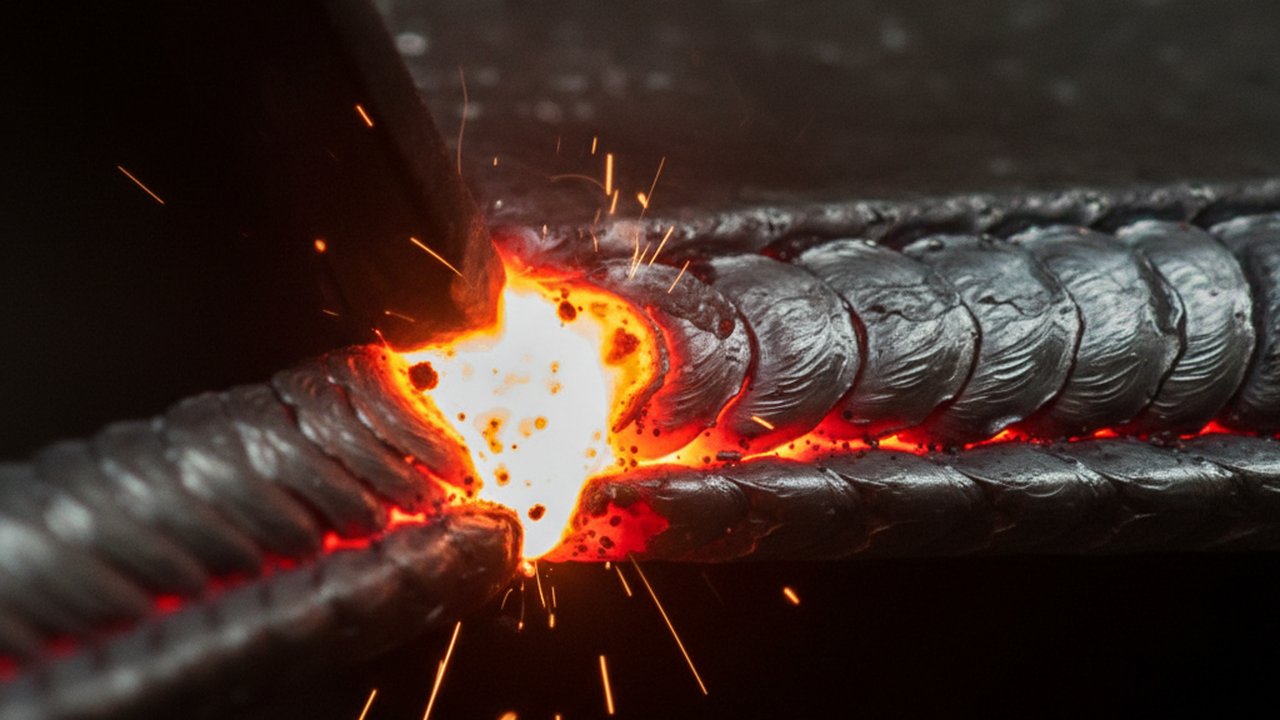
Why weld bead ripples form is a question about timing, not about the metal itself: every ripple is one cycle of a freeze front that does not advance smoothly but in a rhythm, and the rhythm is what a finished bead’s surface actually records. Look at any weld bead and the ripples running across it look decorative — a texture left behind once the metal cooled. They are not decorative. They are a direct, physical record of how the trailing edge of the weld pool solidified, laid down one cycle at a time while the arc was still moving.
At normal viewing speed, or on standard video, the pool that produces this pattern is just a bright, moving blob behind the arc. At several hundred frames per second, the same pool resolves into a moving liquid volume with a visible freeze front sweeping across its trailing edge — and the ripples on the finished bead turn out to be the fossil record of that front’s own rhythm.
Key takeaways
- A weld ripple is not cosmetic — it is the physical trace of one cycle of the freeze front advancing behind the moving arc.
- Regular, evenly spaced ripples generally indicate stable travel speed and heat input; irregular spacing is the signal worth investigating.
- Marangoni flow — surface-tension-driven circulation from the pool’s own temperature gradient — helps set the pool’s shape and stirring pattern that the freeze front then locks in.
- Pulsed processes often show more mechanically regular ripple spacing because the pool can freeze back slightly between pulses.
- High-speed video is the only practical way to see the freeze front itself; ordinary video only shows its finished output, the bead.
- Reading ripple pattern live is a real-time proxy for the same pool stability that ultimately governs penetration and freeze-rate-dependent defects.
Watching the freeze front form the pattern

In the clip above, the pool trails the arc as a bright, mobile volume of liquid metal. Watched frame by frame rather than as one continuous blur, its trailing edge is not advancing at a constant rate — it is stepping forward in a rhythm, and each step is the birth of one visible ripple on the bead behind it.
The pool is not a static shape
A weld pool is held together by surface tension against gravity and arc pressure, and stirred internally by electromagnetic forces and by Marangoni flow driven by the temperature gradient across its surface. None of that is static: the pool’s outline, depth, and internal circulation are all changing continuously as the arc moves and as heat is added and lost.
The freeze front advances in cycles, not smoothly
Behind the arc, the trailing edge of the pool cools through its freezing range. That front does not sweep forward at one continuous rate; it advances, briefly stalls as latent heat is released and local conditions rebalance, then advances again. Each stall-and-advance cycle is the moment one ripple is laid down — which is why the ripple spacing on a finished bead is, in effect, a record of the timing of that cycle.
Ripples are read, not counted, in real time
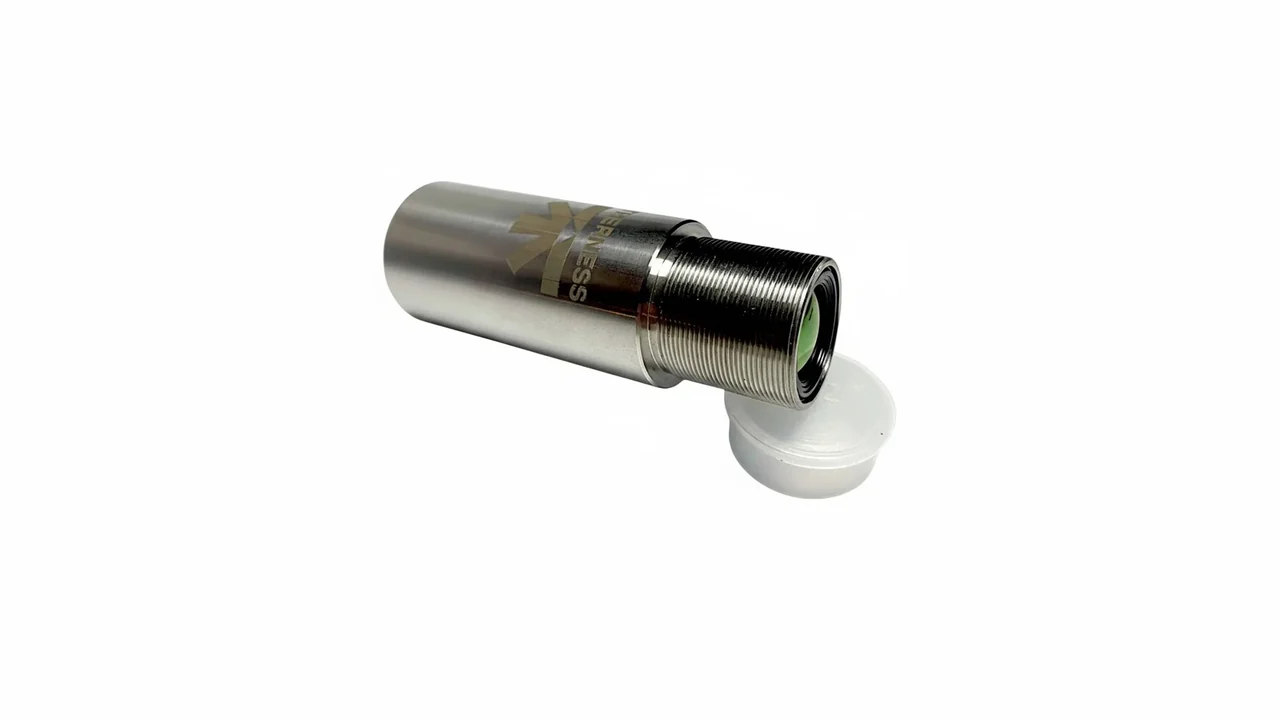
A stable, evenly spaced ripple pattern is one of the most direct real-time indicators that pool behaviour is consistent pass to pass. That is a large part of what HeatCore AI is scoring when it evaluates pool geometry live: not the ripples as an aesthetic outcome, but the freeze-front stability they represent, generated frame by frame from footage a PoolDrop camera captures at up to 480 fps.
Ripple pattern is a proxy signal, not a substitute for measurement. A visually regular bead can still carry an internal defect the surface does not show — porosity, for one, originates inside the pool rather than on its freezing surface, which is why ripple reading complements rather than replaces the acceptance criteria a governing standard actually specifies.
What drives ripple spacing and regularity
Travel speed and heat input
Slower travel relative to a given freeze-front cycling rate packs ripples closer together; faster travel spreads them out. Because travel speed and current together set heat input, and heat input sets how much liquid metal the freeze front has to work through each cycle, the two variables that already govern penetration and bead shape are the same variables setting the ripple pattern — one more reason ripple regularity is a useful real-time signal rather than an incidental one.
Continuous versus pulsed current
In a continuous arc, the freeze-front cycle is set by the pool’s own thermal and surface-tension dynamics, and ripple spacing can vary more from cycle to cycle. When current is pulsed, each pulse deposits a burst of metal and heat and the pool often freezes back slightly in the interval between pulses, so the ripple pattern can lock onto the pulse frequency and come out mechanically more regular. Whether a given clip shows one mechanism or the other is a question about that specific weld’s parameters, not a rule that applies to every process.
Joint geometry and position
Welding position changes how gravity acts on the pool, and joint geometry changes how much of the pool’s edge is unsupported versus backed by parent metal. Both shift where and how the freeze front stalls, which is one reason the same nominal parameters can produce a visibly different ripple character on a fillet weld than on a flat butt joint.
Reading ripple pattern as a real-time signal: a decision checklist
| Observation on video | Likely meaning | What to check next |
|---|---|---|
| Regular, evenly spaced ripples throughout | Stable travel speed and heat input | Nothing urgent — this is the baseline to compare future passes against |
| Ripple spacing widens gradually along the weld | Travel speed increased or heat input dropped | Check arc voltage and travel speed trend for the same pass |
| Ripple spacing suddenly tightens then resumes | A momentary stall — arc length or stick-out change | Correlate the frame timestamp against arc voltage and current logs |
| Ripples disappear into a smeared, glassy stretch | Freeze front outrun by excessive heat input | Check for over-wide pool geometry at the same location, a burn-through precursor on thin material |
| Pattern is regular but mechanically identical every cycle | Pulsed process locking ripple to pulse frequency | Confirm pulse frequency against the qualified WPS rather than treating it as a fault |
Failure modes and fixes
- Reading ripple pattern from a still photo of the finished bead. A photo shows the outcome, not the timing. Fix: read the pattern from video captured during welding, where the frame timestamps carry the cycling-rate information a photo cannot.
- Treating any irregularity as a defect. Minor natural variation exists even in a sound weld. Fix: compare against a baseline pass on the same joint and parameters, and flag departures from that baseline rather than absolute irregularity.
- Filming at a frame rate too low to resolve the freeze front. At 30 or 60 fps the front’s cyclic advance blurs into a smooth-looking edge. Fix: film in the low hundreds of frames per second on the joint and process you actually run.
- Confusing arc glare artefacts with pool features. Arc light reflecting off the pool surface can look like structure that is not there. Fix: use illumination and filtering built to suppress arc glare rather than reading raw, unfiltered footage.
- Judging ripple pattern in isolation from arc parameters. Ripple spacing correlates with travel speed and heat input, but confirming the cause needs the parameter log, not the video alone. Fix: correlate the frame timestamp of a ripple-pattern change against the arc data recorded for the same pass.
Step-by-step: reading the freeze front on your own footage
- Film a known-good pass on the joint and parameters you consider your baseline, at a frame rate high enough to resolve the freeze front rather than just the finished bead.
- Step through the footage and note the approximate interval, in frames, between one ripple forming and the next — this is your baseline cycling rate.
- Film a pass with a deliberate, controlled parameter change — a small travel-speed or current adjustment — and repeat the same frame-by-frame reading.
- Compare the two cycling rates against the parameter change you made, to build your own sense of how travel speed and heat input move the pattern on your process.
- Correlate any irregular pattern you observe in production against the arc log for the same timestamp, rather than judging the video alone.
- Set a baseline range for ripple regularity on each qualified procedure, so a real-time system — or a reviewer — has something concrete to compare a new pass against.
Verification: confirming the signal tracks a real process change
Verification for a ripple-reading or pool-geometry signal asks whether it actually moves when the underlying process changes, not just whether the picture looks reasonable. Run a deliberate, controlled parameter change — travel speed, current, or arc length — and check that the reported pool geometry or ripple regularity shifts in the direction and timing you expect from the physics above.
Repeat the check periodically and after any change to the camera’s mounting, lighting, or the joint being welded, because a lens or illumination drift can make a stable process look like it is producing an irregular pattern when nothing in the weld itself has changed. A signal that never moves, no matter what you do to the parameters, is not reading the freeze front — it is reading something else and reporting it as if it were.
Standards behind visual assessment and procedure qualification
ISO 17637 — visual testing of fusion welds
ISO 17637 sets the requirements for visual testing of fusion-welded joints, the discipline under which bead appearance — including surface regularity — is formally assessed after welding. The ISO 17637 reference card on this site covers its scope.
ISO 15614-1 — procedure qualification
ISO 15614-1 governs qualification testing of arc and gas welding procedures for steels and arc welding of nickel and nickel alloys, where travel speed, current, and heat input — the same variables that set ripple spacing — sit within the procedure’s range of qualification. The ISO 15614-1 reference card summarises its scope.
AWS D1.1 — visual acceptance of weld profile
AWS D1.1 sets visual acceptance criteria for structural steel welds, including profile and surface requirements that bead appearance is checked against. The AWS D1.1 reference card on this site summarises its scope.
For the underlying physics, TWI Job Knowledge and the International Institute of Welding are the practitioner references worth reading past the standards themselves, alongside the European Welding Federation for qualification frameworks, ASNT and the NDT Resource Center for the inspection side, and the NIST Sensor Science Division and NPL temperature research for the radiometric measurement science behind reading a molten surface with a camera in the first place.
From reading ripples to scoring the pool live
Learning to read a ripple pattern by eye, frame by frame, is what makes a real-time pool-geometry signal trustworthy rather than a black box. A welding camera filming at high frame rate with matched arc-glare suppression is what makes the freeze front visible at all; HeatCore AI is what turns that visibility into a live score rather than a video you would have to review by hand after the fact. For the deeper camera-technology side of filming a pool at this frame rate, see reading the weld pool at 480 fps; for the full clip this article is built around, see inside a welding molten pool at 480 fps.
FAQ
Why does a weld bead show ripples instead of a smooth surface? Ripples are the trace of a moving freeze front. As the arc travels on, the trailing edge of the pool cools through its solidification range in a cyclic rather than smooth way, and each brief pause in that rhythm leaves a visible ridge behind — one ripple per cycle.
Are visible weld ripples a defect or a normal part of a sound weld? Normal, and often a good sign: regular, evenly spaced ripples usually mean stable travel speed and consistent heat input. It is irregular spacing, sudden gaps, or ripples that abruptly widen that are worth investigating, not the ripple pattern itself.
Does ripple spacing say anything about travel speed? Yes, in general terms: tighter, more closely spaced ripples usually correspond to slower travel or a higher solidification-front cycling rate relative to distance covered, while widely spaced ripples usually track a faster-moving arc. The exact relationship depends on process and parameters.
What role does the Marangoni effect play in weld pool shape? Marangoni flow is surface-tension-driven circulation caused by the temperature gradient across the pool’s surface. In the common case, hotter, lower-surface-tension liquid near the arc is pulled toward cooler, higher-tension liquid at the edges, producing an outward-spreading, shallower pool; trace surface-active elements such as sulphur or oxygen can reverse the surface-tension gradient and pull flow inward instead, narrowing the pool. Either way, the resulting circulation sets the shape the freeze front then locks in.
Can irregular or interrupted ripples signal a process problem? Yes. A sudden change in ripple spacing or an interrupted pattern usually means travel speed, arc length, or heat input changed mid-pass — exactly the kind of transient a high-speed or thermal camera can flag while the weld is still being made, not after it cools.
Why do pulsed welding processes often show more regular ripple spacing? When current is pulsed, each pulse deposits a small burst of metal and heat, and the pool often freezes back slightly between pulses — so the ripple pattern can track the pulse frequency directly, producing a more mechanically regular spacing than a continuous arc.
How does high-speed video reveal the freeze front that ordinary video misses? At 30 or 60 fps the freeze front’s cyclic advance blurs into a single trailing edge with no visible structure. At several hundred frames per second, the same edge resolves into discrete steps, each one the moment a ripple is actually being formed.
Does the ripple pattern change between different arc welding processes? Yes — current waveform, travel speed, and pool volume all differ by process, and each of those drives the freeze-front cycling rate. The underlying mechanism, a moving pool solidifying behind a travelling heat source, stays the same across processes; only the resulting spacing and regularity change.
Watch pool stability in real time, not after the bead cools
Therness combines a 480 fps weld pool camera with AI geometry scoring so freeze-front stability is measured on every pass, not read off the finished bead by eye.
Talk to an engineerTherness solution: Welding camera — Thermal and high-speed imaging that watches the arc, the pool and the cooling seam while the weld is made.
Frequently Asked Questions
Why does a weld bead show ripples instead of a smooth surface?
Ripples are the trace of a moving freeze front. As the arc travels on, the trailing edge of the pool cools through its solidification range in a cyclic rather than smooth way, and each brief pause in that rhythm leaves a visible ridge behind — one ripple per cycle.
Are visible weld ripples a defect or a normal part of a sound weld?
Normal, and often a good sign: regular, evenly spaced ripples usually mean stable travel speed and consistent heat input. It is irregular spacing, sudden gaps, or ripples that abruptly widen that are worth investigating, not the ripple pattern itself.
Does ripple spacing say anything about travel speed?
Yes, in general terms: tighter, more closely spaced ripples usually correspond to slower travel or a higher solidification-front cycling rate relative to distance covered, while widely spaced ripples usually track a faster-moving arc. The exact relationship depends on process and parameters.
What role does the Marangoni effect play in weld pool shape?
Marangoni flow is surface-tension-driven circulation caused by the temperature gradient across the pool's surface. In the common case, hotter, lower-surface-tension liquid near the arc is pulled toward cooler, higher-tension liquid at the edges, producing an outward-spreading, shallower pool; trace surface-active elements such as sulphur or oxygen can reverse the surface-tension gradient and pull flow inward instead, narrowing the pool. Either way, the resulting circulation sets the shape the freeze front then locks in.
Can irregular or interrupted ripples signal a process problem?
Yes. A sudden change in ripple spacing or an interrupted pattern usually means travel speed, arc length, or heat input changed mid-pass — exactly the kind of transient a high-speed or thermal camera can flag while the weld is still being made, not after it cools.
Why do pulsed welding processes often show more regular ripple spacing?
When current is pulsed, each pulse deposits a small burst of metal and heat, and the pool often freezes back slightly between pulses — so the ripple pattern can track the pulse frequency directly, producing a more mechanically regular spacing than a continuous arc.
How does high-speed video reveal the freeze front that ordinary video misses?
At 30 or 60 fps the freeze front's cyclic advance blurs into a single trailing edge with no visible structure. At several hundred frames per second, the same edge resolves into discrete steps, each one the moment a ripple is actually being formed.
Does the ripple pattern change between different arc welding processes?
Yes — current waveform, travel speed, and pool volume all differ by process, and each of those drives the freeze-front cycling rate. The underlying mechanism, a moving pool solidifying behind a travelling heat source, stays the same across processes; only the resulting spacing and regularity change.