Active thermography NDT bridges the gap between fast visual inspection and slow volumetric ultrasonic testing. By injecting a controlled thermal stimulus and recording how heat propagates through a component, inspectors can map subsurface defects across large areas in seconds — without contact, coupling agents, or surface grinding. This guide covers how active thermography works in industrial practice, which sectors use it, and how to select the right variant for your application.
What Is Active Thermography NDT?
In passive thermography, the inspector simply observes the natural thermal signature of a component in service — detecting hot spots in electrical panels or heat loss in building envelopes. Active thermography adds an external heat source to create a controlled thermal transient. The infrared camera captures the time evolution of surface temperature, and post-processing algorithms extract subsurface defect information from the thermal response.
The fundamental principle: a sound material conducts heat uniformly. A defect — delamination, lack of fusion, porosity cluster, crack — acts as a thermal barrier. The zone above the defect heats or cools at a different rate than the surrounding material, producing a detectable contrast in the thermogram sequence.
Key advantages over conventional NDT:
- Non-contact: no coupling, no surface preparation beyond cleaning
- Wide-area coverage: inspect 0.5–2 m² per scan pass
- Speed: full thermogram sequence acquired in seconds to minutes
- Digital: output is a data cube (2D spatial × time) amenable to AI analysis
Active thermography is standardised under EN 16714. Personnel must be qualified to ISO 9712 in the thermographic testing (TT) method at the appropriate level for the inspection task.
Core Techniques
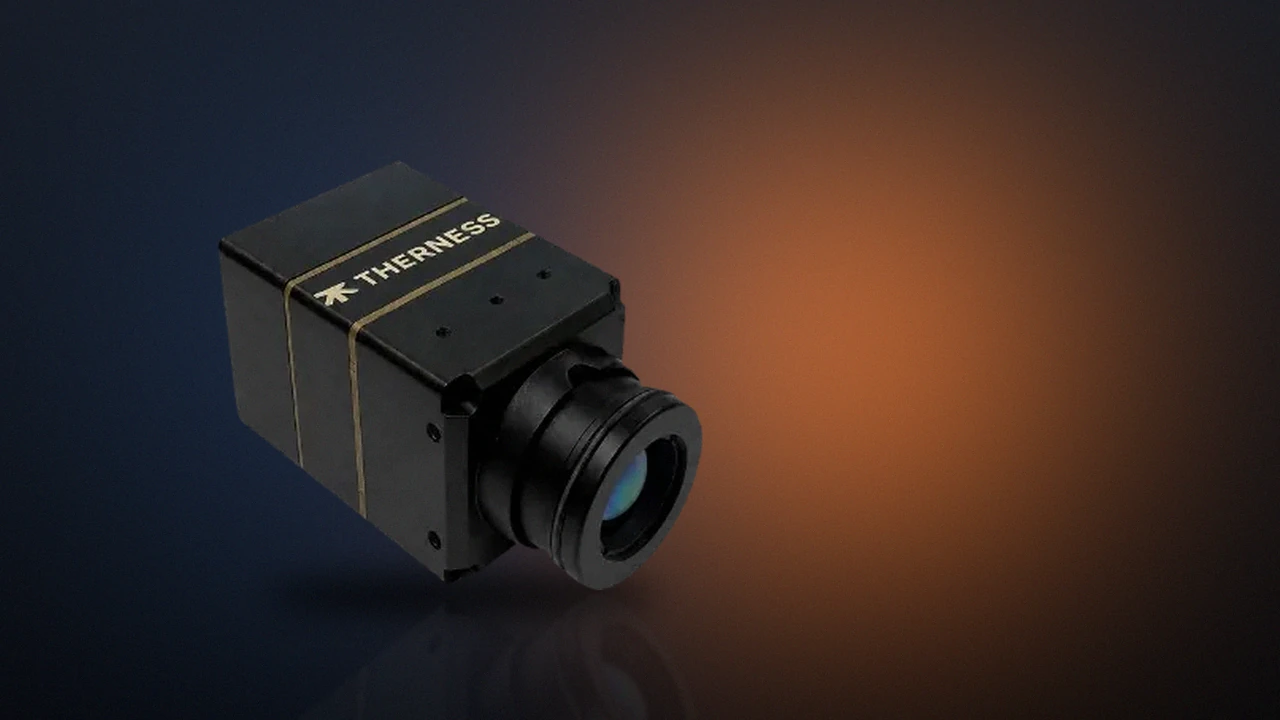
All active thermography methods share the same IR camera and data-processing backend — see the thermographic camera range that runs them. They differ in the excitation source and how heat is deposited:
| Technique | Excitation | Typical depth reach | Best for |
|---|---|---|---|
| Pulsed thermography (PT) | Flash lamps (ms pulse) | 1–5 mm metals; 3–10 mm composites | Rapid screening, large areas |
| Lock-in thermography (LT) | Periodic sinusoidal heat (optical or induction) | 0.1–20 mm (frequency-dependent) | Precise depth profiling, thin sections |
| Flash thermography (FT) | Single high-energy flash | Similar to PT | Aerospace CFRP, aerospace bonds |
| Induction thermography (IHT) | Electromagnetic induction coil | Surface to ~5 mm in ferromagnetics | Steel welds, fatigue cracks, surface-breaking defects |
For a detailed comparison of detection sensitivity, equipment cost, and EN 16714 compliance per technique, see how the four excitation methods stack up.
Applicable Standards and Codes
EN 16714 — Thermographic Testing
EN 16714 is the European standard governing thermographic NDT. It consists of three parts:
- EN 16714-1: General principles — defines qualification of personnel, procedure qualification, and reporting requirements
- EN 16714-2: Equipment — specifies IR camera performance, calibration, and reference standards
- EN 16714-3: Terms and definitions
The standard requires a written procedure approved by a Level 3 thermographic tester (ISO 9712). Inspection procedures must document: excitation type and parameters, camera specifications (NETD, spatial resolution, frame rate), signal processing method, and acceptance criteria referenced to the applicable product standard.
ASTM E2582
ASTM E2582 covers flash thermography for aerospace composites and bonded structures. It defines reference standards (flat-bottom holes at specified depths), minimum detectability thresholds, and data analysis methods. Widely referenced in MRO and Tier 1 aerospace supply chains.
ISO 9712 — Personnel Qualification
Thermographic testing (TT) is a recognised NDT method under ISO 9712. Level 1 technicians operate equipment and record data under supervision; Level 2 technicians interpret results and write procedures; Level 3 experts approve procedures and perform independent assessment. The applicable scope must specify the technique (PT, LT, IHT) and material/product form.
ISO 10878
ISO 10878 provides terminology for non-destructive testing by infrared thermography, harmonising vocabulary across EN 16714 and ASTM standards. Useful reference for procedure writing and cross-standard compliance documentation.
When qualifying an active thermography procedure under EN 16714, the procedure qualification record (PQR) must demonstrate detectability on representative reference specimens at the specified defect type, size, and depth — analogous to the WPS/WPQR logic in ISO 3834.
Industrial Applications by Sector
Welded Metallic Structures
Active thermography, particularly induction thermography (IHT), is effective for detecting surface-breaking and near-surface fatigue cracks and lack-of-fusion defects in steel and aluminium welds. IHT induces eddy currents that produce localised heating at discontinuities — a crack tip concentrates current and appears as a thermal hot spot within milliseconds of excitation.
Typical applications:
- Post-weld inspection of structural steel per EN 1090-2 (fillet welds, butt welds in EXC2–EXC4)
- Weld toe crack screening in fatigue-critical joints
- Subsurface lack-of-fusion detection in thin-wall sections (<8 mm)
- Inspection of EN 15085 railway weld classes (CP A–C) on bogie frames and car body structures
For subsurface defect detection in weld seams, see our Active Thermography for Subsurface Weld Defect Detection article.
Aerospace Composites and Bonded Structures
Flash and pulsed thermography are mature inspection methods for CFRP (carbon fibre reinforced polymer) panels, sandwich structures, and adhesive bonds. Key detectable discontinuities: fibre disbonds, impact damage (barely visible impact damage, BVID), delaminations, and voids in adhesive layers.
ASTM E2582 defines the qualification framework. Flash thermography is accepted in MRO procedures for skin-to-stringer bonding inspection and nacelle panels. Detection depth in CFRP: typically 3–8 mm with pulsed/flash excitation; lock-in thermography reaches deeper with sinusoidal heating at lower frequencies (0.01–1 Hz).
Automotive: AHSS and Laser Welds
Advanced high-strength steel (AHSS) welding — TRIP, DP, MART steels — produces narrow weld beads with high heat-affected zone sensitivity. Pulsed thermography provides rapid screening of resistance spot welds (RSW) and laser welds for internal porosity clusters and expulsion defects without requiring sectioning.
Lock-in thermography at low frequencies (0.1–0.5 Hz) reaches 3–5 mm depth, sufficient to characterise the nugget quality in RSW joints (<3 mm sheet). In CQI-15 welding system assessments, documented NDT sampling procedures using active thermography can serve as evidence for process control monitoring requirements.
Railway and Rolling Stock
EN 15085-3 assigns weld quality classes (CP A through CP D) to rolling-stock welds based on safety criticality. CP A and CP B welds require NDT — typically VT + UT or RT. Active thermography (IHT or PT) is increasingly used for rapid screening of large weld areas on bogie frames and car body shell panels, where conventional UT probe scanning is slow and access-limited.
The method is not yet explicitly named in EN 15085-3 as a mandatory technique, but EN 16714 procedures accepted under customer-approved NDT procedures qualify as “other methods” where demonstrated sensitivity meets CP class requirements.
Pressure Equipment
EN 13445-5 (unfired pressure vessels) permits various NDT methods for vessel shells, nozzle welds, and heat-exchanger tube-to-tubesheet joints. Active thermography complements RT and PAUT for weld overlay cladding bond quality assessment and for detecting surface cracks in weld heat-affected zones prior to hydrotest.
What Active Thermography Detects
| Defect type | Technique | Typical depth | Reliability |
|---|---|---|---|
| Delaminations / disbonds | PT, FT, LT | 1–10 mm | High |
| Lack of fusion (near-surface) | IHT, PT | <5 mm | Medium–High |
| Fatigue cracks (surface-breaking) | IHT | Surface | High |
| Porosity clusters | PT, LT | <3 mm | Medium |
| Subsurface cracks | LT (low freq) | 3–15 mm | Medium |
| Volumetric inclusions | Not well-suited | — | Low |
Active thermography is not recommended as the sole inspection method for deep volumetric defects (slag, tungsten inclusions >5 mm depth) — PAUT or TOFD per EN ISO 13588 remains the standard for those defect types.
Method Selection Checklist
Use this framework to narrow technique selection before writing the inspection procedure:
Step 1 — Material and geometry
- Ferromagnetic steel → IHT viable (eddy current excitation efficient)
- Non-ferromagnetic aluminium / titanium / CFRP → PT, FT, or LT
- Thin section (<3 mm) → LT at higher frequency (1–10 Hz) for depth control
- Thick section (>10 mm) → LT at 0.01–0.1 Hz or PT with high-energy source
Step 2 — Target defect
- Surface or near-surface cracks → IHT
- Delaminations, disbonds, large-area screening → PT or FT
- Precise depth profiling → LT
Step 3 — Inspection constraints
- Access from one side only → reflection mode PT/LT (same-side excitation and camera)
- Inline / automated → IHT or PT with robotised scanner
- Manual handheld → PT with portable flash unit
Step 4 — Standard and customer requirement
- Aerospace customer → ASTM E2582 / qualified flash thermography procedure
- EN 16714 required → document technique variant in procedure, qualify on reference specimen
- ISO 9712 Level 2 on site? → required before independent interpretation
Not every part fits a standard setup. When geometry, coating, production rate, or access rules out an off-the-shelf configuration, Therness scopes custom thermal imaging and monitoring setups — feasibility trial on representative parts first, then the excitation, optics, and analysis chain designed around the component.
Acceptance criteria for active thermography must always reference the product standard (EN 1090-2, EN 13445-5, EN 15085-3) or a customer engineering specification — EN 16714 itself does not define accept/reject thresholds.
Integration with Digital Quality Systems
Active thermography generates structured data: thermogram sequences, processed phase/amplitude maps, defect maps with coordinates. Linking this data to a digital QMS closes the loop between inspection results and weld traceability records.
In practice this means:
- Weld seam ID → thermogram linkage: each inspection record references the weld ID from the traveller or MES, enabling full traceability per ISO 3834-2
- AI-assisted analysis: convolutional neural network (CNN) models trained on thermogram datasets reduce operator subjectivity and flag anomalies below the trained human detection threshold
- Corrective action integration: defects flagged in thermograms trigger NCR workflows directly in the QMS, with the thermogram as digital evidence
Therness builds inspection systems around this method that integrate thermography inspection data alongside real-time thermal weld monitoring, creating a unified quality record from weld start to final inspection.
Active Thermography in Your Production Line
Therness integrates IR inspection data with real-time weld process monitoring for complete, audit-ready quality records. Talk to our application engineers.
Book a demoTherness solution: Welding monitoring system — Every weld inspected in the cycle, with defect flags and the ISO 3834 / ISO 17635 evidence kept per weld.
Frequently Asked Questions
What is active thermography in NDT?
Active thermography NDT is a non-contact inspection method that injects a controlled heat stimulus into a component — via flash lamps, induction coils, or ultrasonic transducers — and records the resulting surface temperature distribution with an infrared camera. Subsurface defects (delaminations, lack of fusion, cracks, porosity) alter local heat flow and appear as thermal anomalies in the recorded thermogram sequence. EN 16714 is the governing European standard.
Which standards apply to active thermography inspection?
The primary standard is EN 16714 (Thermographic testing), structured in three parts: EN 16714-1 (general principles), EN 16714-2 (equipment), EN 16714-3 (terms and definitions). ASTM E2582 covers flash thermography for aerospace composites. ISO 10878 provides NDT thermography terminology. Personnel qualification follows ISO 9712 (Level 1–3, thermographic testing method). For railway applications EN 15085-3 references compatible NDT methods; for pressure equipment EN 13445-5 lists permitted examination methods.
How does active thermography compare to ultrasonic testing for weld inspection?
Active thermography excels at detecting wide-area shallow defects (delaminations, lack of fusion in thin-wall sections, surface-breaking cracks) in a single non-contact scan — typical inspection rates 0.5–2 m²/min. Ultrasonic testing (UT/PAUT/TOFD) reaches greater depths and achieves precise sizing of volumetric defects (porosity, inclusions) but requires coupling, slower point-by-point scanning, and surface preparation. In practice, active thermography complements UT for screening and post-weld surface verification, while PAUT/TOFD is used for volumetric characterisation per EN ISO 11666 and EN ISO 13588.