Introduction: Artificial Intelligence Meets Welding Quality
The welding industry is undergoing a fundamental shift. Traditional quality control methods rely on post-weld inspection to catch defects after they’ve already occurred. Welding monitoring with artificial intelligence changes this paradigm by detecting issues as they happen, in real time.
At the heart of modern AI welding monitoring systems lies computer vision, a branch of artificial intelligence that enables machines to interpret and analyze visual data. When applied to thermal imaging of the weld pool, computer vision algorithms can identify patterns invisible to the human eye, classify weld quality, and trigger immediate alerts when anomalies occur.

This article explores how welding monitoring artificial intelligence works, what computer vision can detect, and how manufacturers are using these technologies to achieve zero-defect welding.
How Computer Vision Analyzes Weld Pool Images
Computer vision for welding monitoring uses deep learning neural networks trained on thousands of weld images. These models learn to recognize the visual signatures of good welds and defects, enabling automated classification at production speed.
The AI Detection Pipeline
Modern AI welding monitoring systems follow a structured pipeline:
- Image Acquisition: A thermal weld camera captures infrared images of the weld pool at high frame rates (typically 30-120 FPS)
- Preprocessing: Images are normalized and enhanced to optimize detection accuracy
- Object Detection: Deep learning models identify and locate key features (weld pool, arc, spatter, defects)
- Classification: Each detection receives a confidence score and quality classification
- Decision Output: The system triggers alerts, logs data, or stops production based on configured thresholds
Key Technology: YOLO-Based Detection
Many industrial AI welding systems use YOLO (You Only Look Once) architecture for real-time object detection. These models can process video streams at 30+ FPS while maintaining high accuracy, making them ideal for inline weld monitoring.
What the AI Detects
A well-trained computer vision model for welding monitoring can detect and classify:
- Weld pool geometry: Size, shape, and position of the molten pool
- Arc characteristics: Stability, position, and intensity
- Thermal anomalies: Hot spots, cold zones, and temperature gradients
- Defect signatures: Porosity indicators, lack of fusion patterns, undercutting
- Process drift: Gradual changes in pool behavior indicating parameter degradation

Real-World AI Detection Examples
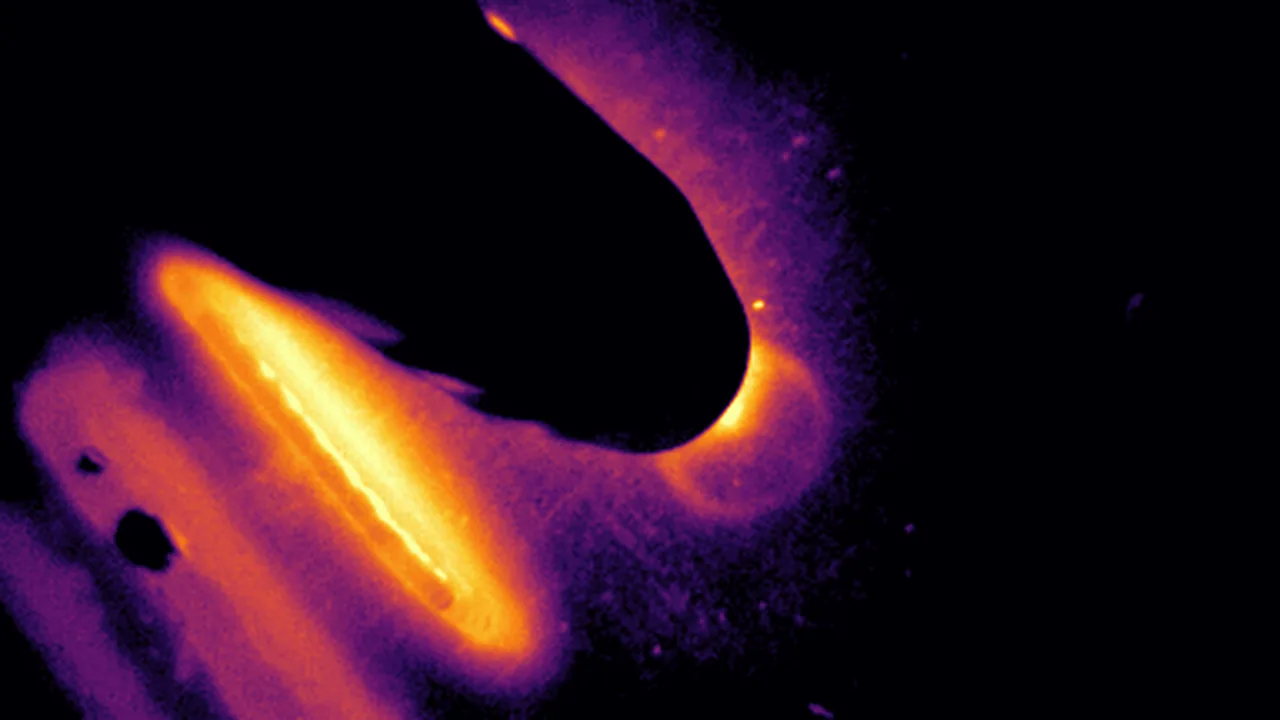
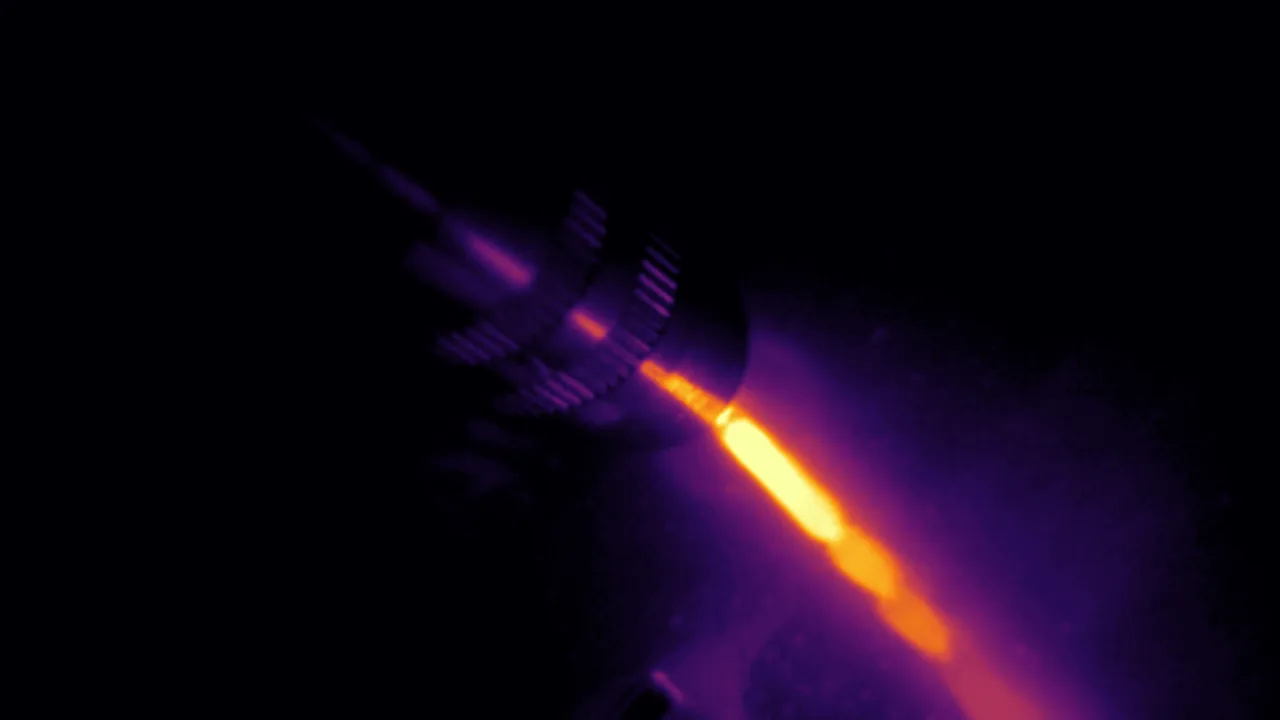
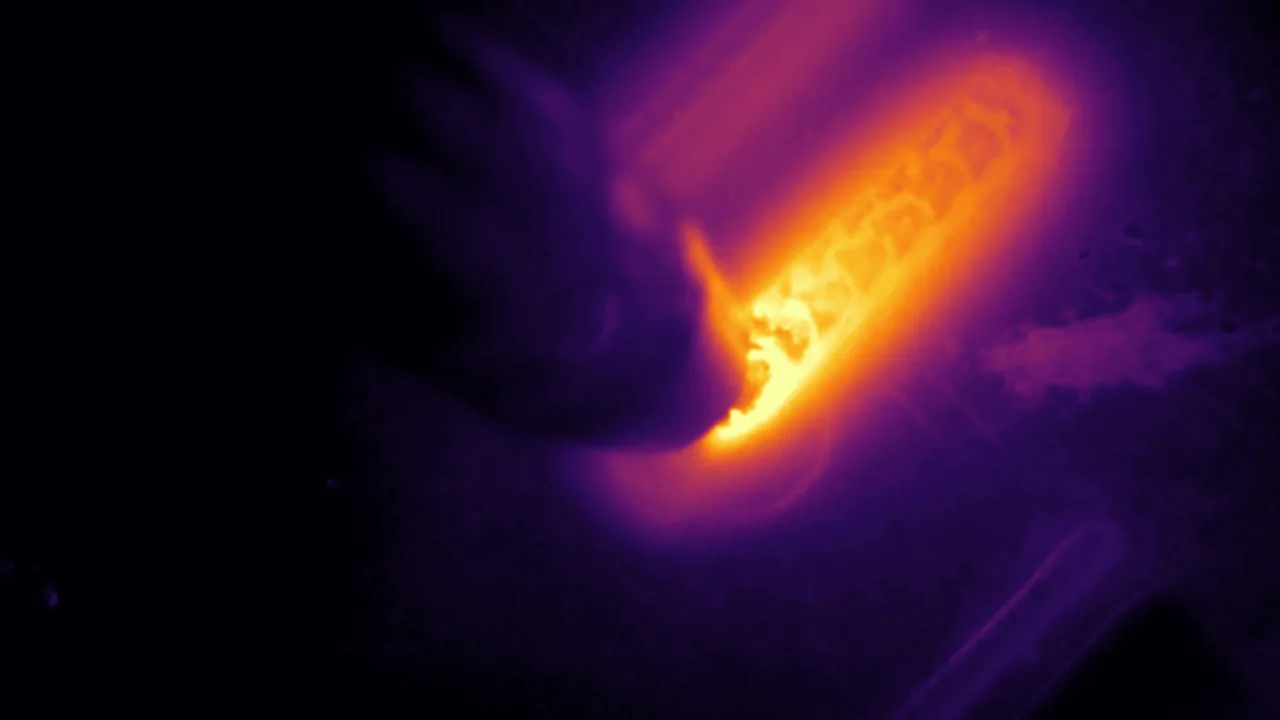
The following examples demonstrate how computer vision algorithms analyze actual weld pool thermal images, providing confidence scores that indicate detection reliability. (Watch AI molten-pool analysis in action.)
Example 1: Standard Pool Detection
In this thermal image, the AI model identifies the weld pool region with high confidence. The bounding box overlay shows the detected weld pool boundaries.
Example 2: High-Confidence Detection
As the weld stabilizes, confidence scores often increase. High-confidence detections are suitable for automated decisions without human review.
Example 3: Detecting Process Instability
When the weld pool shape becomes irregular, confidence can drop and anomaly scores can rise. This is the signal operators need to intervene before defects propagate.
Benefits of AI Welding Monitoring for Manufacturers
Implementing AI-powered welding monitoring delivers measurable benefits:
- 100% inspection coverage: Every weld is monitored, not just samples
- Immediate defect detection: Problems are caught in real time, reducing rework
- Objective classification: Consistent scoring without human subjectivity
- Automated traceability: Evidence logs support ISO 17635 and customer audits
- Process optimization: Data reveals drift and parameter sensitivity
Implementing AI Welding Monitoring
Deploying artificial intelligence for welding monitoring requires careful planning:
Step 1: Start with Critical Welds
Select 1-2 welds where defects cause the most rework, safety risk, or customer complaints.
Step 2: Install Thermal Imaging
Mount industrial thermal cameras with appropriate resolution and frame rate for your welding speed. See weld-pool camera systems matched to inline monitoring speeds.
Step 3: Train the AI Model
Collect baseline data from good welds and known defects. The AI model learns your specific process, materials, and acceptable variations.
Step 4: Set Confidence Thresholds
Configure the system to alert, log, or stop based on confidence scores and defect classifications. Start conservatively and tune based on operational experience.
Step 5: Integrate with QMS
Connect AI monitoring data to your quality management system for automated record-keeping, CAPA triggers, and compliance reporting. the HeatCore QMS workflow provides seamless integration.
Ready to Implement AI Welding Monitoring?
See how Therness AI systems analyze your specific welding process with a live demonstration.
Book a Live DemoFrequently Asked Questions
What is AI-powered welding monitoring?
AI-powered welding monitoring uses artificial intelligence algorithms to analyze sensor data (thermal, visual, acoustic) from the welding process in real time, automatically detecting defects and classifying weld quality without human intervention.
How does computer vision detect weld pool defects?
Computer vision systems use deep learning object detection models trained on thousands of weld images. These models identify and locate the weld pool, arc, and potential defects, outputting bounding boxes with confidence scores for each detection.
What confidence score is acceptable for weld pool detection?
Industrial AI welding systems typically require confidence scores above 85% for reliable detection. Scores above 90% indicate high-confidence detections suitable for automated pass/fail decisions without human review.
Can AI welding monitoring work with existing thermal cameras?
Yes, AI welding monitoring systems like Therness can integrate with existing thermal imaging hardware. The AI processing unit analyzes the thermal video stream in real time, adding intelligence to your current sensor infrastructure. Where a fresh install makes sense, the full camera range covers cylindrical, compact, and weld-pool optics.
How long does it take to train an AI model for welding monitoring?
Initial model training typically requires 2-4 weeks of data collection, covering normal production variation and known defect examples. Pre-trained models can accelerate deployment, with fine-tuning completed in days for common welding processes.
Conclusion
Welding monitoring with artificial intelligence and computer vision represents the next evolution in quality control. By analyzing weld pool thermal images in real time, AI systems deliver what was previously impossible: 100% inspection coverage with consistent, objective quality assessment.
The examples in this article demonstrate how modern AI can detect weld pools and arcs with high confidence, providing the foundation for automated defect detection and quality classification.
For manufacturers seeking competitive advantage through quality, implementing AI welding monitoring is no longer a question of if, but when.
Related resources
- Weld Quality Monitoring 101: Complete Guide
- AI Defect Detection: Thermal vs Vision vs Acoustic
- Infrared Thermography for Welding Quality
- HeatCore AI: Thermal Weld Monitoring System
Therness solution: Welding camera — Thermal and high-speed imaging that watches the arc, the pool and the cooling seam while the weld is made.