English version
Welding a sleeve, a branch connection or a hot-tap fitting onto a pipeline that is still carrying product is not the same job as welding a new line. The product keeps flowing, the wall keeps its pressure, and the weld has to be made without letting either of those turn into a failure. API 1104 deals with this case in Annex B, which covers the welding procedures and the welders qualified for welding onto a pipeline in service.
The current edition of API 1104, “Welding of Pipelines and Related Facilities”, is the 22nd edition, published in July 2021, with Errata 1 issued in September 2023. In the United States the federal pipeline rules (49 CFR Parts 192 and 195) incorporate by reference the 21st edition of September 2013, with its errata and Addenda 1 (2014) and 2 (2016); in August 2025 the 22nd edition was not yet incorporated. Confirm which edition the operator, the contract and the regulator require before you write the procedure.
Why welding on a live line is different
Two risks drive every in-service procedure: burn-through and hydrogen cracking.
- Burn-through. The arc heats the carrier pipe wall under the weld. If the wall gets too hot it can no longer hold the internal pressure and a leak follows. Thin walls are the most exposed.
- Hydrogen cracking. It needs three things at once: hydrogen, stress and a hard, susceptible microstructure. Welding brings the hydrogen. The flowing contents pull heat out of the pipe wall, so the weld cools fast and the heat-affected zone hardens. The shrinkage of the weld supplies the residual stress.
The two risks pull in opposite directions. To avoid burn-through, the heat going into the carrier pipe must be restricted. To avoid hydrogen cracking, the highest possible heating is preferred, because it slows the cooling. The procedure has to sit in the window between the two, and production has to stay inside it.
What Annex B covers and which edition applies
API 1104 covers gas and arc welding of carbon and low-alloy steel pipelines both in new construction and in in-service welding. Annex B is the part for welding onto a line that carries product. For the acceptance standards that apply to the finished welds, see the API 1104 acceptance criteria guide.
| Question | What to check | Where it is decided |
|---|---|---|
| Which edition applies? | 21st or 22nd edition, with errata and addenda | Operator, contract and regulator |
| Is this in-service welding? | Whether the line carries product while you weld | Work scope and line status |
| Does the procedure fit the site? | Thermal severity of the site against the qualification test | Welding procedure and its qualification record |
| Are the welders qualified for it? | Welder qualification for in-service welding under Annex B | Welder qualification records |
| When and how is the weld inspected? | Inspection delay and a method suited to the joint geometry | Procedure, company specification and inspection plan |
Thermal severity: make the test match the site
How fast the wall loses heat depends on the flow rate and on the type of contents. This is the thermal severity of the site. A heat-capacity measurement can compare the site with the conditions of the qualification test. When the site removes heat faster than the test did, the weld cools faster than it did on the test piece, and the heat-affected zone can end up harder than the qualification showed.
The cooling time from 800 to 500 °C (t8/5) of each pass is a value commonly used in models to predict the maximum heat-affected-zone hardness: the faster the cooling, the higher the hardness. For the link between cooling time and microstructure, see t8/5, cooling rate and microstructure.
Keeping hydrogen cracking out
Four levers lower the cracking risk:
- Low-hydrogen consumables, stored and handled so they do not pick up moisture.
- Preheat, which helps hydrogen escape from the weld. On a pipe with flowing product it is harder to reach and hold, so confirm that the required temperature can be kept at the joint.
- A temper bead sequence, which lowers the hardness of the heat-affected zone of the previous pass.
- Heat input inside the qualified range, pass by pass. See how to calculate heat input.
The general mechanism and its controls are in hydrogen-induced cracking prevention.
Inspection delay and difficult geometry
Hydrogen cracking is delayed: it can appear some time after the weld is finished. For that reason the final inspection of in-service welds is commonly delayed after welding, and the delay time comes from the procedure or the company specification. How the hold time is set is covered in delayed hydrogen cracking and inspection hold time.
The fillet welds that attach sleeves and branches are hard to inspect even in good conditions. Choose the inspection method for that geometry before the work starts, not after the weld is made.
Before you weld on a line in service
- Confirm the edition of API 1104, with errata and addenda, that the operator, the contract and the regulator require.
- Compare the thermal severity of the site with the conditions of the procedure qualification test.
- Check that the procedure and the welders are qualified for in-service welding under Annex B.
- Write the inspection delay and the inspection method for the joint geometry into the work pack.
- Confirm that low-hydrogen consumables are stored and handled correctly and that the preheat can be held on the flowing line.
How per-pass records help
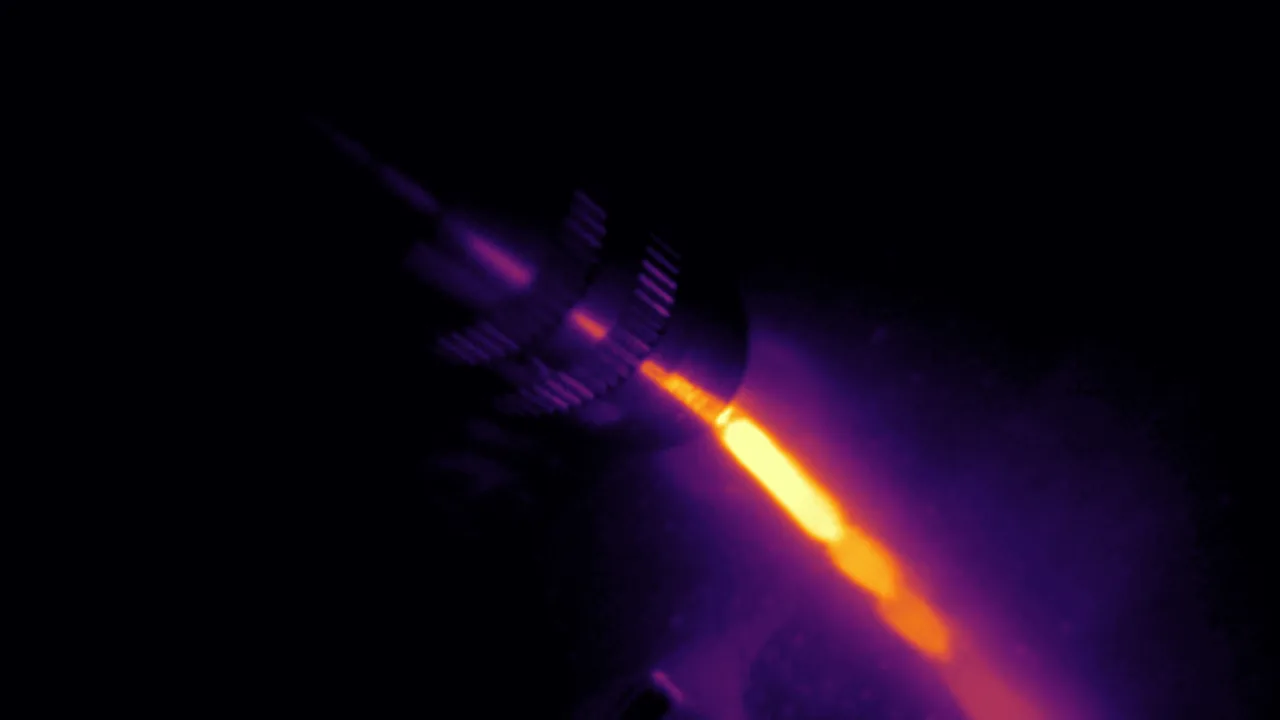
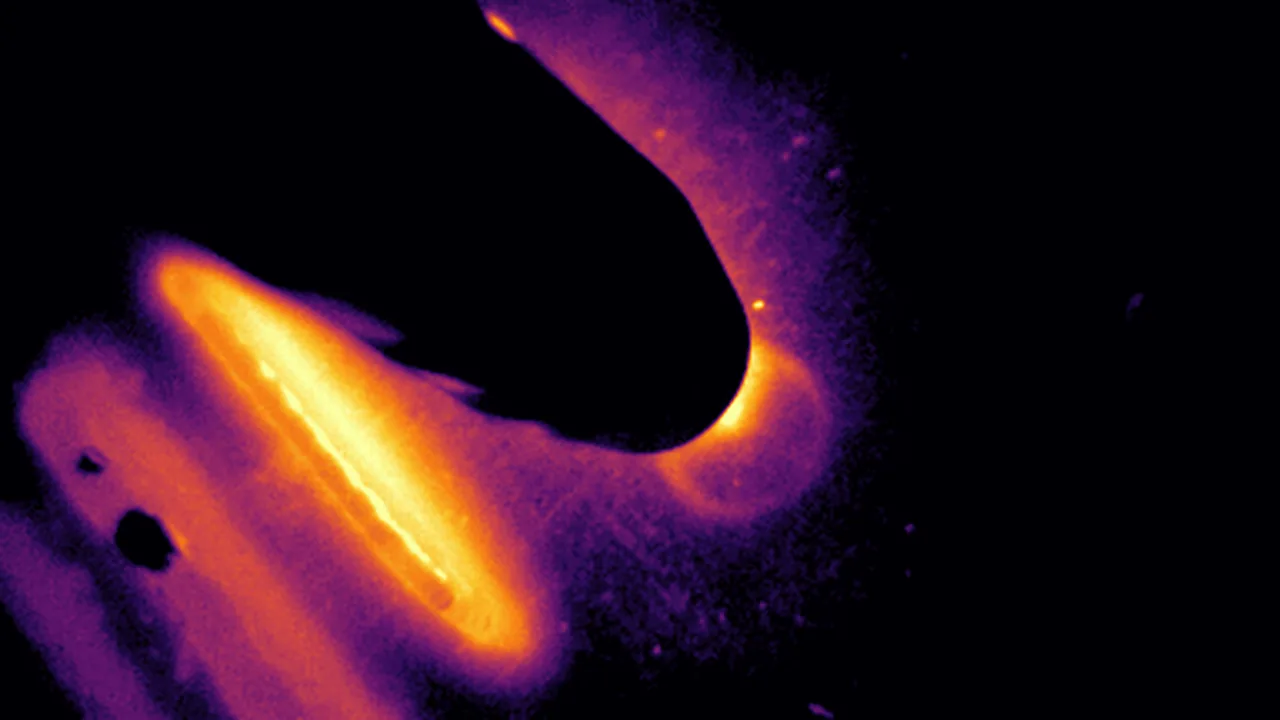
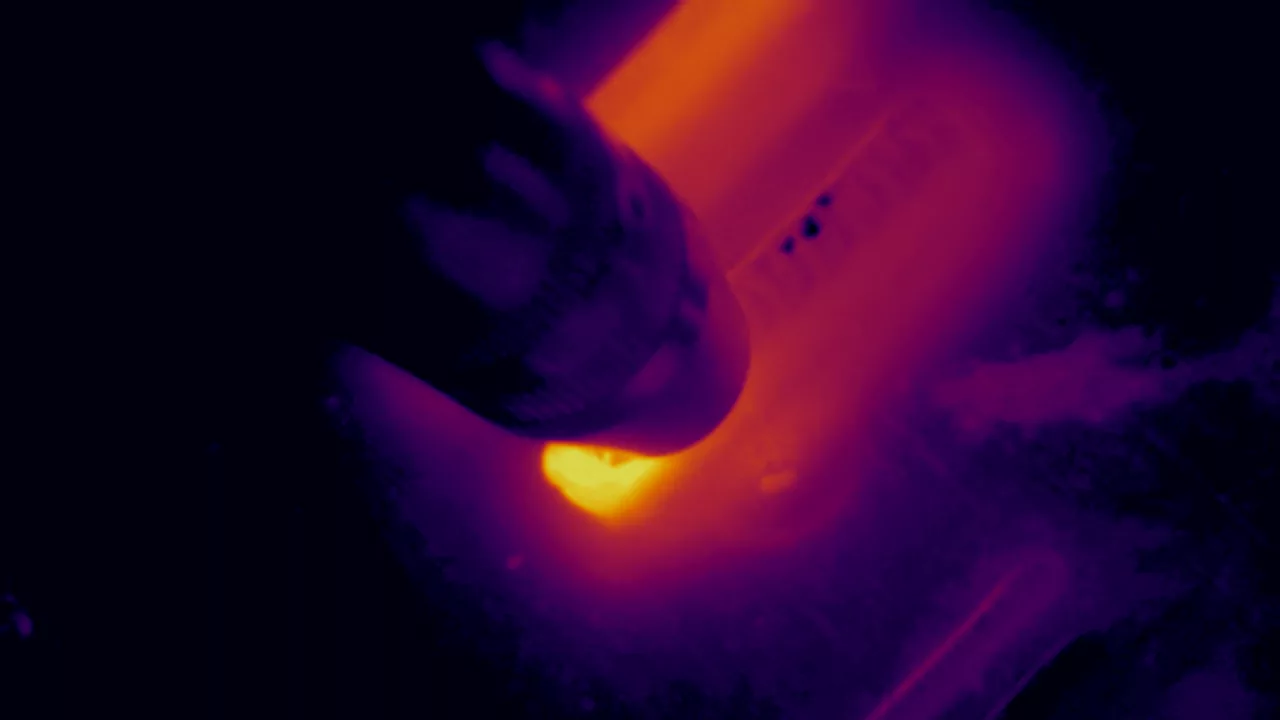
The procedure defines a narrow window; the evidence that production stayed inside it is a record of each pass. WeldTrace records current, voltage and wire feed speed at up to 25 kHz and gas flow at 10 Hz, so the heat input of every pass is documented, and thermal cameras measure how each pass cools. These records show whether each pass stayed inside the qualified heat-input range. They do not prevent cracking and they do not replace the delayed inspection. For pipeline welding codes beyond API 1104, see ASME B31.8 gas pipeline welding.
Versione italiana
Saldare un manicotto, una derivazione o un raccordo per hot tap su una tubazione che trasporta ancora prodotto non è lo stesso lavoro che saldare una linea nuova. Il prodotto continua a scorrere, la parete resta in pressione e la saldatura va eseguita senza che nessuna delle due cose diventi un guasto. API 1104 tratta questo caso nell’Annex B, che copre le procedure di saldatura e i saldatori qualificati per saldare su una tubazione in esercizio.
L’edizione corrente di API 1104, «Welding of Pipelines and Related Facilities», è la 22ª, pubblicata nel luglio 2021, con l’Errata 1 del settembre 2023. Negli Stati Uniti le norme federali sulle condotte (49 CFR Parti 192 e 195) incorporano per riferimento la 21ª edizione del settembre 2013, con le sue errata e gli Addenda 1 (2014) e 2 (2016); nell’agosto 2025 la 22ª edizione non era ancora incorporata. Prima di scrivere la procedura, conferma quale edizione richiedono il gestore, il contratto e l’autorità.
Perché saldare su una linea in esercizio è diverso
Due rischi guidano ogni procedura in esercizio: la perforazione (burn-through) e la cricca da idrogeno.
- Perforazione. L’arco scalda la parete della tubazione sotto la saldatura. Se la parete diventa troppo calda non regge più la pressione interna e si apre una perdita. Le pareti sottili sono le più esposte.
- Cricca da idrogeno. Servono tre cose insieme: idrogeno, tensioni e una microstruttura dura e suscettibile. La saldatura porta l’idrogeno. Il prodotto che scorre sottrae calore alla parete, quindi la saldatura si raffredda in fretta e la zona termicamente alterata si indurisce. Il ritiro della saldatura fornisce le tensioni residue.
I due rischi spingono in direzioni opposte. Per evitare la perforazione bisogna limitare il calore che entra nella tubazione. Per evitare la cricca da idrogeno è preferibile il riscaldamento più alto possibile, perché rallenta il raffreddamento. La procedura deve stare nella finestra fra le due cose, e la produzione deve restarci dentro.
Cosa copre l’Annex B e quale edizione si applica
API 1104 copre la saldatura a gas e ad arco di condotte in acciaio al carbonio e basso legato, sia nella nuova costruzione sia nella saldatura in esercizio. L’Annex B è la parte per la saldatura su una linea che trasporta prodotto. Per i criteri di accettazione delle saldature finite, vedi la guida ai criteri di accettazione API 1104.
| Domanda | Cosa verificare | Dove si decide |
|---|---|---|
| Quale edizione si applica? | 21ª o 22ª edizione, con errata e addenda | Gestore, contratto e autorità |
| È saldatura in esercizio? | Se la linea trasporta prodotto mentre saldi | Ambito del lavoro e stato della linea |
| La procedura è adatta al cantiere? | Severità termica del cantiere rispetto alla prova di qualifica | Procedura di saldatura e suo verbale di qualifica |
| I saldatori sono qualificati? | Qualifica del saldatore per la saldatura in esercizio secondo l’Annex B | Registri di qualifica dei saldatori |
| Quando e come si ispeziona? | Ritardo dell’ispezione e metodo adatto alla geometria del giunto | Procedura, specifica aziendale e piano di ispezione |
Severità termica: la prova deve somigliare al cantiere
La velocità con cui la parete perde calore dipende dalla portata e dal tipo di prodotto. È la severità termica del cantiere. Una misura della capacità termica permette di confrontare il cantiere con le condizioni della prova di qualifica. Se il cantiere sottrae calore più in fretta della prova, la saldatura si raffredda più in fretta che sul provino e la zona termicamente alterata può risultare più dura di quanto mostrato dalla qualifica.
Il tempo di raffreddamento da 800 a 500 °C (t8/5) di ogni passata è un valore usato spesso nei modelli per prevedere la durezza massima della zona termicamente alterata: più rapido il raffreddamento, più alta la durezza. Per il legame fra tempo di raffreddamento e microstruttura, vedi t8/5, velocità di raffreddamento e microstruttura.
Tenere lontane le cricche da idrogeno
Quattro leve abbassano il rischio di cricca:
- Consumabili a basso idrogeno, conservati e maneggiati in modo che non assorbano umidità.
- Preriscaldo, che aiuta l’idrogeno a uscire dalla saldatura. Su una tubazione con prodotto in movimento è più difficile da raggiungere e mantenere: conferma che la temperatura richiesta si possa tenere sul giunto.
- Una sequenza a temper bead, che abbassa la durezza della zona termicamente alterata della passata precedente.
- Apporto termico nel campo qualificato, passata per passata. Vedi come calcolare l’apporto termico.
Il meccanismo generale e i suoi controlli sono in prevenzione della cricca da idrogeno.
Ritardo dell’ispezione e geometrie difficili
La cricca da idrogeno è ritardata: può comparire qualche tempo dopo la fine della saldatura. Per questo l’ispezione finale delle saldature in esercizio si esegue di solito con un ritardo, e il tempo di attesa lo stabilisce la procedura o la specifica aziendale. Come si fissa il tempo di attesa è spiegato in cricca da idrogeno ritardata e tempo di attesa per l’ispezione.
Le saldature d’angolo che fissano manicotti e derivazioni sono difficili da ispezionare anche in buone condizioni. Scegli il metodo di ispezione per quella geometria prima di iniziare il lavoro, non dopo aver eseguito la saldatura.
Prima di saldare su una linea in esercizio
- Conferma l’edizione di API 1104, con errata e addenda, richiesta da gestore, contratto e autorità.
- Confronta la severità termica del cantiere con le condizioni della prova di qualifica della procedura.
- Verifica che procedura e saldatori siano qualificati per la saldatura in esercizio secondo l’Annex B.
- Scrivi nel pacchetto di lavoro il ritardo dell’ispezione e il metodo di ispezione per la geometria del giunto.
- Conferma che i consumabili a basso idrogeno siano conservati e maneggiati correttamente e che il preriscaldo si possa mantenere sulla linea in movimento.
Come aiutano i dati registrati per passata
La procedura definisce una finestra stretta; la prova che la produzione ci è rimasta dentro è un registro di ogni passata. WeldTrace registra corrente, tensione e velocità del filo fino a 25 kHz e la portata del gas a 10 Hz, quindi l’apporto termico di ogni passata è documentato, e le telecamere termiche misurano come si raffredda ciascuna passata. Questi registri mostrano se ogni passata è rimasta nel campo di apporto termico qualificato. Non impediscono la cricca e non sostituiscono l’ispezione ritardata. Per i codici di saldatura delle condotte oltre API 1104, vedi saldatura dei gasdotti secondo ASME B31.8.
Sources
Show that every in-service pass stayed inside the window / Dimostra che ogni passata in esercizio è rimasta nella finestra
Therness records per-pass process and thermal data next to the procedure it was welded to, ready for the procedure review and the audit. / Therness registra i dati di processo e termici di ogni passata accanto alla procedura con cui è stata eseguita, pronti per la revisione della procedura e l'audit.
Talk to an expert / Parla con un espertoTherness solution: Welding monitoring system — Every weld inspected in the cycle, with defect flags and the ISO 3834 / ISO 17635 evidence kept per weld.