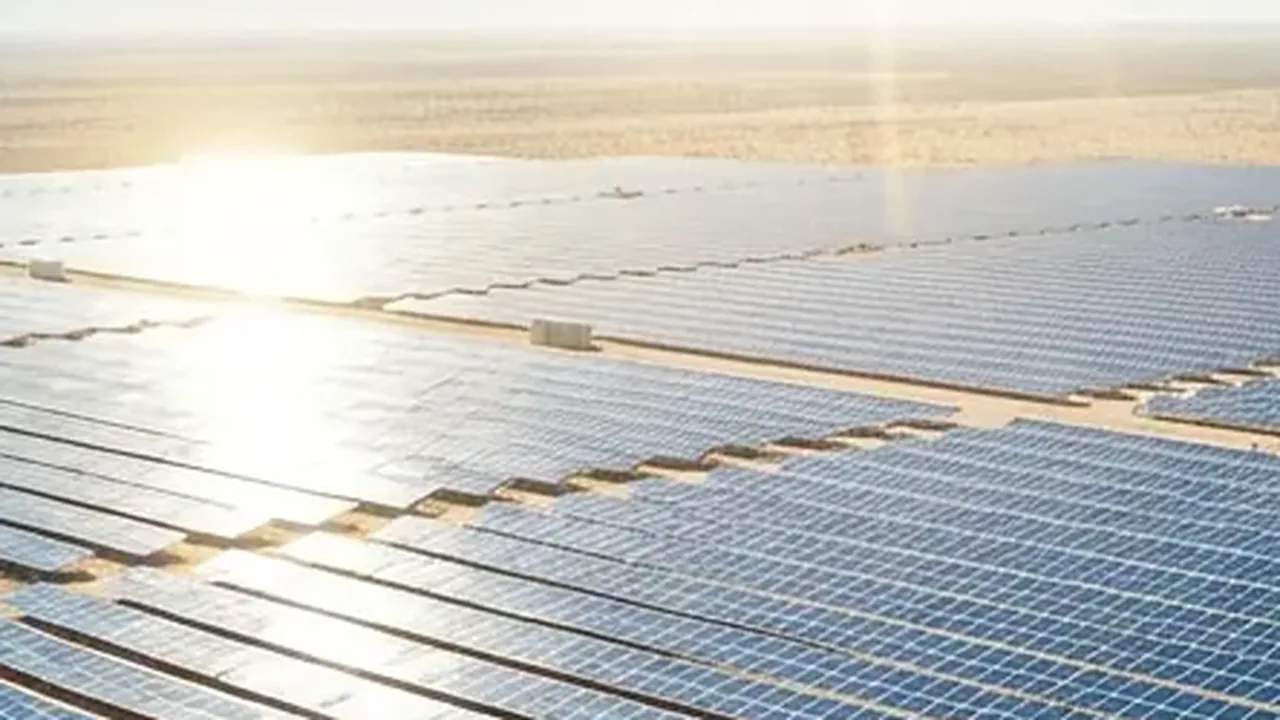
A drone can collect a large set of thermal and visible images from a photovoltaic plant. That collection is not yet an inspection record. An asset owner still needs to know what was in scope, what was actually observed, under which conditions the data was acquired, how each finding maps back to a module or string, and which limitations remain open.
We treat the report as an evidence system rather than a gallery of interesting hot spots. The workflow starts before the flight, with a declared population and review rules, and ends when every in-scope asset has a traceable outcome. The PV thermography by drone service describes the acquisition and reporting context; this guide focuses on the controls that make the result reviewable.
Define the report as an evidence system
A defensible report lets another qualified reviewer reconstruct how an observation became a finding. For each record, the reviewer should be able to retrieve the asset identifier, visible image, thermal image, acquisition context, classification rule, limitation, reviewer decision and follow-up status. If one of those links is missing, the report should expose the gap instead of hiding it inside a summary.
This is the same principle used in a controlled industrial thermography specification: scope, method and acceptance logic are set before interpretation begins. The purpose is not to claim certainty from a surface temperature pattern. It is to preserve enough context for a competent decision and for later comparison with maintenance evidence.
[Assumption] The asset owner can provide a stable plant register with identifiers that remain valid from flight planning through corrective work. If that register is incomplete, the project should include an agreed reconciliation step before findings are released.
Freeze the inspection scope and denominator
Start with the population that the report promises to cover. The denominator may be expressed in modules, strings, tables, inverters or another controlled asset level, but it must be written down and tied to the plant register. Do not derive the denominator from the images that happened to be captured; that would make missed areas invisible by definition.
For each planned unit, record one explicit outcome: inspected with a valid record, not inspected with a stated reason, or removed from scope through an approved change. Typical reasons for a valid exception include access restrictions, an operational condition that prevented a useful observation, a flight limitation, an obstruction or an identifier that could not be reconciled safely.
The coverage statement should therefore be a reconciliation, not a slogan. It should show the planned population, the accepted records, the exceptions and the approved scope changes using the same identifiers. This approach also makes a repeat campaign comparable because the next survey begins from a known asset population rather than an unstructured image archive.
Record acquisition conditions before interpretation
Thermal patterns depend on the asset state and the acquisition setup. The field record should preserve the conditions required by the approved survey procedure: time, environmental observations, relevant operating context supplied by the owner, camera configuration, viewing geometry, distance, flight plan and any event that could affect the record.
The report should distinguish measured or recorded conditions from assumptions. If a required condition was not captured, mark it as missing. Do not replace it with a value copied from a weather service or another part of the plant unless that substitution is part of the approved method and its limitation is stated.
The wider industrial thermography service explains why measurement context matters across different assets. For photovoltaic plants, the flight plan also needs a consistent relationship between visible imagery, radiometric data and the physical plant layout. A visually clear image can still be unusable if it cannot be tied to the correct module or if the operating context is unknown.
Keep visible and thermal data linked
Thermal and visible images answer different questions. The thermal record shows a surface pattern under the recorded conditions; the visible record helps establish location, orientation, obstructions and physical context. The report should keep them linked by a common record identifier rather than relying on filenames that can be changed during export.
Georeferencing supports navigation, but coordinates alone may not resolve the exact module in dense or repetitive arrays. Reconcile the image location with the plant layout and the controlled asset identifier. When the mapping is uncertain, keep the record in an exception state until the ambiguity is reviewed.
The custom thermal imaging solutions page describes application-specific acquisition where a standard survey is not enough. The same discipline applies here: the data path should be designed around the decision that the asset owner needs to make, not around the capabilities of the camera alone.
Declare anomaly classes before the flight
Classification rules should be agreed before inspectors see the campaign results. Otherwise, unusual images can pull the review toward ad hoc labels and inconsistent priorities. Define the allowed observation classes, the evidence needed for each class, the rules for an inconclusive record and the route for technical review.
Keep observation separate from diagnosis. A thermal contrast is an observation. The cause may require electrical measurements, close-range inspection, maintenance history or another test. The report can state which follow-up is appropriate without claiming that the aerial image proves an internal failure.
The thermography acceptance testing guide provides a related control: acceptance logic should be explicit, repeatable and tied to the inspected asset. For photovoltaic work, the project-specific procedure remains the controlling source. This article does not set normative thresholds or reproduce standard clauses.
Map every finding to a module or string
A finding should lead a field technician to the intended asset without a second discovery exercise. Use the plant’s controlled hierarchy and preserve the relationship between module, string, table and inverter where those levels are relevant to the owner’s maintenance system.
Include the record identifier in the finding table, image references and follow-up record. If a label, layout or coordinate source conflicts with another, do not silently choose one. Record the conflict, name the source used for the provisional mapping and assign an owner to resolve it.
This traceability also supports later verification. A reviewer can select a reported anomaly and walk back to its images and conditions, or select an asset from the register and confirm whether it has a valid outcome. Both directions matter: a report can contain well-documented findings while still missing part of the declared population.
Separate observations, hypotheses and actions
Use distinct fields for what the image shows, what may explain it and what happens next. This prevents a plausible hypothesis from becoming a maintenance instruction without review. It also lets different specialists contribute without overwriting the original observation.
[Assumption] The maintenance or QMS platform can preserve links to the source images, report revision and disposition history. If it cannot, define a controlled export with ownership, retention and change history before the report is issued.
The active thermography overview and the guide to emissivity in industrial thermography illustrate why interpretation depends on method and surface context. They are useful background, but the photovoltaic campaign still needs its own approved procedure and qualified review.
Route exceptions and targeted ground validation
Not every aerial observation should become a final finding. Define a route for records that are doubtful, poorly mapped, affected by conditions or inconsistent with neighbouring evidence. The PV drone thermography service includes targeted ground validation as part of the method when a case needs closer review.
Ground validation should preserve the link to the aerial record. Record the asset identifier, validation method, date, reviewer and result. If validation changes the interpretation, keep both the original observation and the reviewed disposition. Do not erase the earlier state; the audit trail explains why the conclusion changed.
Related plant assets may require a different method. Ground-based electrical panel thermography covers a different inspection context, and the scheduled article on electrical panel thermography in Ex areas separates asset evidence from hazardous-area controls. Link the workflows where they share identifiers, but do not apply one asset class’s assumptions to another.
Review coverage and data quality before release
Run a release review against the declared denominator. Confirm that every in-scope unit has an allowed outcome, every accepted record has its required data, every finding maps to a controlled identifier and every exception has an owner or approved disposition. A summary total is not enough unless it reconciles with the detailed records.
Test retrieval in both directions. Select assets from the register and locate their survey outcomes. Then select findings from the report and trace them back to the asset, visible image, thermal image, acquisition conditions and review decision. Record any failed retrieval as a data-quality exception before issuing the report.
Check links and exports as delivered, not only inside the analyst’s working environment. The recipient must be able to open the agreed evidence package without relying on temporary paths or personal accounts. The final package should also identify the report revision so later updates do not replace the evidence used for an earlier maintenance decision.
Package a defensible handover
The handover should state scope, method, recorded conditions, coverage reconciliation, findings, limitations, exception status and the route for follow-up. It should also name the data owner and the controlled location for the evidence package. This makes the report useful after the flight team has left the site.
Avoid presenting the report as a certification or as proof that no defect exists. Therness does not certify installations, and accredited or otherwise competent bodies retain their own responsibilities. The report documents the inspection evidence and its limitations so the owner can decide what additional review or action is required.
Where hazardous-area context applies to balance-of-system assets, the IEC 60079 service context may inform a separate controlled scope. Applicable parts, editions and requirements must be verified by competent personnel for the site; they are not inferred from an aerial photovoltaic observation.
Sources
- Therness PV thermography by drone — acquisition, georeferencing, reporting and targeted ground-validation context.
- Therness industrial thermography — wider measurement and reporting context.
- Therness electrical panel thermography — related ground-based asset inspection context.
- Therness custom thermal imaging solutions — application-specific acquisition context.
- Therness industrial thermography specification guide — scope and method controls.
Plan a PV survey around traceable evidence
Therness combines aerial infrared acquisition, georeferenced records and targeted ground validation for photovoltaic plants.
Discuss an inspection