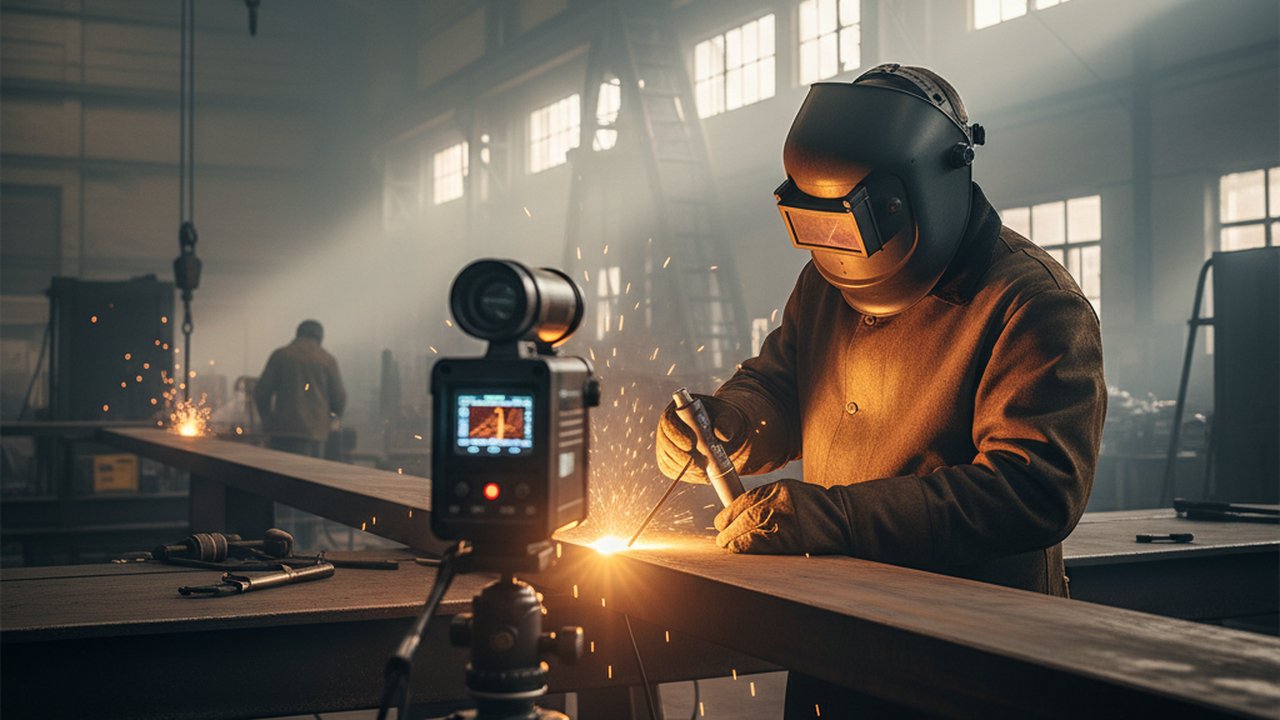
When you buy welded parts, the welds arrive already made. Whatever you want to know about them later, after a field failure, a customer audit or a disputed batch, has to be written into the purchase specification before production starts. Adding it afterwards means asking a supplier to reconstruct records that were never kept.
This article is for supplier quality engineers and buyers of welded assemblies in sectors such as rail and automotive. It lists the evidence worth requiring per weld, the form it should take and the questions to settle in the specification. It does not replace the certification or qualification your sector requires, and it does not set acceptance limits.
Key takeaways
- Certification proves a supplier can weld to a standard. It does not tell you how a specific weld on a specific part was made.
- Specify evidence by the question it must answer later, not by a list of documents.
- Require a weld identifier that links the part, the procedure, the person or program and the process record.
- Say explicitly whether evidence covers every weld or a sample, and what “not evaluated” means.
- Fix the format, the retention period and the access route in the contract, not in a later email.
Certification is necessary, not sufficient
A supplier certified to ISO 3834, or in rail to the EN 15085 series, has shown that its welding coordination, procedures, personnel and inspection meet a defined level. That is the right entry condition, and the EN 15085 certification guide explains what rail auditors check.
What certification does not give you is the history of an individual weld. If a joint cracks in service two years from now, the questions will be concrete: which procedure was it welded under, by whom or by which program, with which consumable batch, and what did the process look like at the time? Only records kept per weld can answer them.
Start from the questions you will need to answer
Before listing documents, write down the questions the evidence must answer. A typical set:
- Was this weld made under a qualified procedure? Procedure reference and revision, linked to the qualification record.
- Was the welder or operator qualified for it? Identity and qualification reference at the date of welding.
- Did the process stay within the procedure? The process record for the weld: parameters delivered and, where monitored, its thermal record.
- Was it inspected, and what was found? Inspection method, extent, result and disposition, with any repair history.
- Which parts share the same risk? Enough context, such as station, shift and consumable batch, to find the other parts made under the same conditions.
Each question maps to a record. The specification then says which records are required, for which joints, and in which form.
Define the weld identifier
Evidence is only useful if it can be found. Require a weld identifier that is unique within the part and links, at minimum:
- part number and serial or batch;
- joint reference on the drawing or weld map;
- procedure (WPS) reference and revision;
- welder, operator or robot program;
- date, station and the process record for that weld.
A weld map is the usual way to fix joint references before production. Without a shared identifier, records exist but cannot be joined, and the investigation stops at “the batch was made that week”.
Every weld or a sample: say which
Many specifications are silent on coverage, and suppliers reasonably interpret silence as sampling. Decide and write down:
- Which joints need a per-weld process record, usually those whose failure has the highest consequence;
- Which joints may be covered by sampling, and at what rate;
- What happens to a weld with no usable record. It should be treated as “not evaluated” and follow a defined route, never counted as good by default.
Where the supplier monitors every weld in the cell, the every-weld coverage guide shows how that coverage is proved. Monitoring does not replace the NDT your standard or customer requires; it narrows the search when something is found.
Form, retention and access
Three clauses save most of the friction later:
- Form. Machine-readable records exported with the identifier, not scanned paper. State the minimum content of the evidence for a weld; the weld evidence pack guide describes a modular structure.
- Retention. How long records are kept, in line with the service life of the product and your sector’s requirements. Rail vehicles, for example, are expected to be traceable long after delivery.
- Access. Whether records are delivered with each shipment, available on request within a set time, or reachable through an agreed interface. Also state what happens to the records if the supplier changes system or ceases trading.
[Assumption / ipotesi] Retention periods and minimum record content vary by sector, customer and contract. Confirm them with your own quality requirements and, where relevant, with the certification body before fixing them in the specification.
Checking the supplier can deliver
Before awarding the work, ask the supplier to show the evidence for one real part: pick a weld on a part they made last month and follow it from the identifier to the process record and the inspection result. If that takes minutes, the system works. If it takes a week of searching, the specification will not be met in practice, however well it is written.
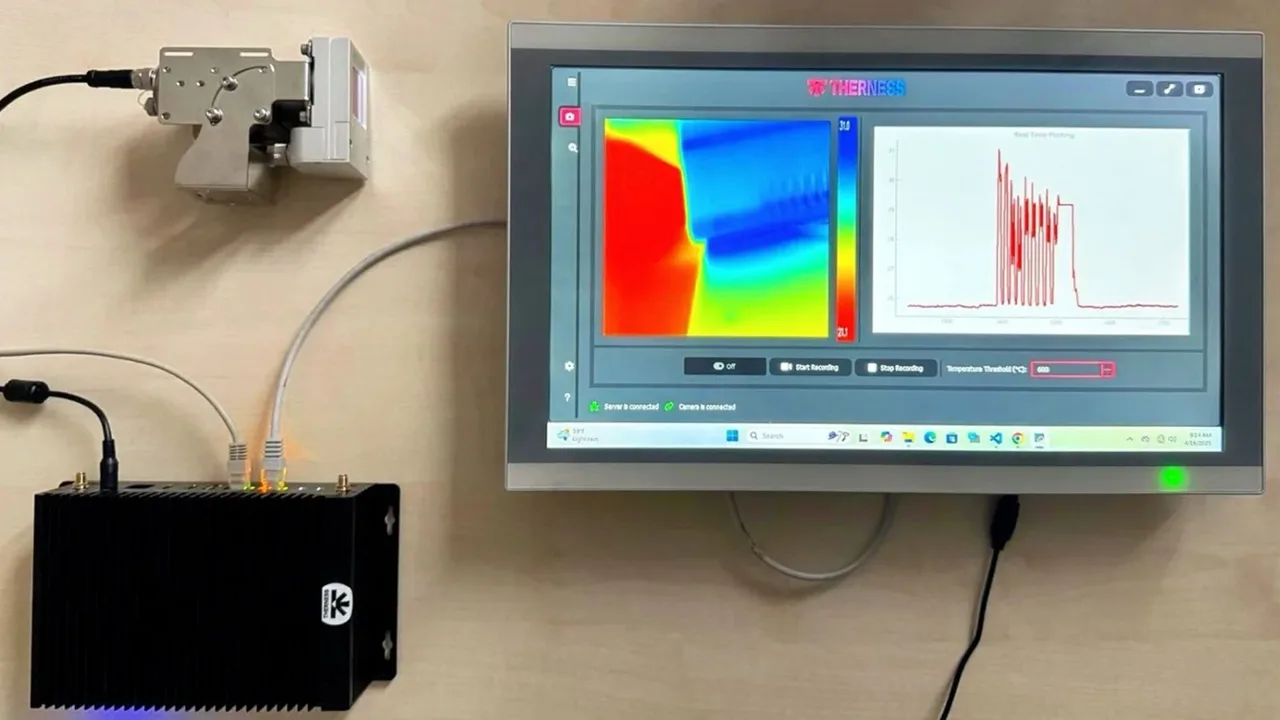
For suppliers that need to build this capability, per-weld monitoring is the practical route: a thermal record of each weld from a camera such as HeatCam IR-C, process parameters from WeldTrace, and a per-weld record filed by HeatCore. The welding monitoring system page explains how these fit together, and in automotive supply chains the same records support PPAP and control-plan evidence.
Sources
- ISO 3834-2 — comprehensive quality requirements for fusion welding.
- EN 15085 certification levels — what rail welding certification covers.
- Weld evidence pack for ISO 3834 and ISO 17635 — structure of a per-weld evidence record.
- Verify every-weld thermal monitoring coverage — proving coverage in scope.
- Therness welding monitoring system — how thermal and process records are combined per weld.
- ISO 17635 — general rules for NDT of fusion welds; verify the edition your contract applies.
Turn your specification into per-weld records
Therness can help you or your supplier define the weld identifier, the per-weld record and a one-cell pilot to prove it.
Discuss your supply chainTherness solution: Welding monitoring system — Every weld inspected in the cycle, with defect flags and the ISO 3834 / ISO 17635 evidence kept per weld.