“Welding camera” and “thermal camera” are often used as if they mean the same thing. They don’t. The confusion costs buyers real money — a team that needs temperature data buys a visible-light pool camera, or a team that needs to see droplet transfer buys a thermal camera and gets a blurry heat map instead of geometry. This guide untangles the two terms so you can match the camera to the question you are actually trying to answer about the weld.
If you already know which modality you need and want hardware specifics, jump to the welding camera buyer’s guide or the specs, setup and integration guide. If you want the short version: it depends on whether you care about what the weld looks like or how hot it is.
The two terms describe two different sensors
A welding camera, in everyday use, is a visible-light industrial camera engineered to survive the arc and image the molten pool despite glare, spatter, and heat. It works in the visible and near-infrared spectrum and answers geometric questions: pool width and symmetry, droplet transfer, arc stability, seam tracking.
A thermal camera is a long-wave infrared (LWIR) sensor. It does not image visible light at all — it measures the thermal radiation a surface emits and converts it to a temperature map. It answers thermal questions: preheat adequacy, interpass temperature, heat-affected zone extent, cooling rate.
So the relationship is: a thermal welding camera is one type of welding camera, but most cameras sold as “welding cameras” are visible-light only. The umbrella term hides a fundamental sensor difference.
Rule of thumb: if your question starts with “what does the weld look like,” you want a visual camera. If it starts with “how hot is,” you want a thermal camera.
What each one actually detects
The two modalities cover different defect mechanisms, and the overlap is smaller than people expect.
Visible-light / high-speed visual cameras
A purpose-built visual weld camera images the pool surface using narrowband illumination and a matched optical filter that rejects arc radiation. At high frame rates it resolves transient events that ordinary 30/60 fps cameras blur out:
- Weld pool geometry — width, length, symmetry, penetration indication
- Droplet transfer mode in pulsed-MIG, short-circuit, and stub-out events
- Arc-start and end-of-bead transients, spatter rate, arc deflection
This is the domain of a high-speed visual weld-pool camera — frame-accurate evidence for process development and ISO 17637 visual testing. The limitation: it tells you almost nothing about temperature.
LWIR thermal cameras
A thermal camera operating in the 8–14 µm band measures emitted heat, so the arc does not saturate it. It quantifies what the eye cannot see:
- Penetration and porosity risk correlated with heat distribution
- Lack-of-fusion patterns and subsurface thermal drift
- Preheat and interpass temperature for procedure compliance
- Cooling-rate and HAZ width as proxies for heat input
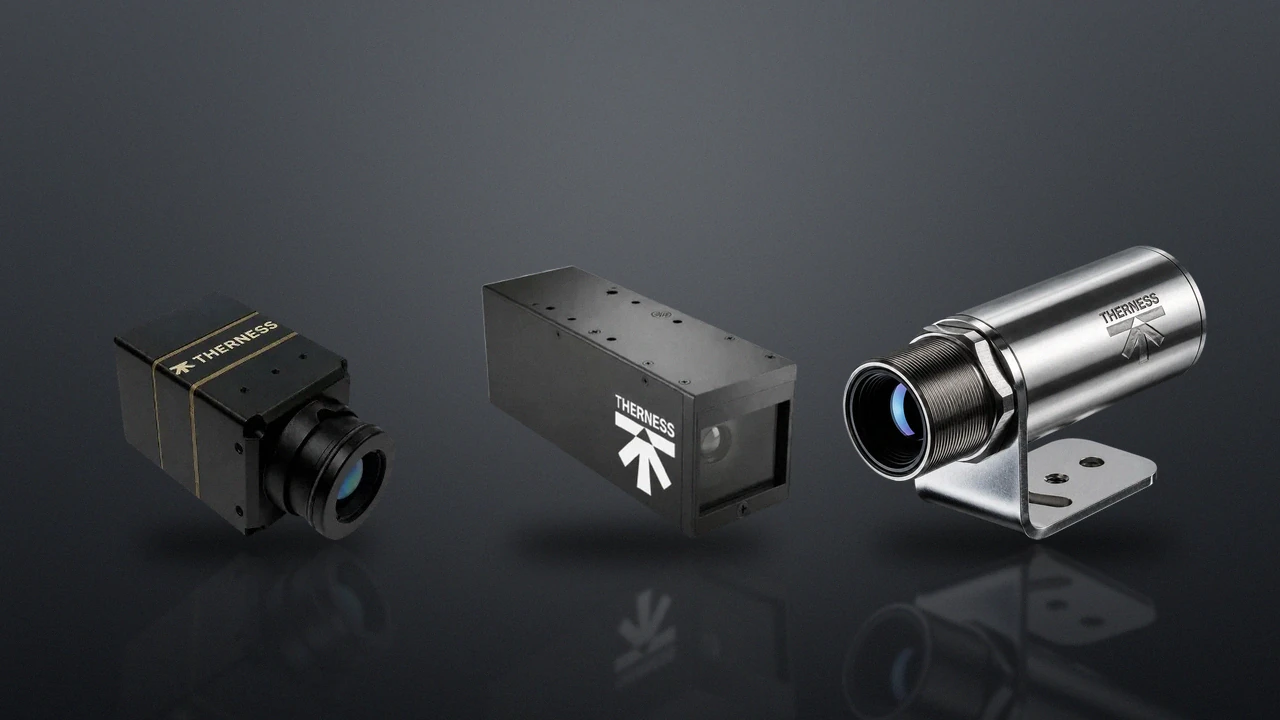
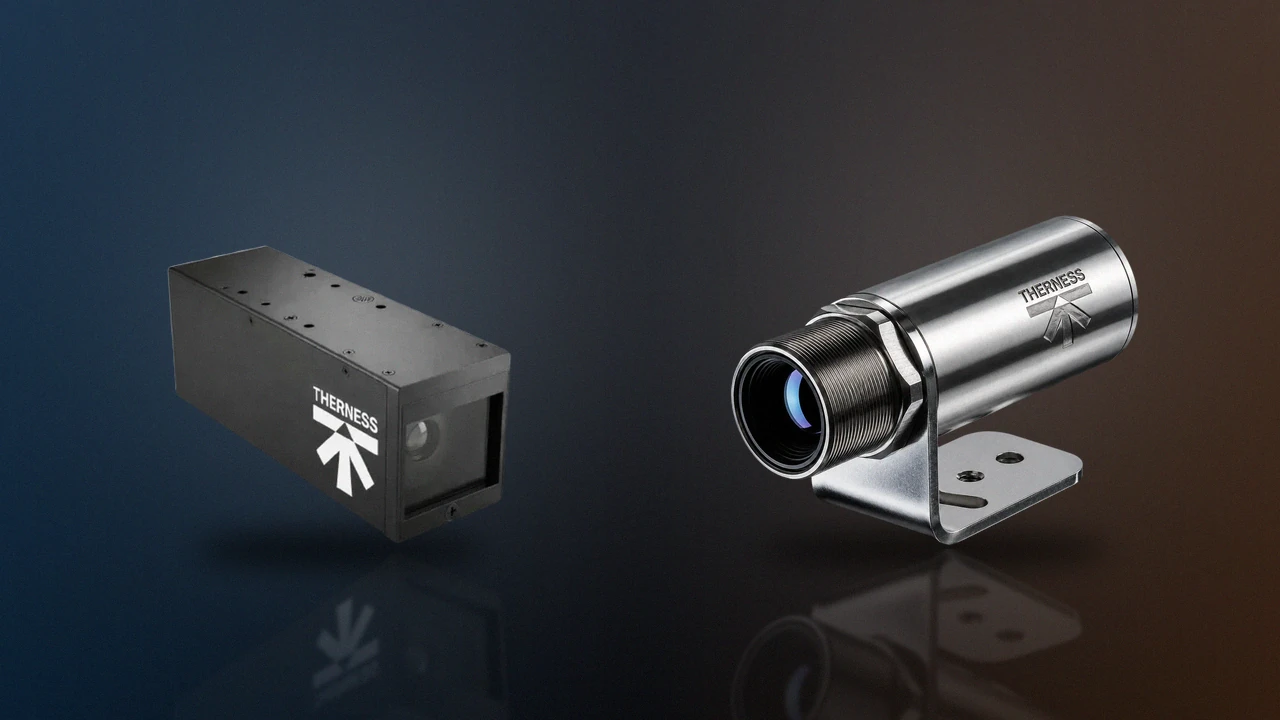
This is the domain of cameras like the cylindrical HeatCam IR-C for fixed cells and pipe welding, and the compact HeatCam IR-S for embedded WAAM and robotic heads. To see what this modality actually captures, watch LWIR thermal imaging of a live weld. The same heat data underpins post-weld thermography NDT testing on finished parts. The limitation: it will not resolve fine pool geometry or droplet detail.
Why the best answer is often “both”
The two sensors are complementary, not competing. Heat-driven defects and surface/process-stability defects are different failure populations, and no single modality covers both with equal fidelity. That is why high-throughput production cells increasingly run a thermal camera and a visual camera on the same weld, then fuse the streams.
Fusion only pays off if something correlates the two data streams and scores them. That is the role of AI software like HeatCore AI: it takes thermal and visual inputs, flags anomalies in real time, and produces a pass/fail decision plus traceable evidence per weld. The camera is the sensor; the AI is what turns two video feeds into a quality record. See how the pieces combine in a full welding monitoring system.
How to choose for your process
Work backward from the defect you most need to catch:
- Geometry, arc behavior, R&D, process qualification → high-speed visual camera. Start with the PoolDrop high-speed visual camera.
- Preheat, interpass, heat input, porosity/penetration risk, code compliance → LWIR thermal camera. Start with HeatCam IR-C or IR-S, part of the welding camera lineup.
- Full quality coverage in production → both, fused under AI scoring. See the full camera range side by side.
- Post-weld and subsurface inspection → step up to thermographic testing with controlled excitation, which adds a deliberate heat pulse to reveal deeper discontinuities.
Specification details — resolution, frame rate, NETD, optics, interfaces, triggering — matter once you have chosen the modality. Those are covered in the specs, setup and integration guide. Choose the sensor type first; the spec sheet second.
A visible-light camera and an LWIR thermal camera answer different questions. Buying one to do the other’s job is the most common — and most expensive — welding-camera mistake.
The bottom line
“Welding camera” is the category; “thermal camera” is one sensor type inside it. Visible-light cameras show you the weld; thermal cameras measure its heat. For real-time quality on a modern line, the question is rarely which one — it is which combination, scored by AI against your acceptance criteria. Compare the full range on the welding camera hub.
Not sure which welding camera your process needs?
Tell us your process, materials, and what you need to catch. Our applications engineers will recommend the right visual, thermal, or fused configuration — and the AI scoring to go with it.
Talk to the applications teamTherness solution: Welding camera — Thermal and high-speed imaging that watches the arc, the pool and the cooling seam while the weld is made.
Frequently Asked Questions
Is a welding camera the same as a thermal camera?
Not necessarily. "Welding camera" is a broad term that usually means a visible-light camera built to image the arc and weld pool through glare. A thermal camera is a specific type — a long-wave infrared (LWIR) camera that measures emitted heat rather than visible light. A thermal welding camera is one kind of welding camera, but many welding cameras are visible-light only.
Can a thermal camera see the weld pool?
A thermal camera sees the heat the weld pool radiates, not the pool's visible surface detail. It maps temperature distribution, cooling rate, and heat-affected zone — but it will not resolve fine droplet-transfer geometry the way a high-speed visual camera does. For pool geometry and arc behavior you want a visual camera; for temperature and heat-driven defects you want LWIR thermal.
Do I need both a visual and a thermal welding camera?
Often yes for full coverage. Visual high-speed cameras capture surface and process-stability events (spatter, irregular transfer, arc-start transients); LWIR thermal cameras catch heat-related risks (penetration, porosity, lack-of-fusion patterns) the eye cannot see. Many production lines run both and fuse the streams into one record so AI can score each weld against more defect mechanisms.
What wavelength does a thermal welding camera use?
Thermal welding cameras for in-process monitoring operate in the long-wave infrared band, roughly 8–14 µm. LWIR measures emitted thermal radiation and is not saturated by the arc, which emits mostly in the UV and visible bands. Do not confuse LWIR with SWIR (1–2.5 µm), a specialized very-high-temperature imaging band with different emissivity assumptions.