

welding
Hydrogen-Induced Cracking Prevention: Thermal Monitoring
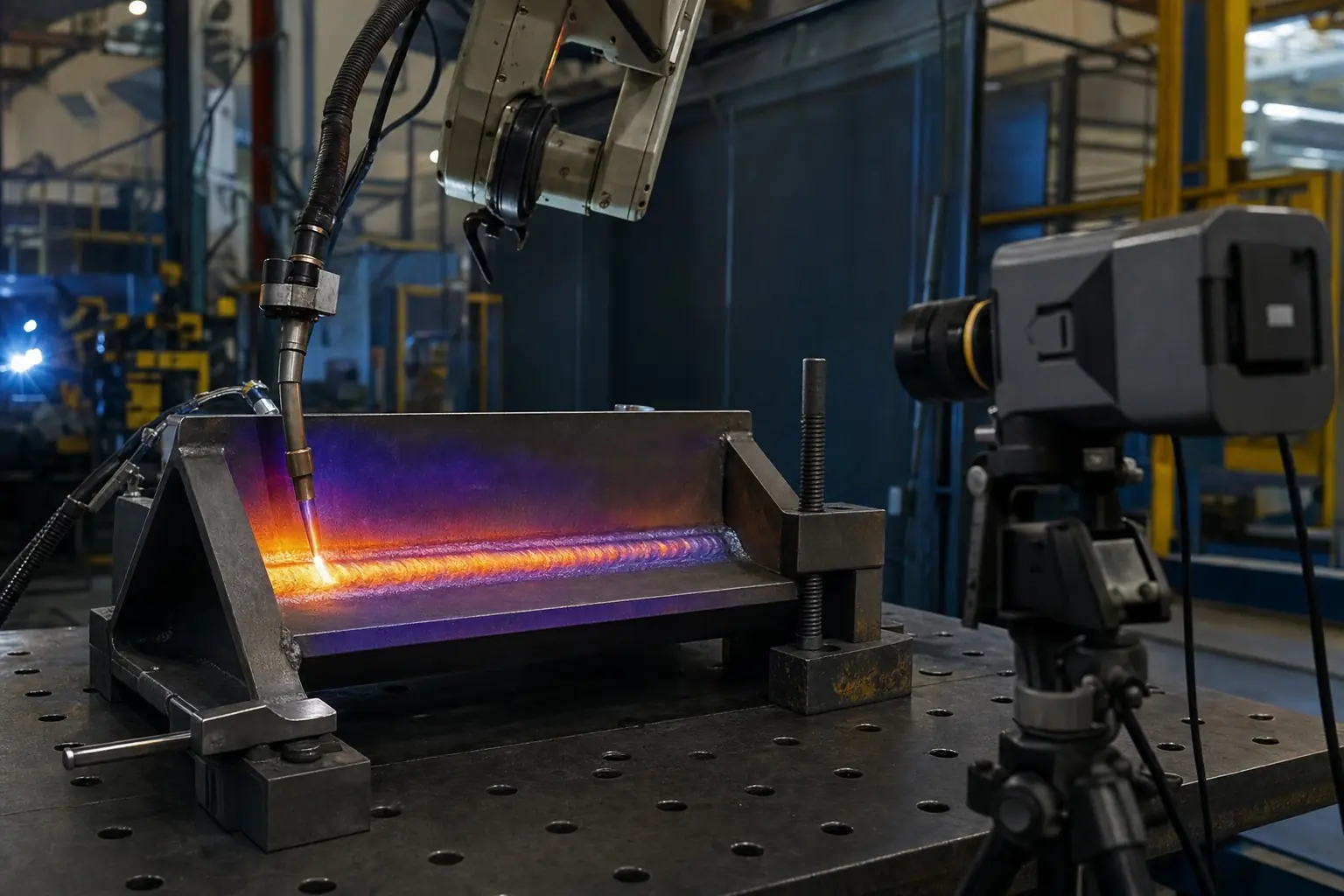
How real-time thermal monitoring prevents hydrogen-induced cracking in welding by enforcing preheat, interpass temperature, and PWHT compliance to ISO 13916.
Research‑grade articles on infrared thermography in welding, AI defect detection, cooling rates (T8/5), compliance, and ROI.
Page 22 of 28
Prefer feeds? Subscribe via RSS.
How real-time thermal monitoring prevents hydrogen-induced cracking in welding by enforcing preheat, interpass temperature, and PWHT compliance to ISO 13916.

How real-time thermal imaging and AI-powered monitoring detect aluminum weld defects inline—porosity, burn-through, HAZ cracking—before they reach final.

How weld pool geometry AI analysis uses thermal imaging to measure pool shape, size, and thermal gradient in real time — predicting weld quality before.

How sensor fusion weld quality monitoring integrates thermal cameras, vision systems, and acoustic emission sensors to detect defects in real time.

Learn how PPAP weld traceability and digital control plan monitoring help automotive suppliers reduce escapes, speed approvals, and strengthen audit readiness.

Discover how real-time laser welding monitoring with thermal imaging ensures zero-defect quality in EV battery manufacturing for busbars and tab-to-terminal.

Learn how real-time multi-pass welding monitoring with thermal cameras controls interpass temperature, detects defects layer by layer, and prevents costly.

Discover how agentic thermal monitoring systems are revolutionizing welding quality control, enabling autonomous inspection and adaptive process adjustments.
Discover Therness AI for welding quality monitoring in real time. Automatic analysis of molten weld pool, electric arc, and stick-out for smarter process.

Progetto cofinanziato nell'ambito del PR Piemonte FSE+ 2021-2027,
Priorità I, Obiettivo Specifico a), Azione 4 – "Sostegno alla nascita delle start up"